Egg Whites: Calories, Protein and Nutrition Facts
 ChatGPT
 Claude
 AI Mode
 Perplexity
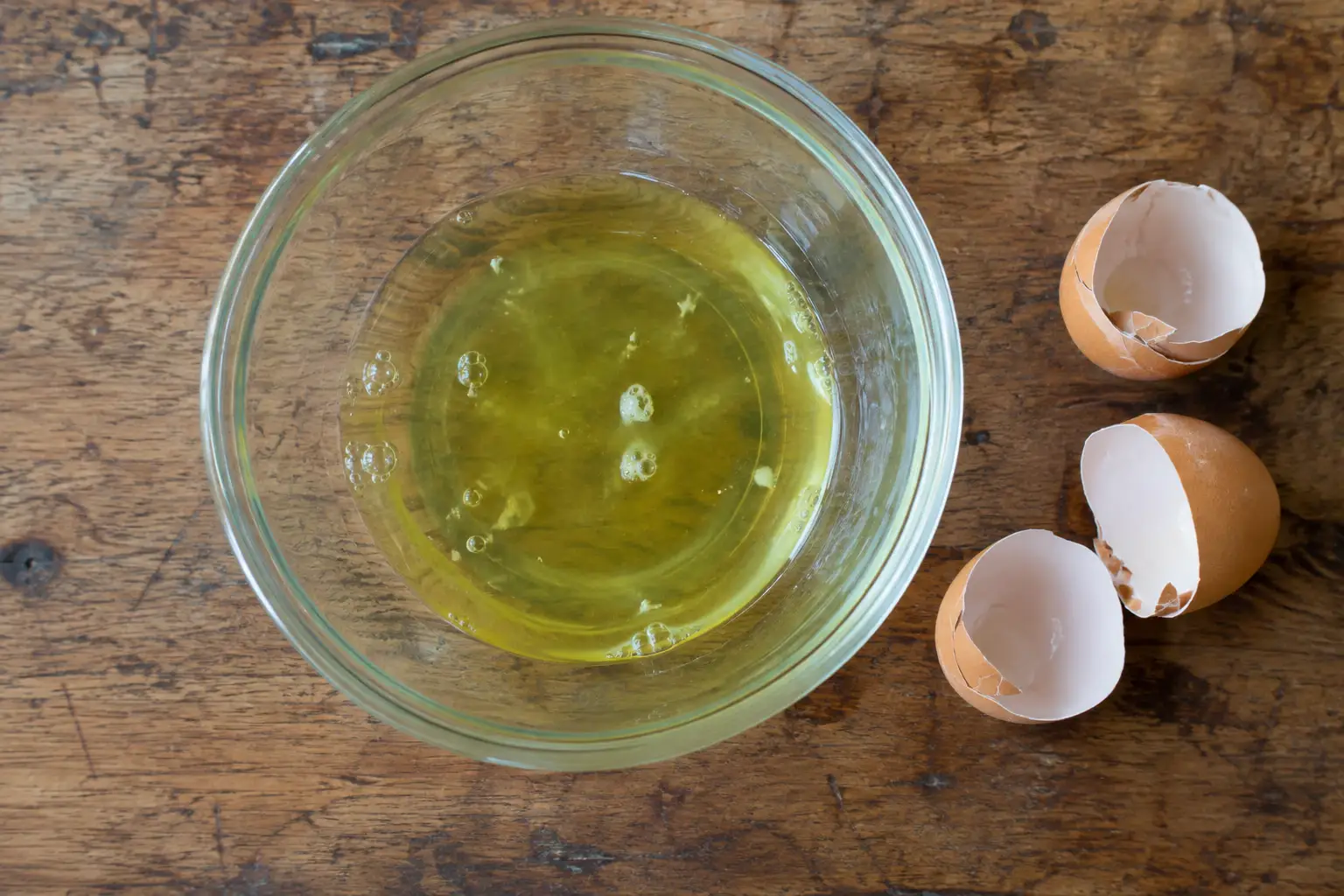
One large egg white (33 g) has 17 calories, 3.6 g of protein, 0.24 g of carbs and almost no fat. Per 100 g that is 52 calories and 10.9 g of protein, so roughly 85% of the calories come from protein. Egg whites are one of the leanest protein sources you can buy.
Quick Nutrition Facts
Per 1 large egg white
| Nutrient | Amount |
|---|---|
| Calories | 17 kcal |
| Protein | 3.6g |
| Carbohydrates | 0.24g |
| Fiber | 0g |
| Sugars | 0.23g |
| Fat | 0.06g |
| Sodium | 55 mg |
Macronutrient Breakdown
NUTRITIONIST'S INSIGHT
Egg whites are close to pure protein and water. Three large whites give about 11 g of protein for 51 calories, which makes them useful when you want more protein without adding many calories. The trade-off is that the yolk holds the vitamin A, vitamin D, choline and most of the iron, so whites alone are a narrower food. Many people do well with a mix, for example one whole egg plus two or three whites. Cook them fully: heat denatures avidin, the protein in raw white that binds biotin, and it also lowers the Salmonella risk. Raw egg protein is also digested less completely, with about 51% absorbed in a small stable-isotope study versus about 91% for cooked egg.
Myth Busters
MYTH #1: Egg whites are healthier than whole eggs for everyone.
TRUTH: Whites have fewer calories and no fat, but the yolk carries most of the vitamins A, D, E, choline and iron. Whites suit people cutting calories or fat; for most healthy adults a whole egg is the more nutrient-dense choice. Harvard's protein guidance treats eggs as a good protein source without singling out whites. USDA FoodData Central: Egg, white, raw, fresh (FDC ID 172183); Harvard T.H. Chan School of Public Health: Protein
MYTH #2: Drinking raw egg whites builds more muscle.
TRUTH: Raw egg protein is digested worse than cooked: about 51% was absorbed from raw egg versus about 91% from cooked in a stable-isotope study of healthy volunteers. Raw whites also carry Salmonella risk and contain avidin. Cooked whites give you more usable protein. Evenepoel P et al. (1998). Digestibility of cooked and raw egg protein in humans as assessed by stable isotope techniques. J Nutr.; USDA FSIS: Shell Eggs from Farm to Table
MYTH #3: Eating egg whites will cause biotin deficiency.
TRUTH: Raw egg white contains avidin, which binds biotin. Cooking inactivates avidin, and the cases of deficiency reported came from eating large amounts of raw egg whites over a long time. Normal amounts of cooked whites are not a concern. NIH Office of Dietary Supplements: Biotin Fact Sheet for Health Professionals
MYTH #4: Egg whites are a high-carb food because they are 'white'.
TRUTH: One large white has about 0.24 g of carbohydrate and 0.23 g of sugar. They have almost no effect on blood sugar by themselves. USDA FoodData Central: Egg, white, raw, fresh (FDC ID 172183); Harvard T.H. Chan School of Public Health: Carbohydrates and Blood Sugar
MYTH #5: Egg whites are high in sodium.
TRUTH: A large white has about 55 mg of sodium, about 2% of a 2,300 mg daily limit. Sodium usually comes from what you add, such as salt, cheese or sauces. USDA FoodData Central: Egg, white, raw, fresh (FDC ID 172183); Harvard T.H. Chan School of Public Health: Salt and Sodium
NutriScore by Health Goals
| Health Goal | NutriScore | Why This Score? |
|---|---|---|
| Weight Loss |  | 17 calories per large white with 3.6 g of protein. Very high protein per calorie, which helps fullness at a low calorie cost. USDA FoodData Central: Egg, white, raw, fresh (FDC ID 172183); Harvard T.H. Chan School of Public Health: Protein |
| Muscle Gain |  | Complete, well-digested protein when cooked, but one white gives only 3.6 g, so you need several per meal or a whole egg alongside to reach 20 to 30 g. USDA FoodData Central: Egg, white, raw, fresh (FDC ID 172183); Evenepoel P et al. (1998). Digestibility of cooked and raw egg protein in humans as assessed by stable isotope techniques. J Nutr. |
| Blood Sugar Control | | About 0.24 g of carbohydrate per white, so there is almost no glucose rise on its own. Pairing with whole grains or vegetables sets the meal's response. USDA FoodData Central: Egg, white, raw, fresh (FDC ID 172183); Harvard T.H. Chan School of Public Health: Carbohydrates and Blood Sugar |
| Heart Health | | No cholesterol, almost no fat and about 55 mg of sodium per white, as long as they are cooked without much butter or salt. USDA FoodData Central: Egg, white, raw, fresh (FDC ID 172183); Harvard T.H. Chan School of Public Health: Salt and Sodium |
| General Nutrition |  | Lean protein and some riboflavin and selenium, but whites lack the vitamins A, D, E and choline found in the yolk, so they work best alongside other foods. USDA FoodData Central: Egg, white, raw, fresh (FDC ID 172183) |
PERSONALIZED NUTRITION
Track your meals with NutriScan for personalized NutriScores based on your specific health goals!
Blood Sugar Response to Egg Whites
Egg whites contain under 1 g of carbohydrate per 100 g, so eating them alone barely moves blood glucose. The curve is almost flat, with a rise of about 3 to 4 mg/dL at 30 to 45 minutes. In a meal, the toast, potatoes or fruit served with them set the actual peak. Harvard T.H. Chan School of Public Health: Carbohydrates and Blood Sugar; USDA FoodData Central: Egg, white, raw, fresh (FDC ID 172183)
Estimated Blood Sugar Response (3 large egg whites, cooked)
Modeled from carbohydrate content. Not a measured CGM trace. Individual responses vary.
How to flatten the spike
- Eat whites with vegetables or whole-grain toast so the meal has fiber, not just protein.
- Cook them in a non-stick pan or with a small amount of olive oil rather than butter to keep fat and calories low.
- Avoid pairing with sugary sauces such as ketchup or sweet chili if you are watching glucose.
- Cook until firm: this inactivates avidin and removes the Salmonella risk of raw whites.
Cultural Significance
Egg whites are used across cuisines for structure rather than flavor: whipped into meringue and macarons in French pastry, set into angel food cake in the United States, and cooked into omelets and scrambles in fitness and bodybuilding diets. Egg-white omelets became a standard low-fat breakfast order in US diners and cafes from the 1990s. In Chinese cooking, whisked whites coat meat in a technique called velveting, and in Peruvian and Chilean bars whites give the foam on pisco sours. Cartons of pasteurized liquid whites made them a staple of gym meal prep.
Compare & Substitute
Egg Whites vs Similar Foods
| Nutrient | 1 large whole egg (50 g) | Liquid egg whites, carton (3 tbsp / 46 g) | Plain nonfat Greek yogurt (100 g) | Firm tofu (100 g) |
|---|---|---|---|---|
| Calories | 72 kcal | 25 kcal | 59 kcal | 144 kcal |
| Protein | 6.3g | 5g | 10.2g | 17.3g |
| Carbohydrates | 0.4g | 0.4g | 3.6g | 2.8g |
| Fat | 4.8g | 0g | 0.4g | 8.7g |
Frequently Asked Questions
How many calories are in one egg white?
One large egg white (33 g) has about 17 calories. Per 100 g it is 52 calories. Three whites are about 51 calories.
How much protein is in an egg white?
One large egg white has about 3.6 g of protein; 100 g has 10.9 g. About 85% of its calories come from protein.
Are egg whites good for weight loss?
They fit well because they are low in calories and high in protein, which helps you feel full. They work best with vegetables and whole grains so the meal has fiber and other nutrients.
Is it safe to eat raw egg whites?
Raw whites carry a small Salmonella risk, and raw egg protein is digested less well. Pasteurized liquid whites reduce the safety risk, but cooked whites remain the better choice for protein absorption. Pregnant people, older adults, young children and people with weakened immunity should avoid unpasteurized raw egg.
Do egg whites have carbs or sugar?
Almost none. One large white has about 0.24 g of carbohydrate and 0.23 g of sugar, with no fiber.
How many egg whites equal one whole egg?
In volume, about two large whites equal one large whole egg in many recipes. Nutritionally, a whole egg has 72 calories and 6.3 g of protein, while two whites have about 34 calories and 7.2 g of protein and no fat.


Similar Nutritious Foods
4505 Chicharrones Classic Chili Salt
7 Eleven Japan Crispy Corn Cheese
Explore More Tools
AI Calorie Counter App - Snap a Photo, Get Macros
AI Nutritionist App That Reads Your Logged Meals
Best Protein Supplements for Women
Bulking Meal Plan App That Sets Your Surplus
ChatGPT Calorie Counter Alternative That Keeps the Total
ChatGPT Diet Plan Alternative That Tracks What You Eat
ChatGPT Weight Loss Coach Alternative With a Food Log
Fast Food Calorie Counter App That Reads the Tray
Free Calorie Tracker App with AI Photo Scans | NutriScan
Indian Diet Plan App With Veg and Non Veg Meals
Indian Food Calorie Calculator - Get Instant Nutrition Facts for Desi Meals — 2026
Intermittent Fasting for Women, Timer and Meal Log App
Intermittent Fasting Tracker App - Free Fasting Timer
Macro Tracker App That Fills the Numbers From a Photo
Mediterranean Diet Meal Plan App That Counts the Oil
Micronutrient Tracker App for Vitamins and Minerals
MyFitnessPal Alternative That Stays Free | NutriScan
NutriScore App: A Free Grade on Every Meal | NutriScan
Nutrition Label Scanner App for the Amount You Ate
Second Trimester Protein Guide
Vegetarian Meal Plan App With a Protein Target
Voice Calorie Counter - Speak to Track Meals Hands-Free
Water and Calorie Tracker App - Free Water Log