Golombki (Polish Cabbage Rolls): Calories, Nutrition and Health Benefits
A beloved Polish comfort food combining tender cabbage, seasoned beef, and rice in a savory tomato sauce - delivering balanced nutrition in every bite.
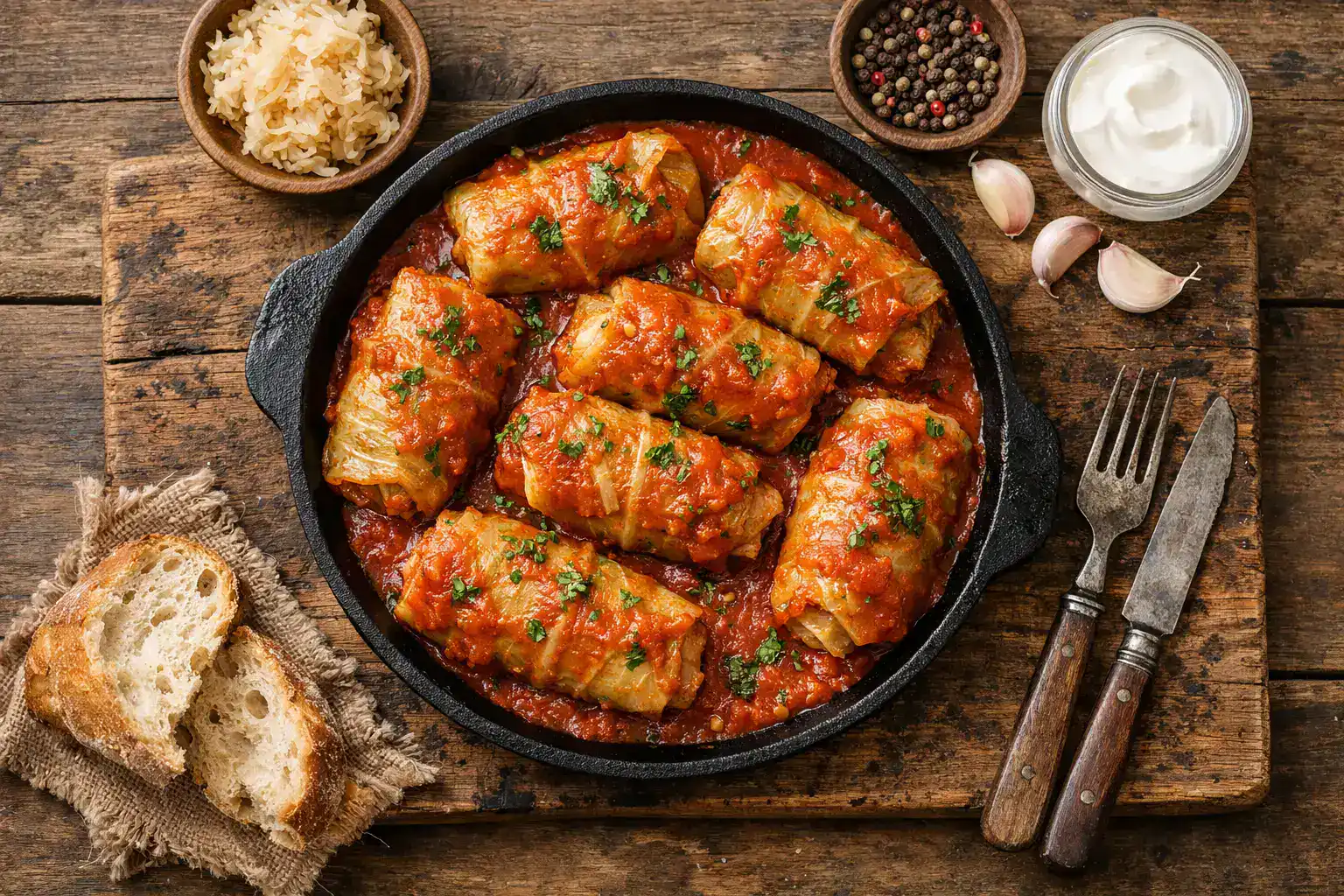
Quick Nutrition Facts
Per 2 Rolls (200g)
| Nutrient | Amount |
|---|---|
| Calories | 280 kcal |
| Protein | 15g |
| Carbohydrates | 22g |
| Fiber | 3g |
| Sugars | 4g |
| Fat | 14g |
| Saturated Fat | 5g |
| Iron | 2.4mg |
| Vitamin C | 18mg |
| Sodium | 520mg |
Macronutrient Breakdown
 ChatGPT
  Claude
  AI Mode
  Perplexity
NUTRITIONIST INSIGHT
Golombki offer a rare combination of comfort food satisfaction with balanced macros. The cabbage wrapper provides fiber and vitamin C while keeping calories moderate. For a lighter version, increase the cabbage-to-filling ratio.
Myth Busters
MYTH #1: Stuffed Cabbage Rolls Are Unhealthy Comfort Food
TRUTH: Golombki are actually a balanced meal. With 15g protein, 3g fiber, and vegetables providing vitamin C and K, they're nutritionally superior to many comfort foods. The cabbage wrapper adds nutrients without excess calories.
MYTH #2: Cabbage Rolls Are Too High in Carbs
TRUTH: Two golombki contain only 22g carbs - less than a single slice of bread. The combination of protein, fat, and fiber slows glucose absorption, making them more blood sugar-friendly than high-carb alternatives.
MYTH #3: You Can't Eat Golombki on a Diet
TRUTH: At 140 calories per roll with 7.5g protein, golombki provide excellent satiety. The protein and fiber content keeps you fuller longer. Portion control (2 rolls) with extra vegetables makes them diet-compatible.
MYTH #4: Stuffed Cabbage Has No Nutritional Value
TRUTH: Golombki deliver iron from beef (13% DV per serving), vitamin C from cabbage, B vitamins for energy metabolism, and complete protein for muscle maintenance. They're a nutrient-dense complete meal.
MYTH #5: Cabbage Rolls Are Hard to Digest
TRUTH: Cooking softens cabbage fiber, making it easier to digest than raw cabbage. The slow-cooking process breaks down tough fibers while retaining nutrients. If you have digestive sensitivities, start with one roll and chew thoroughly.
NutriScore by Health Goals
| Health Goal | NutriScore | Why This Score? |
|---|---|---|
| Weight Loss |  | 140 cal/roll, high protein (15g) promotes satiety. Choose tomato sauce over cream, limit to 2 rolls. |
| Muscle Gain | | Complete protein from beef, carbs for energy. Good post-workout meal with balanced macros. |
| Diabetes Management | | Protein and fat slow glucose absorption. Use brown rice, limit portions, pair with non-starchy vegetables. |
| PCOS Management | | Balanced macros support insulin sensitivity. Choose lean beef, reduce rice portion. |
| Pregnancy Nutrition |  | Iron from beef supports blood production, folate from cabbage aids development. Ensure meat is thoroughly cooked. |
| Viral/Flu Recovery | | Easy to digest, provides protein for immune function, vitamin C from cabbage and tomatoes supports recovery. |
PERSONALIZED NUTRITION
Track your meals with NutriScan for personalized NutriScores based on your specific health goals!
Blood Sugar Response to Golombki
Understanding how golombki affect blood glucose helps optimize meal timing and portions.
Typical Glucose Response Curve
This chart shows typical blood glucose response for general healthy individuals. Individual responses may vary. Not medical advice.
How to Flatten the Spike
Pairing carbs with protein and fat slows glucose absorption:
- Increase protein ratio - Use leaner beef or add extra meat to filling
- Reduce rice - Cut rice by half, add more vegetables to filling
- Add fiber - Serve with a side salad or sauerkraut
- Choose brown rice - Swap white rice for brown rice or cauliflower rice
Golombki already have a favorable glucose response due to their balanced macro profile.
Cultural Significance
Golombki (also spelled gołąbki, meaning "little pigeons") are a cornerstone of Polish cuisine with roots spanning centuries.
In Poland:
- Traditional Sunday dinner and holiday staple
- Served at weddings, Christmas Eve (Wigilia), and Easter celebrations
- Each family has their own recipe passed through generations
- Regional variations include mushroom-based vegetarian versions
Eastern European Heritage:
- Similar dishes exist across Eastern Europe: Ukrainian holubtsi, Russian golubtsy
- Reflects the agricultural tradition of cabbage cultivation in cold climates
- Represents the practical wisdom of wrapping precious meat in abundant vegetables
Global Spread:
- Polish immigrants brought golombki to America, Canada, and Australia
- Known as "stuffed cabbage" or "pigs in a blanket" in English-speaking countries
- Modern variations include Greek dolmades, Middle Eastern mahshi
Compare & Substitute
Golombki vs Similar Dishes (Per Serving)
| Nutrient | Golombki (2 rolls) | Dolmades (6 pieces) | Cabbage Soup | Meatballs (4 pcs) |
|---|---|---|---|---|
| Calories | 280 kcal | 240 kcal | 150 kcal | 320 kcal |
| Carbs | 22g | 28g | 18g | 8g |
| Fiber | 3g | 3g | 4g | 1g |
| Protein | 15g | 8g | 10g | 20g |
| Fat | 14g | 10g | 6g | 24g |
| Iron | 2.4mg | 1.8mg | 1.5mg | 2.8mg |
| Best For | Balanced meal | Lower calorie | Weight loss | High protein |
Frequently Asked Questions
How many calories are in golombki?
Two traditional golombki contain approximately 280 calories. A single roll averages 140 calories with 7.5g protein. Calorie content varies based on meat-to-rice ratio, sauce type, and portion size.
Variations:
- With cream sauce: +50-80 calories
- Vegetarian (mushroom): 180-200 calories per 2 rolls
- Extra-lean beef: 240-260 calories per 2 rolls
Are golombki healthy?
Yes, golombki are a nutritious complete meal. They provide balanced macros (protein, carbs, fat), essential nutrients (iron, vitamin C, B vitamins), and fiber from cabbage.
Health highlights:
- Complete protein from beef supports muscle maintenance
- Cabbage provides fiber and vitamin C
- Tomato sauce adds lycopene antioxidants
- Satisfying meal that prevents overeating
Can diabetics eat golombki?
Diabetics can enjoy golombki with modifications. The protein and fat content helps moderate blood sugar response compared to high-carb meals.
Tips for diabetics:
- Limit to 1-2 rolls per meal
- Choose brown rice or cauliflower rice filling
- Pair with non-starchy vegetables
- Avoid sweet tomato sauces
- Monitor blood sugar 2 hours after eating
How much protein is in stuffed cabbage rolls?
Two golombki provide 15g of protein, primarily from ground beef. This represents about 30% of daily protein needs for sedentary adults.
Protein optimization:
- Use 90% lean beef for higher protein-to-fat ratio
- Add extra meat to filling
- Serve with Greek yogurt or cottage cheese
What are the main health benefits of golombki?
Key Benefits:
- Complete Protein: 15g supports muscle maintenance and satiety
- Iron: 2.4mg (13% DV) supports blood health and energy
- Vitamin C: 18mg from cabbage and tomatoes for immunity
- Fiber: 3g supports digestive health
- B Vitamins: Energy metabolism support
- Balanced Macros: Prevents blood sugar spikes
Are golombki good for weight loss?
Golombki can support weight loss when portion-controlled. At 140 calories per roll with satisfying protein content, they prevent overeating.
Weight loss tips:
- Limit to 2 rolls (280 calories)
- Choose tomato sauce over cream sauce
- Add a large side salad
- Use extra-lean beef
- Increase vegetable content in filling
How should I store and reheat golombki?
Storage:
- Refrigerate within 2 hours of cooking
- Store in airtight container for 3-4 days
- Freeze for up to 3 months
Reheating:
- Microwave: 2-3 minutes, covered
- Oven: 350°F for 15-20 minutes with sauce
- Stovetop: Simmer in sauce for 10 minutes
Golombki often taste better the next day as flavors meld together.


Similar Nutritious Foods
4505 Chicharrones Classic Chili Salt
7 Eleven Japan Crispy Corn Cheese
Explore More Nutrition Tools & Resources
AI Calorie Counter App - Snap a Photo, Get Macros
AI Nutritionist App That Reads Your Logged Meals
Best Protein Supplements for Women
Bulking Meal Plan App That Sets Your Surplus
ChatGPT Calorie Counter Alternative That Keeps the Total
ChatGPT Diet Plan Alternative That Tracks What You Eat
ChatGPT Weight Loss Coach Alternative With a Food Log
Fast Food Calorie Counter App That Reads the Tray
Free Calorie Tracker App with AI Photo Scans | NutriScan
Indian Diet Plan App With Veg and Non Veg Meals
Indian Food Calorie Calculator - Get Instant Nutrition Facts for Desi Meals — 2026
Intermittent Fasting for Women, Timer and Meal Log App
Intermittent Fasting Tracker App - Free Fasting Timer
Macro Tracker App That Fills the Numbers From a Photo
Mediterranean Diet Meal Plan App That Counts the Oil
Micronutrient Tracker App for Vitamins and Minerals
MyFitnessPal Alternative That Stays Free | NutriScan
NutriScore App: A Free Grade on Every Meal | NutriScan
Nutrition Label Scanner App for the Amount You Ate
Second Trimester Protein Guide
Vegetarian Meal Plan App With a Protein Target
Voice Calorie Counter - Speak to Track Meals Hands-Free
Water and Calorie Tracker App - Free Water Log