Instant Coffee: Calories, Nutrition and Health Benefits
 ChatGPT
 Claude
 AI Mode
 Perplexity
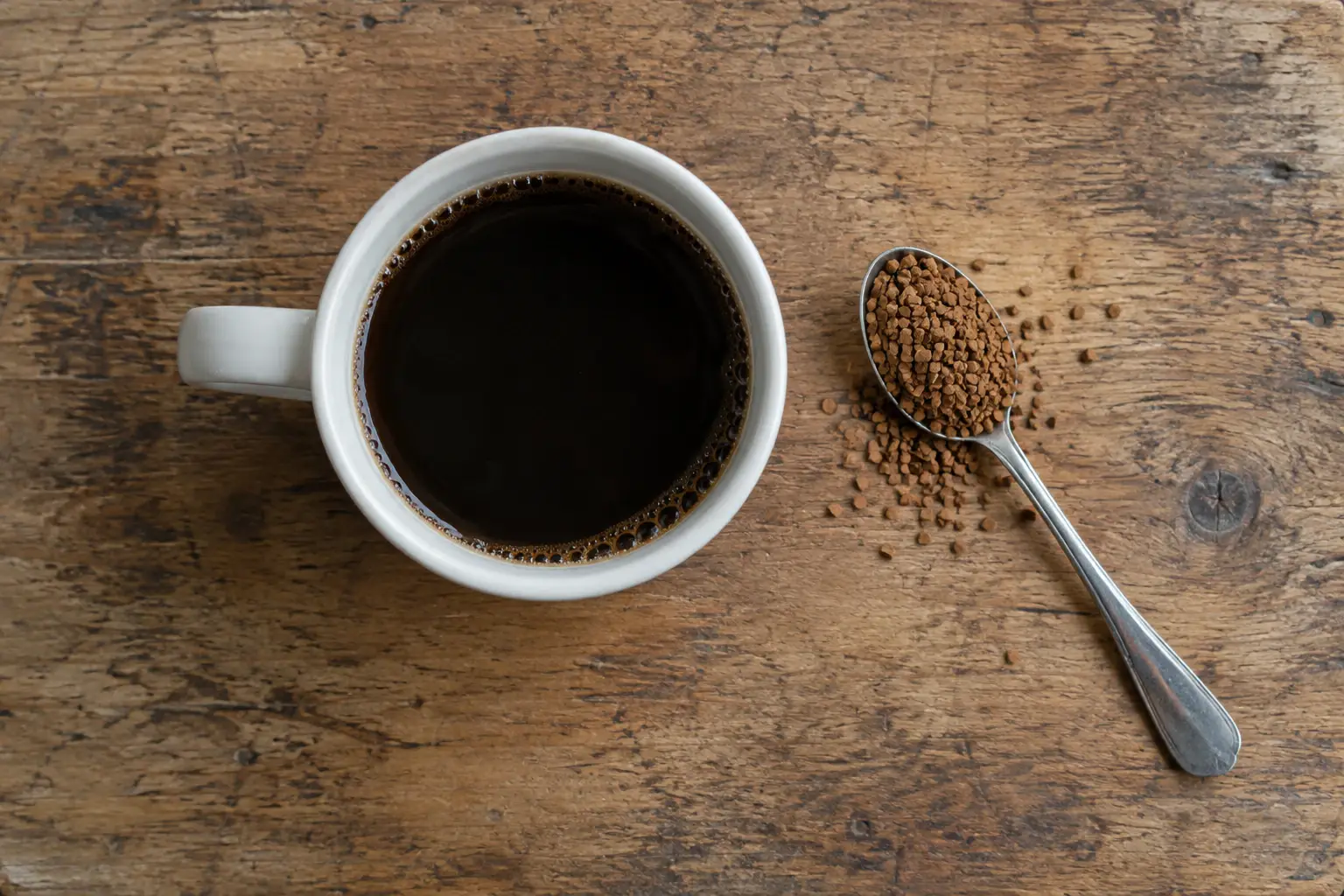
A teaspoon of instant coffee (2 g of granules, one mug) has about 7 calories, 0.2 g protein, 1.5 g carbs and almost no fat, fiber or sugar. The 353 kcal per 100 g figure only describes the dry powder; nobody eats 100 g. A mug of black instant coffee carries roughly 50-90 mg of caffeine. The calories that matter in a mug of instant come from milk, sugar and flavored sachets, not from the coffee itself.
Quick Nutrition Facts
Per 1 teaspoon dry granules (2 g), makes 1 mug
| Nutrient | Amount |
|---|---|
| Calories | 7 kcal |
| Protein | 0.2g |
| Carbohydrates | 1.5g |
| Fiber | 0g |
| Sugars | 0g |
| Fat | 0g |
| Sodium | 0.7 mg |
Macronutrient Breakdown
NUTRITIONIST'S INSIGHT
Black instant coffee is about as close to zero calories as a drink gets, so the useful question is what goes in next to it. Two teaspoons of sugar add around 32 kcal, a splash of 2% milk adds 10 to 15, and a 3-in-1 sachet can add 70 to 100. The caffeine is moderate: Nescafé puts a 2 g serve at 50-90 mg, below filter coffee, so three mugs sit near the 200 mg a day pregnancy limit rather than far under it. The dry powder is 12% protein and 75% carbohydrate by weight, which looks odd on a label but is irrelevant at 2 g a mug.
Myth Busters
MYTH #1: Instant coffee has 353 calories, so it is fattening
TRUTH: The 353 kcal figure is per 100 g of dry powder. One 2 g teaspoon is about 7 kcal, and you would need to eat 50 teaspoons of dry granules to reach 353 kcal. A mug of black instant coffee is effectively a 7-calorie drink. USDA FoodData Central: Beverages, coffee, instant, regular, powder (FDC ID 171893); NESCAFÉ Original Instant Coffee, Nescafé UK & IE (2 g serve, 50-90 mg caffeine)
MYTH #2: Instant coffee has more caffeine than fresh coffee
TRUTH: Nescafé states 50-90 mg of caffeine per 2 g serve, while UK pregnancy guidance based on the NHS puts a mug of instant at about 100 mg and a mug of filter coffee at about 140 mg. A typical mug of instant has less caffeine than filter, not more. NESCAFÉ Original Instant Coffee, Nescafé UK & IE (2 g serve, 50-90 mg caffeine); Limiting your caffeine intake in pregnancy, Tommy's (NHS 200 mg guidance)
MYTH #3: Coffee raises your blood sugar because it contains carbs
TRUTH: Black coffee has under 2 g of carbohydrate per mug. Short-term caffeine can reduce insulin sensitivity a little, but long-term coffee drinking is linked to a lower risk of type 2 diabetes in meta-analyses, for both caffeinated and decaffeinated coffee. Effects of coffee consumption on glucose metabolism, PMC (PMC6544578); Coffee and Lower Risk of Type 2 Diabetes: Arguments for a Causal Relationship, PMC (PMC8066601); Caffeinated and Decaffeinated Coffee Consumption and Risk of Type 2 Diabetes, PMC (PMC3898757)
MYTH #4: Decaf instant is calorie-free
TRUTH: Decaf granules are still roasted and dried coffee, so a teaspoon carries roughly the same 6-7 kcal as regular. The calories are negligible, but the number is not zero. USDA FoodData Central: Beverages, coffee, instant, regular, powder (FDC ID 171893)
MYTH #5: Instant coffee is not real coffee
TRUTH: Instant coffee is brewed coffee that has been freeze-dried or spray-dried into granules. USDA lists it as a coffee product with the same protein, potassium and caffeine profile per gram of solids as other coffee powders. USDA FoodData Central: Beverages, coffee, instant, regular, powder (FDC ID 171893); Nutrition facts for beverages, coffee, instant, regular, powder, NutritionDataHub (USDA mirror)
NutriScore by Health Goals
| Health Goal | NutriScore | Why This Score? |
|---|---|---|
| Weight loss |  | About 7 kcal per mug of black coffee, so it fits any calorie target. Milk, sugar and 3-in-1 sachets are where the calories come from. USDA FoodData Central: Beverages, coffee, instant, regular, powder (FDC ID 171893) |
| Muscle building |  | 0.2 g protein per teaspoon is nothing. It works as a pre-workout caffeine source, not a protein source. USDA FoodData Central: Beverages, coffee, instant, regular, powder (FDC ID 171893); NESCAFÉ Original Instant Coffee, Nescafé UK & IE (2 g serve, 50-90 mg caffeine) |
| Heart health |  | Roughly 1 mg of sodium per mug and no fat. The drink adds no saturated fat unless you add cream. USDA FoodData Central: Beverages, coffee, instant, regular, powder (FDC ID 171893); Coffee and Lower Risk of Type 2 Diabetes: Arguments for a Causal Relationship, PMC (PMC8066601) |
| Blood sugar management | | Under 2 g carbs per mug, so no meaningful glucose rise. Caffeine can briefly lower insulin sensitivity, so a very strong mug on an empty stomach affects some people more. Effects of coffee consumption on glucose metabolism, PMC (PMC6544578); Caffeinated and Decaffeinated Coffee Consumption and Risk of Type 2 Diabetes, PMC (PMC3898757) |
| Gut health |  | No fiber and no prebiotics. Coffee stimulates gut motility in some people, which helps some and irritates others. USDA FoodData Central: Beverages, coffee, instant, regular, powder (FDC ID 171893) |
| Energy | | 50-90 mg caffeine per 2 g serve gives a mild lift with no sugar crash, as long as you keep to two or three mugs. NESCAFÉ Original Instant Coffee, Nescafé UK & IE (2 g serve, 50-90 mg caffeine); Limiting your caffeine intake in pregnancy, Tommy's (NHS 200 mg guidance) |
PERSONALIZED NUTRITION
Track your meals with NutriScan for personalized NutriScores based on your specific health goals!
Blood Sugar Response to Instant Coffee
Drunk black, instant coffee barely moves blood glucose: only 1.5 g of carbohydrate reaches the gut. Some people see a small, brief dip in insulin sensitivity from the caffeine at 45 to 60 minutes, and levels are back at baseline by about 90 minutes. USDA FoodData Central: Beverages, coffee, instant, regular, powder (FDC ID 171893); Effects of coffee consumption on glucose metabolism, PMC (PMC6544578)
Typical Glucose Response Curve
Not medical advice
How to flatten the spike
- Drink it black or with a splash of milk. Each teaspoon of sugar adds about 4 g of carbs and is the only part that moves glucose.
- Skip 3-in-1 sachets if you track carbs: they carry roughly 10-15 g of sugar per serve.
- Have it with food rather than on an empty stomach if caffeine makes you shaky or spikes your glucose readings.
- Stop at two mugs a day if you are pregnant, to stay under 200 mg of caffeine.
Cultural Significance
Instant coffee is one of the most common ways people drink coffee worldwide. Nescafé launched in 1938 in Switzerland, instant coffee went into soldiers' rations in the Second World War, and today it is an everyday home and office coffee in countries from the UK and Germany to Mexico, Brazil, Japan and much of Asia. The routine is the same almost everywhere: a heaped teaspoon, hot water, a splash of milk. Freeze-dried premium ranges such as Nescafé Gold sit alongside budget store-brand granules, and the shared 2 g serve makes comparing them straightforward.
Compare & Substitute
Instant Coffee vs Similar Foods
| Nutrient | Black filter coffee (240 ml) | Decaf instant coffee (2 g serve) | Black tea (240 ml, no milk) | Instant latte sachet (1 serve) |
|---|---|---|---|---|
| Calories | 2 kcal | 6 kcal | 2 kcal | 90 kcal |
| Protein | 0.3g | 0.2g | 0g | 1.5g |
| Carbohydrates | 0g | 1.4g | 0.7g | 15g |
| Fat | 0g | 0g | 0g | 2.5g |
Frequently Asked Questions
How many calories are in a teaspoon of instant coffee?
A 2 g teaspoon of instant coffee has about 7 calories, based on USDA data of 353 kcal per 100 g. A level 1 g teaspoon is closer to 4 kcal. Black instant in a mug stays at that number.
How many calories are in a mug of instant coffee with milk and sugar?
Black instant is about 7 kcal. A splash of 2% milk adds roughly 10-15 kcal and each level teaspoon of sugar adds about 16 kcal, so a mug with milk and two sugars lands near 50-55 kcal.
How much caffeine is in a mug of instant coffee?
Nescafé lists 50-90 mg of caffeine per 2 g serve for Original and Gold. UK pregnancy guidance based on the NHS counts about 100 mg per mug of instant coffee.
Is instant coffee OK in pregnancy?
Yes, within the 200 mg a day caffeine limit used by both the NHS and the American College of Obstetricians and Gynecologists. That is about two mugs of instant coffee, counting caffeine from tea, cola and chocolate too.
Does instant coffee break a fast?
At about 7 kcal and 1.5 g of carbs a mug, black instant coffee is within what most intermittent fasting plans allow. Strict clean-fast definitions that allow zero calories may still count it, so milk and sugar are the clear no.
Is instant coffee worse for you than filter coffee?
Not on calories or macros. Both are near zero black. Long-term coffee drinking, caffeinated or decaf, is linked to a lower type 2 diabetes risk in meta-analyses, and those studies include instant coffee drinkers.


Similar Nutritious Foods
4505 Chicharrones Classic Chili Salt
7 Eleven Japan Crispy Corn Cheese
Explore More Tools
AI Calorie Counter App - Snap a Photo, Get Macros
AI Nutritionist App That Reads Your Logged Meals
Best Protein Supplements for Women
Bulking Meal Plan App That Sets Your Surplus
ChatGPT Calorie Counter Alternative That Keeps the Total
ChatGPT Diet Plan Alternative That Tracks What You Eat
ChatGPT Weight Loss Coach Alternative With a Food Log
Fast Food Calorie Counter App That Reads the Tray
Free Calorie Tracker App with AI Photo Scans | NutriScan
Indian Diet Plan App With Veg and Non Veg Meals
Indian Food Calorie Calculator - Get Instant Nutrition Facts for Desi Meals — 2026
Intermittent Fasting for Women, Timer and Meal Log App
Intermittent Fasting Tracker App - Free Fasting Timer
Macro Tracker App That Fills the Numbers From a Photo
Mediterranean Diet Meal Plan App That Counts the Oil
Micronutrient Tracker App for Vitamins and Minerals
MyFitnessPal Alternative That Stays Free | NutriScan
NutriScore App: A Free Grade on Every Meal | NutriScan
Nutrition Label Scanner App for the Amount You Ate
Second Trimester Protein Guide
Vegetarian Meal Plan App With a Protein Target
Voice Calorie Counter - Speak to Track Meals Hands-Free
Water and Calorie Tracker App - Free Water Log