Japanese Sweet Potato Calories: 90 kcal per 100g, Carbs and Nutrition
 ChatGPT
 Claude
 AI Mode
 Perplexity
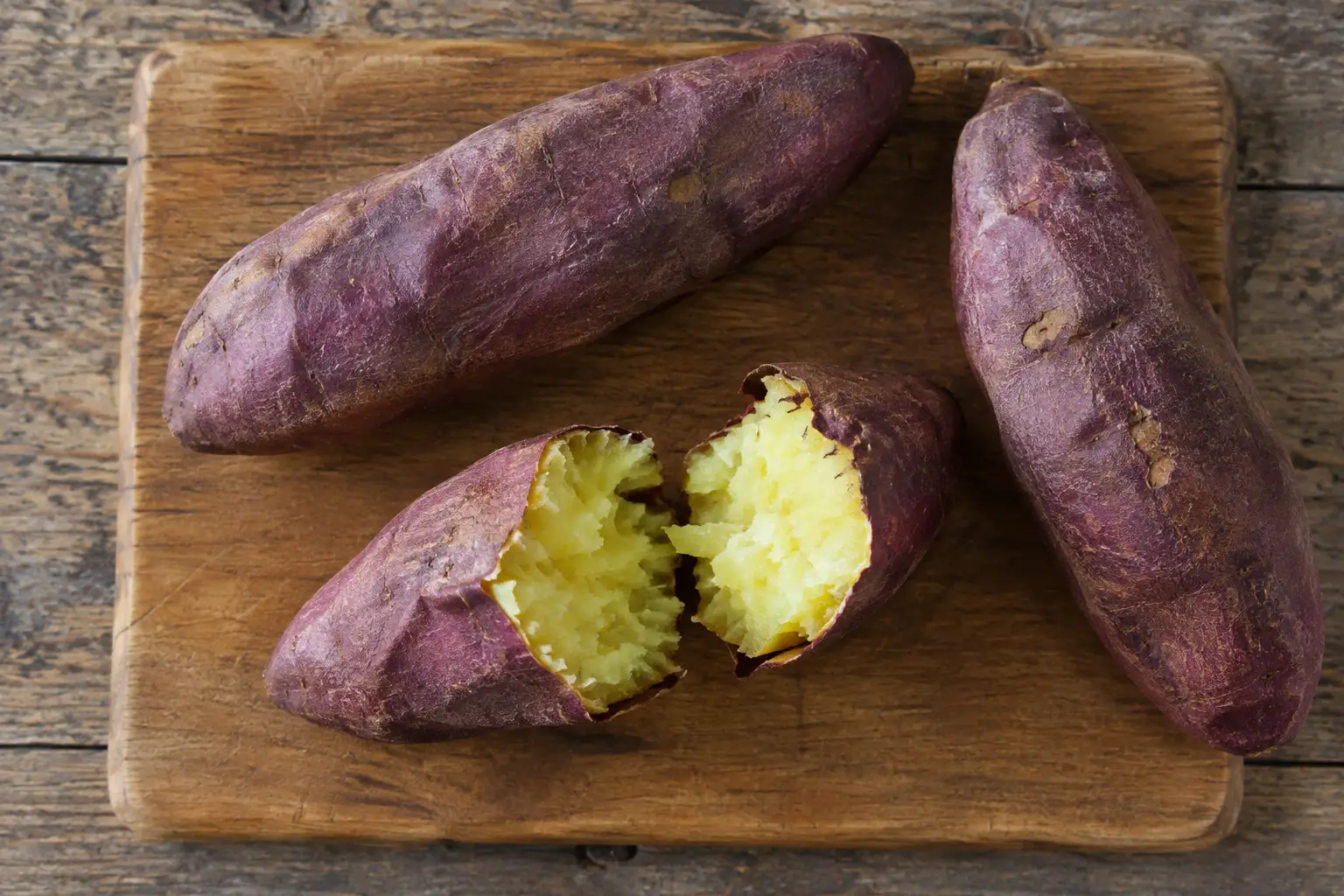
100 g of baked Japanese sweet potato (satsumaimo) has about 90 calories, 20.7g carbs, 3.3g fiber and 2g protein, with almost no fat. A medium one of 150 to 200 g lands near 135 to 180 calories. It is a starchy root with a moderate glycemic index, so portion size matters more than the variety.
Quick Nutrition Facts
Per 100 g baked Japanese sweet potato, flesh and skin
| Nutrient | Amount |
|---|---|
| Calories | 90 kcal |
| Protein | 2g |
| Carbohydrates | 20.7g |
| Fiber | 3.3g |
| Sugars | 6.5g |
| Fat | 0.2g |
| Sodium | 36 mg |
Macronutrient Breakdown

NUTRITIONIST'S INSIGHT
Satsumaimo is the purple-skinned, yellow-fleshed sweet potato sold as yaki-imo in Japan. Per 100 g it is close to the orange sweet potato, about 90 kcal baked, so the Japanese label does not make it a lower-calorie food. What changes is texture: the flesh is drier and denser, which makes it filling and easy to overeat in two or three potatoes. Treat one medium potato as a starch serving, leave the skin on for the fiber, and pair it with protein such as eggs, fish or tofu. The sweetness comes from maltose formed during baking, which is why slow-roasted ones taste like dessert.
Myth Busters
MYTH #1: Japanese sweet potatoes are much lower in calories than orange sweet potatoes.
TRUTH: Per 100 g baked they are about the same, around 90 kcal. The difference people notice is a denser, drier texture and a chestnut-like flavor, not a calorie gap. USDA FoodData Central: Sweet potato, cooked, baked in skin, flesh, without salt (FDC 168483); Eat This Much: Japanese sweet potato, boiled (100 g)
MYTH #2: A sweet potato is a free food because it is a vegetable.
TRUTH: It is a starchy root with about 21g of carbs per 100 g. A medium baked potato carries 30 to 40g of carbs, which counts as a full carb serving. USDA FoodData Central: Sweet potato, cooked, baked in skin, flesh, without salt (FDC 168483)
MYTH #3: Sweet potatoes are low glycemic however you cook them.
TRUTH: Cooking method changes the number. In a study of the Beauregard variety, raw flesh had a glycemic index near 32, while baked, steamed and microwaved flesh scored in the mid 60s. Baking raises it because heat breaks starch into fast-absorbing sugars. NC State: Characterization of the Glycemic Index of Raw and Thermally Processed Sweet Potatoes (Ipomoea batatas L.); USDA ARS: Sweetpotato glycemic index publication
MYTH #4: People with diabetes must avoid sweet potatoes.
TRUTH: They can fit in a diabetes meal plan in a measured portion. The fiber and slower digestion make them a better pick than many refined starches, and eating the skin and adding protein blunts the rise. Healthline: Sweet potatoes and diabetes
NutriScore by Health Goals
| Health Goal | NutriScore | Why This Score? |
|---|---|---|
| Weight Loss |  | About 90 kcal per 100 g with 3.3g fiber, so it is filling for its calories. Portion control is the only catch, since a large yaki-imo is easy to finish. USDA FoodData Central: Sweet potato, cooked, baked in skin, flesh, without salt (FDC 168483) |
| Muscle Gain |  | Only 2g protein per 100 g, but a good whole-food carb to refuel training when paired with a protein source. USDA FoodData Central: Sweet potato, cooked, baked in skin, flesh, without salt (FDC 168483) |
| Diabetes Management | | Moderate glycemic index when baked, and about 21g of carbs per 100 g. Works in a measured portion with protein and skin on. NC State: Characterization of the Glycemic Index of Raw and Thermally Processed Sweet Potatoes (Ipomoea batatas L.); Healthline: Sweet potatoes and diabetes |
| Heart Health |  | Almost no fat, no cholesterol, and fiber and potassium in a whole food with minimal sodium. USDA FoodData Central: Sweet potato, cooked, baked in skin, flesh, without salt (FDC 168483); Eat This Much: Japanese sweet potato, boiled (100 g) |
| PCOS Management | | A fiber-containing starch is better than refined carbs, but a baked portion still raises glucose, so keep it to one medium potato with protein. Healthline: Sweet potato glycemic index |
PERSONALIZED NUTRITION
Track your meals with NutriScan for personalized NutriScores based on your specific health goals!
Blood Sugar Response to Japanese Sweet Potato
A 100 g baked Japanese sweet potato delivers about 21g of carbs with 3g of fiber. Glucose rises over the first 30 to 60 minutes and returns near baseline by about two hours. A whole 200 g potato roughly doubles the load, so the peak is higher and lasts longer. NC State: Characterization of the Glycemic Index of Raw and Thermally Processed Sweet Potatoes (Ipomoea batatas L.); USDA ARS: Sweetpotato glycemic index publication
Estimated Blood Sugar Response (100 g baked)
Modeled estimate for a person without diabetes, not a measured trace. Individual responses vary.
How to flatten the spike
- Eat the skin and keep the portion to one small to medium potato.
- Pair it with protein or fat such as eggs, fish, tofu or yogurt.
- Cool it and eat it the next day or boil it instead of baking, which gives a lower glycemic response than hot baked.
- Take a 10 to 15 minute walk after the meal.
Cultural Significance
Satsumaimo is named after Satsuma, the old domain in southern Kyushu that grew it widely after the sweet potato reached Japan in the early 1600s. It helped feed people through famines and became a staple of home cooking. Roasted yaki-imo sold from trucks and street stalls is a Japanese autumn and winter ritual, and the call of the vendor is a familiar sound in the cold months. Today it also appears in daigaku-imo candied snacks, tempura and sweet potato lattes.
Compare & Substitute
Japanese Sweet Potato vs Similar Foods
| Nutrient | Orange sweet potato, baked in skin (100 g) | White potato, baked with skin (100 g) | Pumpkin, boiled (100 g) | Cauliflower, boiled (100 g) |
|---|---|---|---|---|
| Calories | 90 kcal | 93 kcal | 20 kcal | 23 kcal |
| Protein | 2g | 2.5g | 0.7g | 1.8g |
| Carbohydrates | 20.7g | 21.2g | 4.9g | 4.1g |
| Fat | 0.2g | 0.1g | 0.1g | 0.5g |
Frequently Asked Questions
How many calories are in a Japanese sweet potato?
About 90 calories per 100 g baked. A medium potato of 150 to 200 g has roughly 135 to 180 calories.
Is Japanese sweet potato healthier than orange sweet potato?
They are close on calories, carbs and fiber. The orange type has far more beta-carotene, while the Japanese type has a drier, sweeter, chestnut-like texture. Neither is clearly healthier.
How many carbs are in a Japanese sweet potato?
About 20.7g of carbs per 100 g baked, including 3.3g of fiber. A medium potato has 30 to 40g of carbs.
Is Japanese sweet potato good for diabetes?
It can fit in a portion-controlled meal. Baked sweet potato has a moderate glycemic index, so eat the skin, keep to one small potato and add protein.
Can I eat the skin of a Japanese sweet potato?
Yes. The skin is edible and holds extra fiber. Scrub it well before baking.


Similar Nutritious Foods
4505 Chicharrones Classic Chili Salt
7 Eleven Japan Crispy Corn Cheese
Explore More Tools
AI Calorie Counter App - Snap a Photo, Get Macros
AI Nutritionist App That Reads Your Logged Meals
Best Protein Supplements for Women
Bulking Meal Plan App That Sets Your Surplus
ChatGPT Calorie Counter Alternative That Keeps the Total
ChatGPT Diet Plan Alternative That Tracks What You Eat
ChatGPT Weight Loss Coach Alternative With a Food Log
Fast Food Calorie Counter App That Reads the Tray
Free Calorie Tracker App with AI Photo Scans | NutriScan
Indian Diet Plan App With Veg and Non Veg Meals
Indian Food Calorie Calculator - Get Instant Nutrition Facts for Desi Meals — 2026
Intermittent Fasting for Women, Timer and Meal Log App
Intermittent Fasting Tracker App - Free Fasting Timer
Macro Tracker App That Fills the Numbers From a Photo
Mediterranean Diet Meal Plan App That Counts the Oil
Micronutrient Tracker App for Vitamins and Minerals
MyFitnessPal Alternative That Stays Free | NutriScan
NutriScore App: A Free Grade on Every Meal | NutriScan
Nutrition Label Scanner App for the Amount You Ate
Second Trimester Protein Guide
Vegetarian Meal Plan App With a Protein Target
Voice Calorie Counter - Speak to Track Meals Hands-Free
Water and Calorie Tracker App - Free Water Log