Kartoffelbrot: German Potato Bread Calories & Nutrition
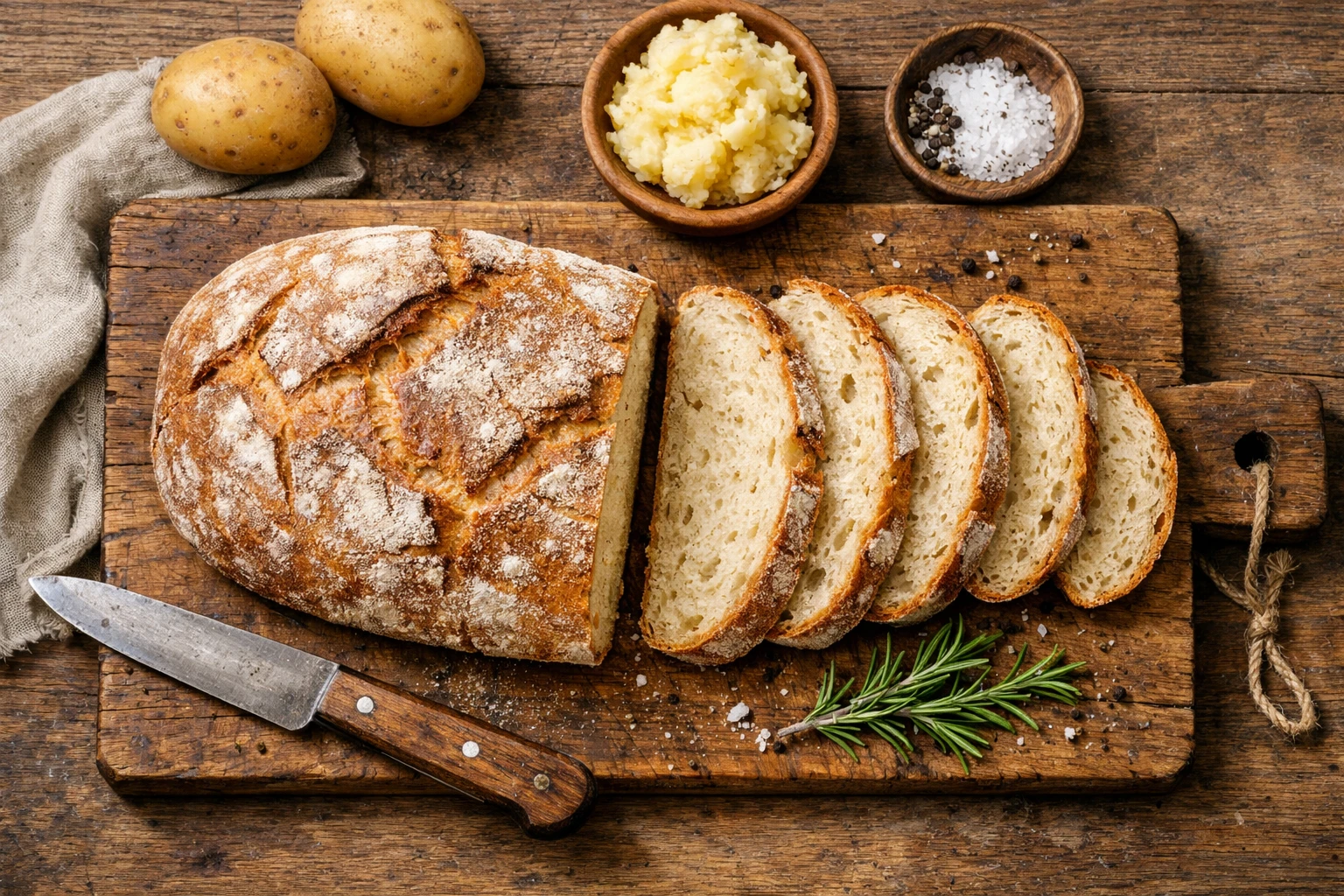
Traditional German bread enriched with potatoes for a uniquely moist, soft texture and extended freshness.
Quick Nutrition Facts
Per 100g of Kartoffelbrot
| Nutrient | Amount |
|---|---|
| Calories | 230 kcal |
| Protein | 6g |
| Carbohydrates | 45g |
| Fiber | 3.5g |
| Sugars | 2g |
| Fat | 3g |
| Sodium | 480mg |
| Potassium | 180mg |
| Iron | 2.1mg |
| Vitamin B6 | 0.15mg |
Macronutrient Breakdown
 ChatGPT
  Claude
  AI Mode
  Perplexity
NUTRITIONIST INSIGHT
Kartoffelbrot's potato content creates a moister crumb and longer shelf life than wheat-only breads. The resistant starch from potatoes supports gut health and provides sustained energy release.
Myth Busters
MYTH #1: Potato Bread Is Less Healthy Than Regular Bread
TRUTH: Kartoffelbrot provides similar nutrition to whole wheat bread with added moisture and palatability. Studies show potato-enriched bread can support weight management when consumed in appropriate portions. The potato content adds vitamin B6, potassium, and fiber without significantly increasing calories.
MYTH #2: Potato Bread Spikes Blood Sugar More
TRUTH: Kartoffelbrot's glycemic impact depends on preparation and pairing. While potatoes have a higher GI, bread made with potato-wheat blends shows moderate glucose response when eaten with protein or fat. Choose whole grain versions and monitor portion size.
MYTH #3: The Potato Content Makes It High Calorie
TRUTH: At 230 calories per 100g, Kartoffelbrot is comparable to most artisan breads. The potato adds moisture without excess fat, actually helping you feel satisfied with less bread. Two slices (100g) fit easily into a balanced diet.
MYTH #4: Kartoffelbrot Goes Stale Faster
TRUTH: The opposite is true. Potato's moisture-retaining properties keep Kartoffelbrot fresh 2-3 days longer than wheat-only breads. The starch in potatoes slows retrogradation (the staling process), maintaining soft texture without preservatives.
MYTH #5: It's Just Regular Bread with Potato Flavor
TRUTH: Authentic Kartoffelbrot incorporates 15-30% cooked potato into the dough, fundamentally changing texture, moisture, shelf life, and nutritional profile. It's a distinct bread category in German baking, not a flavored variant.
NutriScore by Health Goals
| Health Goal | NutriScore | Why This Score? |
|---|---|---|
| Weight Loss |  | 230 calories, 3.5g fiber provides satiety. Moist texture prevents overeating. Limit to 1-2 slices daily. |
| Muscle Gain | | Good carb source (45g) for post-workout glycogen; 6g protein per 100g. Pair with eggs or cheese. |
| Diabetes Management |  | Moderate carbs require portion control. Choose whole grain versions, eat 1 slice at a time, pair with protein. |
| PCOS Management | | Carb-dense; limit to 1 slice daily. Opt for whole grain with seeds for lower glycemic impact. |
| Pregnancy Nutrition |  | Rich in B vitamins for fetal development; easily digestible. Provides sustained energy without nausea-triggering heaviness. |
| Viral/Flu Recovery | | Easy to digest, gentle on stomach, provides quick energy. Soft texture ideal when appetite is low. |
PERSONALIZED NUTRITION
Track your meals with NutriScan for personalized NutriScores based on your specific health goals!
Blood Sugar Response to Kartoffelbrot
Understanding how Kartoffelbrot affects blood glucose helps you make informed meal decisions.
Typical Glucose Response Curve
This chart shows typical blood glucose response for healthy individuals. Individual responses may vary. Not medical advice.
How to Flatten the Spike
Pairing Kartoffelbrot with protein or healthy fat slows glucose absorption:
- 🧀 German cheese (Tilsiter, Emmental) - Adds protein and fat
- 🥚 Boiled or scrambled eggs - Complete protein source
- 🥑 Avocado or hummus - Healthy fats and fiber
- 🥩 Cold cuts or smoked salmon - Traditional German pairing with protein
This combination reduces the glucose spike and extends energy release for 3-4 hours.
Cultural Significance
Kartoffelbrot emerged in 18th-century Germany when potatoes became a staple crop, revolutionizing bread-making traditions.
In Germany:
- Part of UNESCO-recognized German bread culture (3,000+ varieties)
- Originated in rural Bavaria and Saxony during grain shortages
- Traditional accompaniment to Abendbrot (evening meal)
- Often baked with sourdough for enhanced flavor and nutrition
- Modern versions include variations with onions, bacon, or seeds
Global Impact:
- Inspired potato bread traditions across Europe and North America
- Demonstrates sustainable use of leftover mashed potatoes
- Popular in artisan bakeries worldwide as specialty item
- Symbol of German baking ingenuity and resourcefulness
Compare & Substitute
Kartoffelbrot vs Similar Breads (Per 100g)
| Nutrient | 🥔 Kartoffelbrot | 🍞 Whole Wheat Bread | 🥖 White Baguette | 🥨 Pumpernickel |
|---|---|---|---|---|
| Calories | 230 kcal | 247 kcal | 274 kcal | 250 kcal |
| Carbs | 45g | 41g | 56g | 47g |
| Fiber | 3.5g | 6.8g | 2.4g | 7.5g |
| Protein | 6g | 13g | 9g | 8g |
| Fat | 3g | 3.4g | 3.2g | 3g |
| Iron | 2.1mg | 2.5mg | 3.8mg | 3.5mg |
| Moisture | High (soft crumb) | Medium | Low (crusty) | Medium |
| Shelf Life | 5-7 days | 3-4 days | 1-2 days | 7-10 days |
| Best For | Sandwiches, freshness | High fiber, protein | French meals, crust | Digestive health, fiber |
Frequently Asked Questions
Is Kartoffelbrot good for weight loss?
Yes, in moderation. At 230 calories and 3.5g fiber per 100g, Kartoffelbrot provides sustained fullness. The potato content adds moisture and palatability without excess fat, helping you feel satisfied with smaller portions.
Best practices: Limit to 1-2 slices (50-100g) daily; choose whole grain versions; pair with protein (eggs, cheese, lean meats); avoid heavy spreads like butter or cream cheese.
Can diabetics eat Kartoffelbrot?
Diabetics can eat Kartoffelbrot with careful planning. Choose whole grain versions with added seeds or fiber; eat 1 slice at a time (about 50g, 22g carbs); always pair with protein or healthy fat; monitor your individual glucose response 2 hours after eating.
Tips: Select darker, denser loaves; opt for sourdough versions (lower GI); avoid at breakfast if you experience morning glucose spikes; best consumed at lunch paired with salad and protein.
How much protein is in Kartoffelbrot?
Kartoffelbrot contains approximately 6g of protein per 100g. While moderate compared to whole wheat bread (13g), it excels in texture and moisture. For higher protein intake, pair with eggs, cheese, smoked fish, or cold cuts – traditional German combinations.
What makes Kartoffelbrot different from regular bread?
Kartoffelbrot incorporates 15-30% mashed or riced potatoes into wheat dough. This creates a moister, softer crumb; extends shelf life by 2-3 days; adds subtle sweetness; increases vitamin B6 and potassium; produces a denser, more satisfying texture than wheat-only breads.
The potato starch slows retrogradation (staling), keeping bread fresh longer without preservatives.
Is Kartoffelbrot gluten-free?
No, traditional Kartoffelbrot contains wheat flour and is not gluten-free. While potato content reduces the wheat percentage, gluten remains present. Celiac patients must avoid it unless specifically labeled gluten-free with alternative flours (rice, buckwheat, or gluten-free blends).
Some specialty bakeries offer gluten-free potato bread using certified GF flour blends.
How should I store Kartoffelbrot?
Store at room temperature in a bread box or paper bag for 5-7 days. The potato content naturally retains moisture, keeping bread fresh longer than wheat-only varieties. For longer storage: slice before freezing; freeze for up to 3 months; toast directly from frozen; avoid refrigeration (accelerates staling).
Pro tip: Wrap tightly in foil or freezer bags to prevent freezer burn.
When is the best time to eat Kartoffelbrot?
Depends on your goal:
- Weight Loss: Lunch with protein and vegetables; avoid evening carbs.
- Muscle Gain: Post-workout within 1 hour; breakfast for sustained energy.
- Diabetes: Lunch or early dinner, paired with protein; avoid breakfast if glucose-sensitive in morning.
- Energy: Breakfast or pre-workout (1-2 hours before); provides sustained carbs.
What are traditional ways to serve Kartoffelbrot?
German-style servings:
- Open-faced with cheese, tomato, cucumber (Abendbrot)
- Toasted with butter and jam for breakfast
- With smoked salmon, cream cheese, dill
- Alongside soups and stews
- Bread dumplings (Semmelknödel) from stale Kartoffelbrot
Modern variations: Avocado toast; grilled cheese; French toast; breadcrumbs for schnitzel coating.


Similar Nutritious Foods
4505 Chicharrones Classic Chili Salt
7 Eleven Japan Crispy Corn Cheese
Explore More Nutrition Tools & Resources
AI Calorie Counter App - Snap a Photo, Get Macros
AI Nutritionist App That Reads Your Logged Meals
Best Protein Supplements for Women
Bulking Meal Plan App That Sets Your Surplus
ChatGPT Calorie Counter Alternative That Keeps the Total
ChatGPT Diet Plan Alternative That Tracks What You Eat
ChatGPT Weight Loss Coach Alternative With a Food Log
Fast Food Calorie Counter App That Reads the Tray
Free Calorie Tracker App with AI Photo Scans | NutriScan
Indian Diet Plan App With Veg and Non Veg Meals
Indian Food Calorie Calculator - Get Instant Nutrition Facts for Desi Meals — 2026
Intermittent Fasting for Women, Timer and Meal Log App
Intermittent Fasting Tracker App - Free Fasting Timer
Macro Tracker App That Fills the Numbers From a Photo
Mediterranean Diet Meal Plan App That Counts the Oil
Micronutrient Tracker App for Vitamins and Minerals
MyFitnessPal Alternative That Stays Free | NutriScan
NutriScore App: A Free Grade on Every Meal | NutriScan
Nutrition Label Scanner App for the Amount You Ate
Second Trimester Protein Guide
Vegetarian Meal Plan App With a Protein Target
Voice Calorie Counter - Speak to Track Meals Hands-Free
Water and Calorie Tracker App - Free Water Log