Mandarin Orange: Calories, Nutrition and Health Benefits
 ChatGPT
 Claude
 AI Mode
 Perplexity
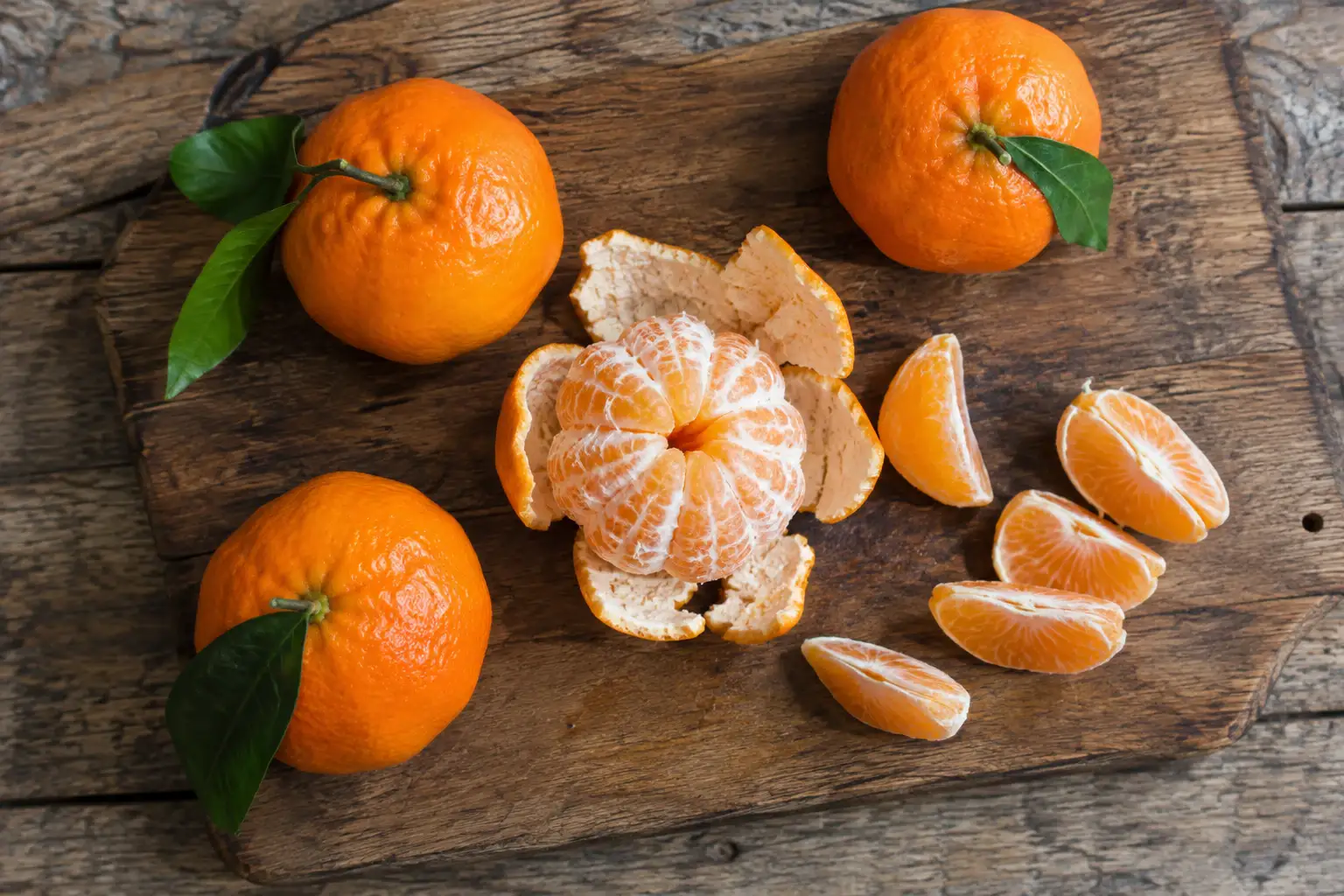
One medium mandarin orange (88 g) has about 47 calories, 11.7 g carbs, 1.6 g fiber and 9.3 g natural sugar, with almost no fat or sodium. It is a smaller, easier-to-peel citrus than a standard orange, and the same numbers roughly apply to clementines and tangerines. Per 100 g it comes to 53 calories.
Quick Nutrition Facts
Per 1 medium mandarin
| Nutrient | Amount |
|---|---|
| Calories | 47 kcal |
| Protein | 0.7g |
| Carbohydrates | 11.7g |
| Fiber | 1.6g |
| Sugars | 9.3g |
| Fat | 0.3g |
| Sodium | 2 mg |
Macronutrient Breakdown

NUTRITIONIST'S INSIGHT
At 47 calories a mandarin is one of the easiest fruits to fit into almost any eating pattern. The carbs come with 1.6 g of fiber and a high water content, so it fills you up more than its calorie count suggests. Eating the segments whole, white pith included, gives more fiber than juicing them. Because they are small, people often eat three or four in a sitting; at that point you are near 190 calories and 47 g of carbs, which is worth counting if you track carbs closely.
Myth Busters
MYTH #1: Mandarins are just small oranges with the same nutrition.
TRUTH: They are a separate citrus type. A medium mandarin has about 47 calories and 11.7 g carbs, while a medium navel orange has roughly 70 calories and 17 g carbs. Per 100 g the two are close, so the gap is mostly fruit size. USDA FoodData Central: Tangerines, (mandarin oranges), raw (FDC 169105); USDA FoodData Central: Clementines, raw (FDC 169098)
MYTH #2: The sugar in mandarins is as bad as the sugar in candy.
TRUTH: The 9.3 g of sugar in a medium mandarin arrives with fiber, water and vitamin C, and fruit intake is linked to lower risk of chronic disease. Whole fruit slows absorption compared with sweets or juice. Harvard T.H. Chan School of Public Health: Vegetables and Fruits; Harvard T.H. Chan School of Public Health: Carbohydrates and Blood Sugar
MYTH #3: People with diabetes should avoid mandarins.
TRUTH: Citrus fruit has a low to moderate glycemic index (oranges are about 40 to 45 in published tables). One medium mandarin fits most carb budgets, and pairing it with protein or fat flattens the response further. Atkinson FS et al. (2008). International tables of glycemic index and glycemic load values. Diabetes Care 31(12).; Harvard T.H. Chan School of Public Health: Carbohydrates and Blood Sugar
MYTH #4: Vitamin C from mandarins prevents colds.
TRUTH: One mandarin supplies about 23 mg of vitamin C, roughly a quarter of the 75 to 90 mg adult daily target. Regular vitamin C intake does not stop most people from catching a cold; at best it modestly shortens symptoms in some groups. NIH Office of Dietary Supplements: Vitamin C Fact Sheet for Health Professionals; USDA FoodData Central: Tangerines, (mandarin oranges), raw (FDC 169105)
MYTH #5: Canned mandarin oranges are the same as fresh ones.
TRUTH: Fresh mandarins have no added sugar. Canned segments packed in light syrup carry added sugar and more calories per cup, so juice-packed or fresh fruit is the closer match. USDA FoodData Central: Tangerines, (mandarin oranges), raw (FDC 169105); Harvard T.H. Chan School of Public Health: Carbohydrates and Blood Sugar
NutriScore by Health Goals
| Health Goal | NutriScore | Why This Score? |
|---|---|---|
| Weight Loss |  | 47 calories per fruit with 1.6 g fiber and about 85% water makes it a filling, low-energy-density snack. Eat the whole fruit rather than the juice. USDA FoodData Central: Tangerines, (mandarin oranges), raw (FDC 169105); Harvard T.H. Chan School of Public Health: Vegetables and Fruits |
| Muscle Gain |  | 0.7 g protein per fruit contributes almost nothing to protein targets. It works as a quick carb and vitamin C source around training, not as a protein food. USDA FoodData Central: Tangerines, (mandarin oranges), raw (FDC 169105) |
| Diabetes Management |  | 11.7 g carbs per medium fruit with fiber and a low to moderate glycemic index fits most carb budgets. Count the portion if you eat several, and pair with nuts or yogurt. Atkinson FS et al. (2008). International tables of glycemic index and glycemic load values. Diabetes Care 31(12).; Harvard T.H. Chan School of Public Health: Carbohydrates and Blood Sugar |
| Heart Health | | 2 mg sodium, no saturated fat, 166 mg potassium per 100 g and fiber support a heart-friendly pattern. Fruit and vegetable intake is associated with lower cardiovascular risk. Harvard T.H. Chan School of Public Health: Vegetables and Fruits; American Heart Association: How Much Sodium Should I Eat Per Day?; USDA FoodData Central: Tangerines, (mandarin oranges), raw (FDC 169105) |
| PCOS Management | | Whole citrus with fiber causes a modest glucose rise and supplies vitamin C. Keep to one or two fruits per sitting and combine with protein to limit insulin spikes. Harvard T.H. Chan School of Public Health: Carbohydrates and Blood Sugar; Atkinson FS et al. (2008). International tables of glycemic index and glycemic load values. Diabetes Care 31(12). |
| Pregnancy | | Whole fresh fruit provides vitamin C, folate and hydration at 47 calories. Wash the peel before peeling, and choose fresh over juice from unpasteurized sources. NIH Office of Dietary Supplements: Vitamin C Fact Sheet for Health Professionals; USDA FoodData Central: Tangerines, (mandarin oranges), raw (FDC 169105) |
PERSONALIZED NUTRITION
Track your meals with NutriScan for personalized NutriScores based on your specific health goals!
Blood Sugar Response to Mandarin Orange
One medium mandarin has 11.7 g carbs and 1.6 g fiber, and citrus sits at a low to moderate glycemic index. This estimated curve shows a gentle rise that peaks around 30 to 45 minutes and settles back near baseline by two hours. Eating several mandarins in a row, or drinking the juice, produces a taller and faster peak. Atkinson FS et al. (2008). International tables of glycemic index and glycemic load values. Diabetes Care 31(12).; Harvard T.H. Chan School of Public Health: Carbohydrates and Blood Sugar
Estimated Blood Sugar Response (1 medium mandarin)
Modeled from published glycemic index data for citrus fruit. Not a measured CGM trace. Individual responses vary.
How to flatten the spike
- Eat the whole segments rather than juice; the fiber slows absorption.
- Pair with a small handful of nuts or plain yogurt to flatten the rise further.
- Count two to three mandarins as one 30 to 35 g carb snack if you track carbs.
- Eat the fruit after a meal rather than alone on an empty stomach if you notice a quick spike.
Cultural Significance
Mandarin oranges originated in southern China and have been cultivated there for more than 3,000 years; the name is said to come from the orange robes of Mandarin officials. They are given as gifts at Lunar New Year, where the Cantonese word for tangerine sounds like the word for luck. In Japan the satsuma mandarin is a winter staple eaten from a kotatsu table. In North America they are mostly sold as Cuties-style easy-peelers or as canned segments in fruit salads and desserts.
Compare & Substitute
Mandarin Orange vs Similar Foods
| Nutrient | Clementine (1 fruit, 74 g) | Navel orange (1 medium, 140 g) | Apple (1 medium, 182 g) | Canned mandarin segments in juice (1/2 cup, ~125 g, estimate) |
|---|---|---|---|---|
| Calories | 35 kcal | 69 kcal | 95 kcal | 46 kcal |
| Protein | 0.6g | 1.3g | 0.5g | 0.8g |
| Carbohydrates | 8.9g | 17.5g | 25g | 12g |
| Fat | 0.1g | 0.2g | 0.3g | 0.1g |
Frequently Asked Questions
How many calories are in a mandarin orange?
A medium mandarin (88 g) has about 47 calories. Per 100 g it is 53 calories. A small one (76 g) is around 40 calories and a large one (120 g) around 64.
How many carbs are in a mandarin orange?
A medium mandarin has 11.7 g total carbs, including 1.6 g fiber, so about 10 g net carbs. Most of that is natural sugar (9.3 g).
What is the difference between a mandarin, a clementine and a tangerine?
Mandarin is the broad citrus group. Clementines and tangerines are types of mandarin. Clementines are smaller, usually seedless and a little sweeter; tangerines have a deeper orange color and a slightly tarter taste. Their calories per 100 g are all in the 47 to 53 range.
Is a mandarin orange good for weight loss?
Yes. At 47 calories with 1.6 g fiber and mostly water, it is a low-calorie, filling snack. Eat the whole fruit, since juice removes the fiber and makes overeating easier.
Are mandarin oranges high in sugar?
A medium one has 9.3 g of natural sugar, which is moderate. It comes with fiber and vitamin C, unlike the added sugar in candy or soda. Canned mandarins in syrup have more sugar than fresh.
How much vitamin C is in a mandarin orange?
About 23 mg in a medium fruit, based on USDA's 26.7 mg per 100 g. That is roughly 25 to 30 percent of the adult daily value.
Can people with diabetes eat mandarin oranges?
Generally yes. One medium fruit has about 12 g of carbs and a low to moderate glycemic index. Watch the number you eat at once and pair them with protein or healthy fat.


Similar Nutritious Foods
4505 Chicharrones Classic Chili Salt
7 Eleven Japan Crispy Corn Cheese
Explore More Tools
AI Calorie Counter App - Snap a Photo, Get Macros
AI Nutritionist App That Reads Your Logged Meals
Best Protein Supplements for Women
Bulking Meal Plan App That Sets Your Surplus
ChatGPT Calorie Counter Alternative That Keeps the Total
ChatGPT Diet Plan Alternative That Tracks What You Eat
ChatGPT Weight Loss Coach Alternative With a Food Log
Fast Food Calorie Counter App That Reads the Tray
Free Calorie Tracker App with AI Photo Scans | NutriScan
Indian Diet Plan App With Veg and Non Veg Meals
Indian Food Calorie Calculator - Get Instant Nutrition Facts for Desi Meals — 2026
Intermittent Fasting for Women, Timer and Meal Log App
Intermittent Fasting Tracker App - Free Fasting Timer
Macro Tracker App That Fills the Numbers From a Photo
Mediterranean Diet Meal Plan App That Counts the Oil
Micronutrient Tracker App for Vitamins and Minerals
MyFitnessPal Alternative That Stays Free | NutriScan
NutriScore App: A Free Grade on Every Meal | NutriScan
Nutrition Label Scanner App for the Amount You Ate
Second Trimester Protein Guide
Vegetarian Meal Plan App With a Protein Target
Voice Calorie Counter - Speak to Track Meals Hands-Free
Water and Calorie Tracker App - Free Water Log