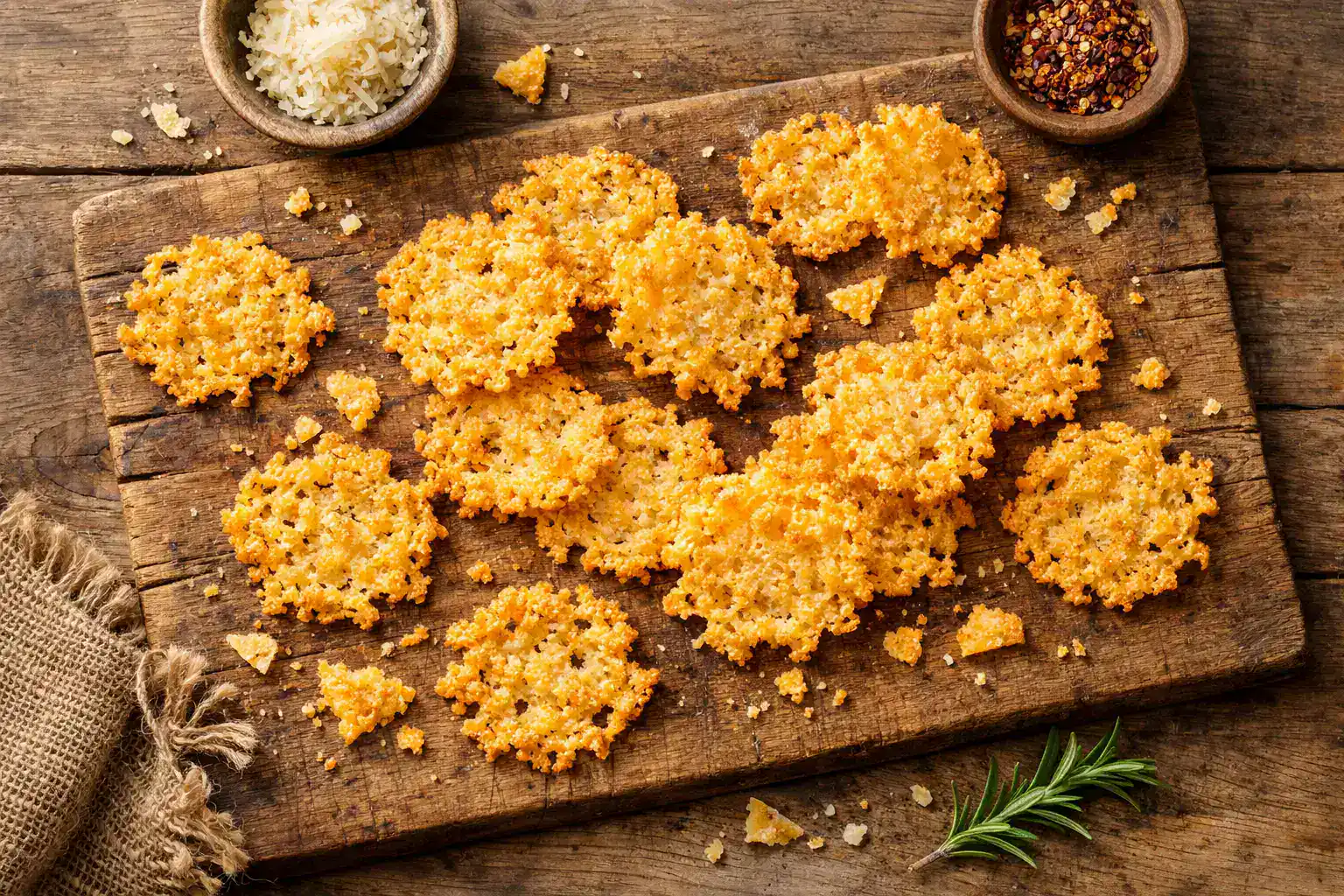
Moon Cheese Crisps (Cheddar): Calories, Nutrition and Health Benefits
Crunchy 100% cheese snack with high protein, zero carbs, and keto-friendly macros for guilt-free snacking.
Quick Nutrition Facts
Per 1 Serving (14g, ~7 pieces)
| Nutrient | Amount |
|---|---|
| Calories | 70 kcal |
| Protein | 5g |
| Carbohydrates | 1g |
| Fiber | 0g |
| Sugars | <1g |
| Fat | 5g |
| Saturated Fat | 3g |
| Calcium | 150mg |
| Sodium | 135mg |
| Cholesterol | 15mg |
Macronutrient Breakdown
 ChatGPT
  Claude
  AI Mode
  Perplexity
NUTRITIONIST INSIGHT
Moon Cheese Crisps deliver 36g protein per 100g with only 7g carbs, making them one of the most protein-dense snacks available. The complete absence of added ingredients means you're getting pure cheese nutrition with 15% of your daily calcium needs per serving.
Myth Busters
MYTH #1: Cheese Snacks Are Always Unhealthy Junk Food
TRUTH: Moon Cheese contains only one ingredient: 100% real cheddar cheese. Unlike processed cheese puffs with artificial flavors and starches, these crisps provide high-quality protein that supports satiety and muscle maintenance.
MYTH #2: High-Fat Snacks Cause Weight Gain
TRUTH: Research shows high-protein, moderate-fat snacks like cheese promote satiety and may actually help with weight management by reducing overall calorie intake throughout the day.
MYTH #3: Cheese Crisps Have Too Much Sodium
TRUTH: At 135mg sodium per serving (6% DV), Moon Cheese has less sodium than many popular snacks. Potato chips average 170mg+ per serving. The sodium comes naturally from the cheese-making process.
MYTH #4: You Can't Eat Cheese on a Diet
TRUTH: Cheese provides protein and calcium that support metabolic health. The key is portion control. One serving of Moon Cheese satisfies cravings with only 70 calories and 5g protein.
MYTH #5: Keto Snacks Are Tasteless
TRUTH: Moon Cheese crisps are made from aged cheddar, delivering rich, savory flavor without carbs. The dehydration process concentrates cheese flavor while creating a satisfying crunch.
NutriScore by Health Goals
| Health Goal | NutriScore | Why This Score? |
|---|---|---|
| Weight Loss |  | High protein (5g) promotes fullness, low carbs prevent blood sugar spikes. Watch portions due to calorie density. |
| Muscle Gain |  | Excellent protein-to-calorie ratio with complete amino acids. 36g protein per 100g supports muscle synthesis. |
| Diabetes Management | | Only 1g carbs per serving causes minimal blood glucose response. Ideal for blood sugar control. |
| PCOS Management | | Low-carb, high-protein profile supports insulin sensitivity. Limit to 1-2 servings due to saturated fat content. |
| Pregnancy Nutrition |  | Good calcium (15% DV) and protein. Made from pasteurized milk, safe during pregnancy. Monitor sodium intake. |
| Viral/Flu Recovery | | Easy to eat, provides protein for immune support. Sodium helps with electrolyte balance during illness. |
PERSONALIZED NUTRITION
Track your meals with NutriScan for personalized NutriScores based on your specific health goals!
Blood Sugar Response to Moon Cheese
Understanding how Moon Cheese affects your blood glucose demonstrates why it's excellent for diabetics and keto dieters.
Typical Glucose Response Curve
This chart shows typical blood glucose response for general healthy individuals. Individual responses may vary. Not medical advice.
Why the Flat Response?
Pure cheese contains virtually no carbohydrates, so it doesn't trigger significant insulin release or blood sugar changes:
- Zero glycemic impact - No carbs means no glucose spike
- 🧀 Protein + fat combination - Slows any minimal absorption
- 🥛 Pairs well with carb foods - Add to salads or crackers to blunt their glycemic response
- ⏰ Stable energy - No crash after eating
This makes Moon Cheese ideal for blood sugar management and sustained energy between meals.
Cultural Significance
Moon Cheese represents the modern American innovation in healthy snacking, born from the intersection of cheese craftsmanship and low-carb diet trends.
Origins:
- Developed as a keto-friendly alternative to traditional cheese puffs
- Uses traditional cheese-making followed by specialized dehydration
- Named for its light, crunchy texture resembling moon rocks
- Made in the USA from American cheddar cheese
Modern Usage:
- Popular among keto, paleo, and low-carb communities
- Used as a crunchy topping for salads and soups
- Portable protein snack for athletes and travelers
- School lunch alternative to chips for parents seeking healthier options
- Featured in Food Network, Men's Health, and Forbes as a healthy snack innovation
Global Adoption:
- Available in multiple countries including Canada, UK, and Australia
- Part of the growing "better-for-you" snack movement
- Represents shift toward single-ingredient, transparent food products
Compare & Substitute
Moon Cheese vs Similar Snacks (Per 100g)
| Nutrient | 🧀 Moon Cheese | 🥔 Potato Chips | 🌾 Cheese Puffs | 🥜 Almonds |
|---|---|---|---|---|
| Calories | 500 kcal | 536 kcal | 533 kcal | 579 kcal |
| Carbs | 7g | 53g | 58g | 22g |
| Fiber | 0g | 4.4g | 1g | 12.5g |
| Protein | 36g | 7g | 6g | 21g |
| Fat | 36g | 35g | 33g | 50g |
| Sodium | 964mg | 525mg | 1058mg | 1mg |
| Calcium | 1071mg | 24mg | 67mg | 269mg |
| Best For | Keto, high-protein, low-carb | Taste, energy, carb intake | Flavor variety, snacking | Fiber, healthy fats, nutrients |
Frequently Asked Questions
Are Moon Cheese Crisps good for keto?
Yes, Moon Cheese Crisps are excellent for keto diets. With only 1g net carbs per serving and 5g protein, they fit perfectly within ketogenic macros of 20-50g daily carbs.
Keto benefits:
- Zero sugar, minimal carbs
- High fat content supports ketosis
- Protein helps prevent muscle loss
- Satisfies crunchy snack cravings without carbs
How much protein is in Moon Cheese?
A 14g serving contains 5g of protein. Per 100g, Moon Cheese provides approximately 36g of protein, making it more protein-dense than most meats by weight.
For comparison:
- Chicken breast: 31g protein per 100g
- Moon Cheese: 36g protein per 100g
- Eggs: 13g protein per 100g
Are Moon Cheese Crisps healthy?
Moon Cheese offers several health benefits but should be eaten in moderation:
Benefits:
- High-quality complete protein
- Excellent calcium source (15% DV per serving)
- Zero artificial ingredients
- Very low carb
Considerations:
- High in saturated fat (3g per serving)
- Calorie-dense (500 kcal/100g)
- Contains sodium (135mg per serving)
Recommendation: Healthy as part of a balanced diet. Limit to 1-2 servings daily.
Can diabetics eat Moon Cheese?
Yes, Moon Cheese is suitable for diabetics. With only 1g carbs per serving, it causes minimal blood sugar impact.
Tips for diabetics:
- Use as a snack between meals to prevent blood sugar drops
- Pair with vegetables for balanced nutrition
- Watch overall calorie intake
- Monitor sodium if managing blood pressure
What are Moon Cheese Crisps made of?
Moon Cheese Crisps contain only one ingredient: 100% cheddar cheese.
Cheese components:
- Pasteurized milk
- Cheese culture
- Salt
- Enzymes
- Annatto (natural vegetable color)
No preservatives, artificial flavors, or fillers are added. The crunchy texture comes from a specialized dehydration process that removes moisture while preserving nutrients.
How many Moon Cheese can I eat per day?
Recommended intake:
- Weight loss: 1 serving (14g) per day
- General health: 1-2 servings (14-28g) per day
- Keto/Athletes: 2-3 servings (28-42g) per day
- Diabetes: 1-2 servings with meals or as snack
Why limit:
- Saturated fat: 3g per serving (15% DV)
- Sodium: 135mg per serving
- Calories add up: 70 per serving
Track your daily intake with NutriScan app to ensure Moon Cheese fits your personal nutrition targets.


Similar Nutritious Foods
4505 Chicharrones Classic Chili Salt
7 Eleven Japan Crispy Corn Cheese
Explore More Nutrition Tools & Resources
AI Calorie Counter App - Snap a Photo, Get Macros
AI Nutritionist App That Reads Your Logged Meals
Best Protein Supplements for Women
Bulking Meal Plan App That Sets Your Surplus
ChatGPT Calorie Counter Alternative That Keeps the Total
ChatGPT Diet Plan Alternative That Tracks What You Eat
ChatGPT Weight Loss Coach Alternative With a Food Log
Fast Food Calorie Counter App That Reads the Tray
Free Calorie Tracker App with AI Photo Scans | NutriScan
Indian Diet Plan App With Veg and Non Veg Meals
Indian Food Calorie Calculator - Get Instant Nutrition Facts for Desi Meals — 2026
Intermittent Fasting for Women, Timer and Meal Log App
Intermittent Fasting Tracker App - Free Fasting Timer
Macro Tracker App That Fills the Numbers From a Photo
Mediterranean Diet Meal Plan App That Counts the Oil
Micronutrient Tracker App for Vitamins and Minerals
MyFitnessPal Alternative That Stays Free | NutriScan
NutriScore App: A Free Grade on Every Meal | NutriScan
Nutrition Label Scanner App for the Amount You Ate
Second Trimester Protein Guide
Vegetarian Meal Plan App With a Protein Target
Voice Calorie Counter - Speak to Track Meals Hands-Free
Water and Calorie Tracker App - Free Water Log