North Indian Thali: Calories & Nutrition Facts (Roti, Dal, Sabzi, Rice, Raita)
 ChatGPT
 Claude
 AI Mode
 Perplexity
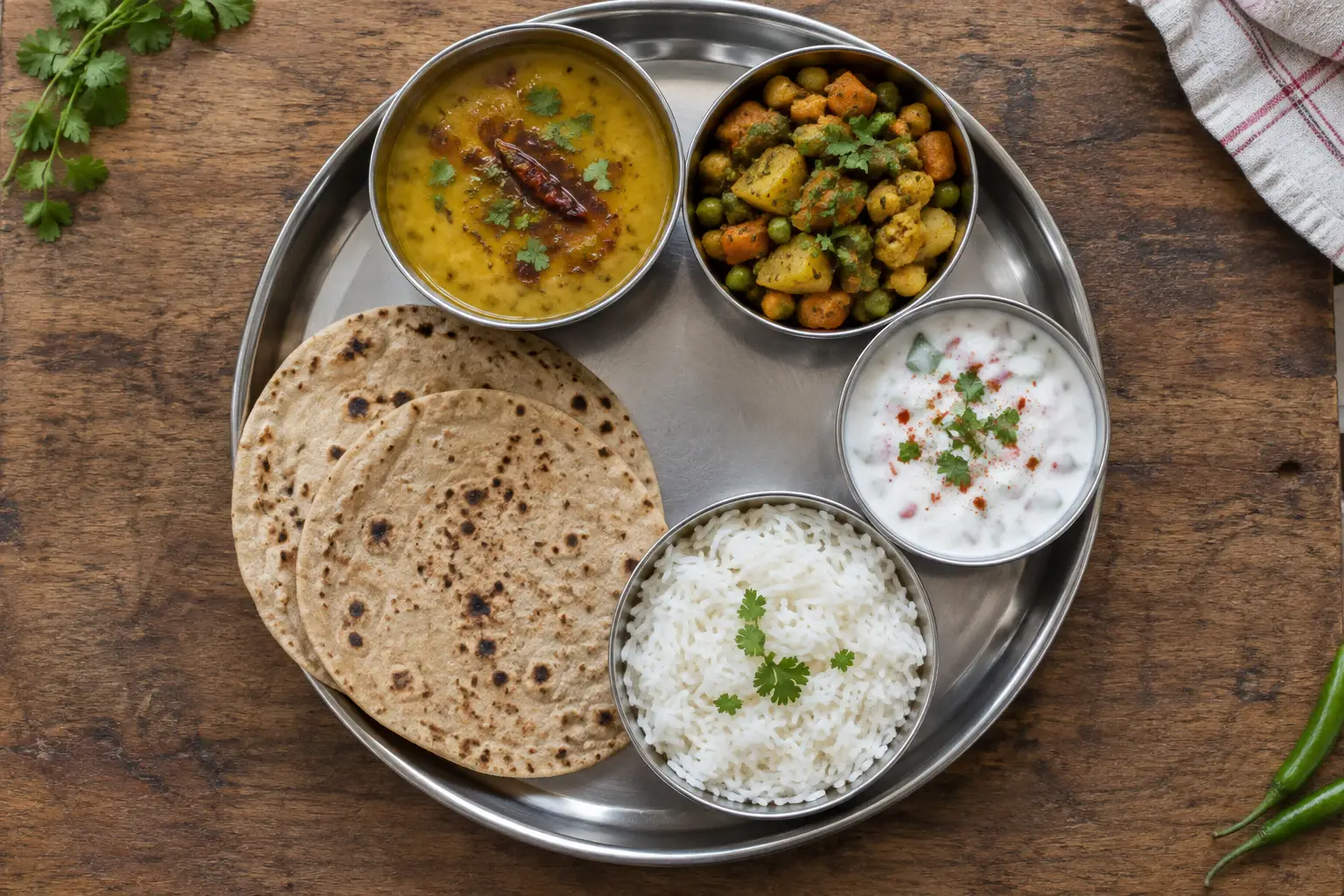
A standard vegetarian North Indian thali (2 rotis, dal tadka, mixed vegetable sabzi, steamed rice and raita, about 585g) has roughly 735 calories, 111g carbs, 24g protein, 21g fat and 12g fiber. Rice and roti supply about 70% of the carbs; dal and raita carry most of the protein. A restaurant thali with paneer, buttered rotis or a sweet can reach 880 kcal or more.
Quick Nutrition Facts
Per 1 thali (about 585g)
| Nutrient | Amount |
|---|---|
| Calories | 735 kcal |
| Protein | 24g |
| Carbohydrates | 111g |
| Fiber | 12g |
| Sugars | 9g |
| Fat | 21g |
| Sodium | 1,000 mg |
Macronutrient Breakdown

NUTRITIONIST'S INSIGHT
This thali is a complete plate: two grains, a pulse, vegetables and dairy, which is the pattern the ICMR-NIN 2024 guidelines describe. The weak point is the grain load. Rotis plus rice put about 80g of the 111g carbs on the plate as starch, while the dal and sabzi together give only about 10g of protein and 7g of fiber. Eating the dal and sabzi first, keeping to either rice or a third roti rather than both, and asking for less tadka oil changes the total more than any other choice. The sodium estimate of about 1,000 mg is half of the 5g salt ceiling in the ICMR-NIN guidelines before pickle or papad, and it climbs quickly with them.
Myth Busters
MYTH #1: A thali is a light, healthy meal by default.
TRUTH: A home-style vegetarian thali is balanced, but it is not light. This one is about 735 kcal, close to 40% of a 1,900 kcal day. Restaurant versions with paneer, ghee on the rotis and a sweet are 880 kcal or more. Indian Thali with Roti, Dal and Curd (Arise food database); North Indian Thali calories and nutrition (Arise food database)
MYTH #2: Skipping rice and eating only rotis makes a thali low carb.
TRUTH: Two rotis still bring about 36g of carbs, and a third roti adds another 18g. Removing the 150g of rice cuts about 42g of carbs and 195 kcal, but the plate stays a carb-led meal. Indian Thali with Roti, Dal and Curd (Arise food database); Indian Thali with Rice, Dal and Vegetable Sabzi (Arise food database)
MYTH #3: Dal makes a thali high in protein.
TRUTH: A 150 ml bowl of dal tadka gives about 7.5g of protein. The whole thali reaches about 24g, which is moderate. Adding paneer (about 13g protein per 60g) or a second bowl of dal is what lifts it. Indian Thali with Roti, Dal and Curd (Arise food database); North Indian Thali calories and nutrition (Arise food database)
MYTH #4: Chapati is always the safer carb for blood sugar than rice.
TRUTH: Published glycemic index figures for rice and whole wheat chapati vary by variety, cooking method and portion, and one study measured white rice lower than chapati. What lowers the spike is the meal around the starch: dal, vegetables and curd slow digestion more than the choice of roti or rice. Glycemic and insulinemic responses to carbohydrate rich whole foods, J Food Sci Technol
MYTH #5: Vegetarian thalis have no meaningful sodium.
TRUTH: Dal tadka, sabzi masala, pickle and papad all carry salt. This thali is estimated at about 1,000 mg sodium before pickle, which is roughly half of the 2,000 mg daily limit (5g of salt) set by the WHO and ICMR-NIN. Dietary Guidelines for Indians, 2024 edition (ICMR-NIN); Whole wheat chapati or roti, USDA-derived nutrition values
NutriScore by Health Goals
| Health Goal | NutriScore | Why This Score? |
|---|---|---|
| Weight Loss |  | At about 735 kcal the thali is a big portion for one meal, and 80g of its carbs come from roti and rice. It becomes a B with one roti, no rice and less tadka oil. Indian Thali with Roti, Dal and Curd (Arise food database); Dietary Guidelines for Indians, 2024 edition (ICMR-NIN) |
| Muscle Gain | | 24g of protein is moderate for a full meal. Dal, raita and sabzi contribute only a little each, so a paneer, egg or second dal serving is needed to reach 30g or more. Indian Thali with Roti, Dal and Curd (Arise food database); North Indian Thali calories and nutrition (Arise food database) |
| Diabetes Management | | 111g of carbs from roti and rice is high for one sitting. Dal, vegetables and curd slow absorption, so eating them first and halving the rice improves the response. Glycemic and insulinemic responses to carbohydrate rich whole foods, J Food Sci Technol; Dietary Guidelines for Indians, 2024 edition (ICMR-NIN) |
| Heart Health |  | Whole wheat, pulses, vegetables and curd match the ICMR-NIN pattern, and fat is only 21g. Sodium of about 1,000 mg and the tadka oil are the watch points. Dietary Guidelines for Indians, 2024 edition (ICMR-NIN); Whole wheat chapati or roti, USDA-derived nutrition values |
| Digestive Health | | About 12g of fiber from whole wheat roti, dal and vegetables, plus live curd in the raita, supports regular digestion. Indian Food Composition Tables 2017 (ICMR-NIN), FAO/INFOODS record; Dietary Guidelines for Indians, 2024 edition (ICMR-NIN) |
PERSONALIZED NUTRITION
Track your meals with NutriScan for personalized NutriScores based on your specific health goals!
Blood Sugar Response to North Indian Thali
This thali delivers about 111g of carbohydrate, mostly from rice and roti, so blood sugar climbs steadily over the first hour. Dal, vegetables and curd add protein, fat and fiber that slow gastric emptying, so the peak is lower and later than rice alone would give. The curve below is an estimate for a healthy adult after eating the whole plate: a peak around 60 minutes, then a slow return to baseline by 3 hours. Glycemic and insulinemic responses to carbohydrate rich whole foods, J Food Sci Technol; Dietary Guidelines for Indians, 2024 edition (ICMR-NIN)
Estimated Glucose Response (1 thali, about 585g)
Estimated curve for a mixed meal of whole wheat roti, rice, dal, vegetables and curd. Individual responses vary with metabolism, activity and prior meals. Not medical advice.
How to flatten the spike
- Eat the dal and sabzi first and the starch last; fiber and protein ahead of carbs flatten the rise.
- Choose either rice or a third roti, not both. Halving the rice removes about 20g of carbs.
- Take a 10 to 15 minute walk after the meal.
- Ask for dal and sabzi with less tadka oil to cut 50 to 100 kcal without changing the carbs.
Cultural Significance
The thali (Hindi for plate) is how a North Indian meal is served: small portions of every course on one plate or in katoris, so each bite can mix a bread, a pulse, a vegetable and a cooling dairy side. In Punjab, Uttar Pradesh and Delhi the core is roti, dal, a seasonal sabzi and raita, with rice added at dinner or on weekends. Ayurvedic meal logic of balancing six tastes shaped the format, and it is still how weddings, langars and dhaba meals are served. Restaurants use the word for a fixed-price set meal, which is why restaurant thalis run heavier than home ones.
Compare & Substitute
North Indian Thali vs Similar Foods
| Nutrient | Thali with 1 roti, no rice, double sabzi | Thali with rice swapped for extra dal | Paneer masala thali (restaurant, 555g) | Roti, dal and curd plate |
|---|---|---|---|---|
| Calories | 500 kcal per serving | 705 kcal per serving | 878 kcal per serving | 430 kcal per serving |
| Protein | 18g | 31g | 31g | 17g |
| Carbohydrates | 69g | 87g | 85g | 60g |
| Fat | 17g | 24g | 46g | 15g |
Frequently Asked Questions
How many calories are in a North Indian thali?
A standard vegetarian home-style thali with 2 rotis, dal tadka, mixed sabzi, rice and raita has about 735 calories. Without rice it is about 540. A restaurant thali with paneer, ghee-topped rotis and papad is closer to 880 calories.
How many calories are in one roti in a thali?
A 40g whole wheat roti has about 104 calories, 3.5g protein and 18g carbs. A 60g restaurant-size roti has about 160 to 180 calories, and ghee on top adds roughly 40 calories per teaspoon.
Is a North Indian thali good for weight loss?
It can be if you control the grain. One roti instead of two, half the rice and less tadka oil brings the plate to about 500 to 550 calories while keeping the dal, sabzi and curd.
How much protein is in a North Indian thali?
About 24g for the standard vegetarian version. Dal gives about 7.5g, two rotis about 7g, curd about 3.5g and rice about 3.6g. A paneer dish adds around 13g for every 60g.
Is a North Indian thali suitable for diabetes?
It is workable with adjustments. The plate has about 111g of carbs, so cut the rice to a quarter plate or skip it, eat the dal and vegetables first, and avoid the sweet and papad. Check your own glucose response with a meter or CGM.


Similar Nutritious Foods
4505 Chicharrones Classic Chili Salt
7 Eleven Japan Crispy Corn Cheese
Explore More Tools
AI Calorie Counter App - Snap a Photo, Get Macros
AI Nutritionist App That Reads Your Logged Meals
Best Protein Supplements for Women
Bulking Meal Plan App That Sets Your Surplus
ChatGPT Calorie Counter Alternative That Keeps the Total
ChatGPT Diet Plan Alternative That Tracks What You Eat
ChatGPT Weight Loss Coach Alternative With a Food Log
Fast Food Calorie Counter App That Reads the Tray
Free Calorie Tracker App with AI Photo Scans | NutriScan
Indian Diet Plan App With Veg and Non Veg Meals
Indian Food Calorie Calculator - Get Instant Nutrition Facts for Desi Meals — 2026
Intermittent Fasting for Women, Timer and Meal Log App
Intermittent Fasting Tracker App - Free Fasting Timer
Macro Tracker App That Fills the Numbers From a Photo
Mediterranean Diet Meal Plan App That Counts the Oil
Micronutrient Tracker App for Vitamins and Minerals
MyFitnessPal Alternative That Stays Free | NutriScan
NutriScore App: A Free Grade on Every Meal | NutriScan
Nutrition Label Scanner App for the Amount You Ate
Second Trimester Protein Guide
Vegetarian Meal Plan App With a Protein Target
Voice Calorie Counter - Speak to Track Meals Hands-Free
Water and Calorie Tracker App - Free Water Log