Organ Meat Supplement (Beef Liver Capsule): Calories, Nutrition and Health Benefits
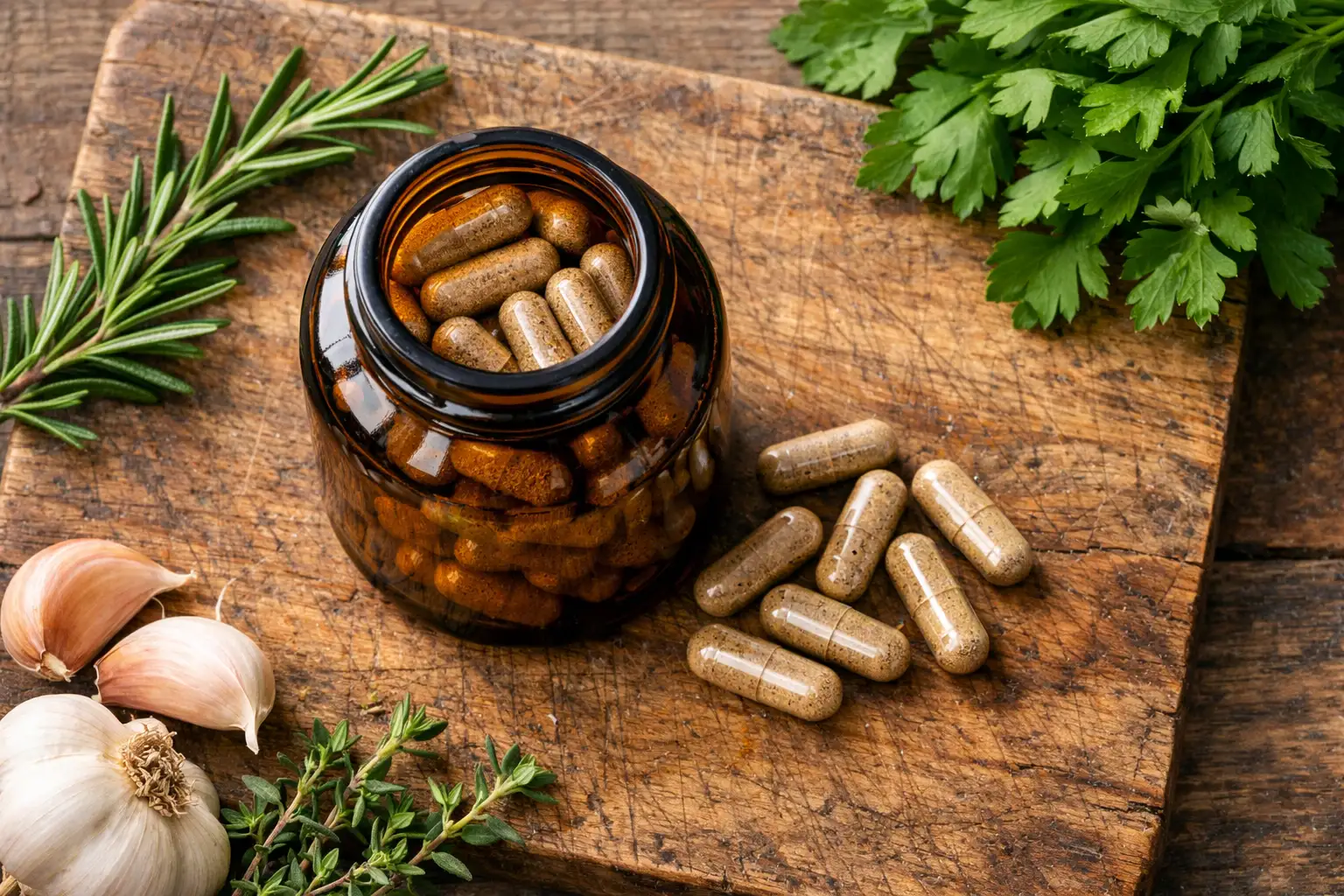
Nature's original multivitamin in capsule form: desiccated beef liver packed with B12, heme iron, vitamin A, and essential cofactors for energy and vitality.
Quick Nutrition Facts
Per 6 Capsules (3g Desiccated Liver)
| Nutrient | Amount | % DV |
|---|---|---|
| Calories | 15 kcal | <1% |
| Protein | 2.2g | 4% |
| Carbohydrates | 0.3g | <1% |
| Fiber | 0g | 0% |
| Fat | 0.35g | <1% |
| Iron (Heme) | 2.8mg | 16% |
| Vitamin A | 1,800 mcg RAE | 200% |
| Vitamin B12 | 21 mcg | 875% |
| Folate | 75 mcg DFE | 19% |
| Copper | 0.43mg | 48% |
| Riboflavin (B2) | 0.9mg | 69% |
| Cholesterol | 27mg | 9% |
Macronutrient Breakdown
 ChatGPT
  Claude
  AI Mode
  Perplexity
NUTRITIONIST INSIGHT
A single serving of beef liver capsules delivers 875% of your daily B12 and 200% of vitamin A, making it one of the most micronutrient-dense supplements available. The heme iron form absorbs 15-35% vs 2-20% for non-heme iron, making it significantly more bioavailable than standard iron supplements.
Myth Busters
MYTH #1: The Liver Stores Toxins That Transfer When Eaten
TRUTH: The liver is a processing organ, not a storage organ for toxins. It metabolizes and eliminates harmful substances via bile and urine. Cleveland Clinic confirms that properly sourced liver from pasture-raised animals is safe to consume. Choose grass-fed, hormone-free sources for the cleanest nutrient profile.
MYTH #2: Liver Capsules Are Identical to Eating Whole Liver
TRUTH: A 3g capsule serving delivers far less nutrition than an 85g cooked liver serving. While capsules preserve heat-stable nutrients like iron, B12, copper, and zinc, heat-dried products lose some sensitive vitamins. Freeze-dried capsules retain more nutrients. Capsules are a supplement, not a replacement.
MYTH #3: You Cannot Get Too Much Vitamin A From Food Sources
TRUTH: A single 85g serving of cooked beef liver delivers over 6,500 mcg RAE of preformed retinol, well above the tolerable upper intake of 3,000 mcg/day. Chronic excess causes headaches, bone loss, and liver damage. Even capsule servings at 1,800 mcg RAE approach the limit when combined with dietary retinol.
MYTH #4: Organ Meats Are Primitive and Unnecessary in Modern Diets
TRUTH: Organ meats remain among the most micronutrient-dense foods per calorie on earth. Muscle-meat-only diets common in modern Western eating frequently create subclinical deficiencies in copper, retinol, B12, and choline. Every traditionally healthy culture studied by nutritional researcher Weston A. Price consumed organ meats regularly.
MYTH #5: Beef Liver Capsules Can Treat Iron-Deficiency Anemia
TRUTH: The 2.8mg heme iron per serving supports maintenance but is not a therapeutic dose. A clinical iron supplement delivers 65mg elemental iron per dose. However, liver capsules have superior absorption rates (15-35%) and cause fewer GI side effects than ferrous sulfate. Consult your doctor for diagnosed anemia.
NutriScore by Health Goals
| Health Goal | NutriScore | Why This Score? |
|---|---|---|
| Weight Loss |  | Only 15 calories per serving with dense micronutrition. B12 supports energy metabolism. No carbs or sugar. |
| Muscle Gain |  | 2.2g protein per serving with complete amino acid profile. Iron supports oxygen delivery to muscles. B vitamins aid energy production. |
| Diabetes Management | | Zero glycemic impact (0.3g carbs). Mayo Clinic notes liver nutrients support metabolic health. B12 aids nerve function often compromised in diabetes. |
| PCOS Management | | Iron combats PCOS-related anemia. B vitamins support hormone balance. Low calorie density helps weight management. |
| Pregnancy Nutrition |  | CAUTION: 200% DV vitamin A per serving. Excess preformed retinol is teratogenic. Consult healthcare provider. Folate and B12 are beneficial but vitamin A risk is significant. |
| Viral/Flu Recovery | | Dense B-vitamin complex supports immune function. Iron aids oxygen transport during recovery. Easy to take when appetite is low. |
PERSONALIZED NUTRITION
Track your meals with NutriScan for personalized NutriScores based on your specific health goals!
Blood Sugar Response to Beef Liver Capsules
Beef liver capsules contain only 0.3g carbohydrates per serving with zero sugar, resulting in virtually no blood glucose impact. The glycemic index is effectively 0.
Typical Glucose Response Curve
This chart shows typical blood glucose response for general healthy individuals. Individual responses may vary. Not medical advice.
How to Maximize Nutrient Absorption
Fat-soluble vitamins A and D in liver capsules require dietary fat for absorption:
- 🥑 Take with a fat-containing meal - Avocado, olive oil, or nuts improve vitamin A absorption
- 🍊 Pair with vitamin C foods - Enhances non-heme iron absorption from any concurrent plant foods
- ☕ Avoid taking with coffee or tea - Tannins and caffeine reduce iron absorption by up to 60%
- 🥛 Separate from calcium supplements - Calcium competes with iron for absorption
Cultural Significance
Organ meat consumption is one of humanity's oldest nutritional traditions, practiced across every continent.
Indigenous Heritage:
- Inuit hunters traditionally eat raw liver immediately after a kill, considered the hunter's first right
- Plains Nations (Lakota, Blackfoot) distributed bison liver, kidneys, and tongue to elders and pregnant women as priority foods
- Pemmican (dried meat + tallow + berries) sustained Indigenous communities through harsh winters
Global Traditions:
- French foie gras and liver pate trace back to Roman culinary traditions
- British liver and onions was a working-class nutritional staple through the 20th century
- Mexican offal cuisine (higado encebollado) has Aztec and Indigenous roots
- German liverwurst and Scottish haggis represent centuries of nose-to-tail eating
Traditional Medicine:
- Traditional Chinese Medicine uses the principle "like supports like" (eating liver nourishes the liver organ)
- Ayurveda classifies liver as brimhana (nourishing) food for debilitated individuals and postpartum recovery
- Weston A. Price documented organ meat consumption in every traditionally healthy culture he studied
Modern Revival:
- Ancestral health, carnivore, and keto movements have driven a capsule supplement renaissance
- Desiccated liver capsules make organ nutrition accessible without taste barriers
- Nose-to-tail movement (Fergus Henderson, 1990s London) re-mainstreamed whole-animal eating
Compare & Substitute
Beef Liver Capsules vs Other Nutrient Sources (Per Typical Serving)
| Nutrient | 💊 Liver Capsules (3g) | 🥩 Whole Liver Cooked (85g) | 💊 Multivitamin (1 tab) | 💊 Iron Supplement (325mg) |
|---|---|---|---|---|
| Calories | 15 kcal | 161 kcal | 0 kcal | 0 kcal |
| Protein | 2.2g | 24.7g | 0g | 0g |
| Iron | 2.8mg (heme) | 5.5mg (heme) | 8-18mg (non-heme) | 65mg (non-heme) |
| Vitamin A | 1,800 mcg RAE | 5,595 mcg RAE | 150-900 mcg RAE | 0 mcg |
| Vitamin B12 | 21 mcg | 60 mcg | 2.4-6 mcg | 0 mcg |
| Folate | 75 mcg DFE | 215 mcg DFE | 400 mcg DFE | 0 mcg |
| Copper | 0.43mg | 12.2mg | 0.9-2mg | 0mg |
| Iron Absorption | 15-35% | 15-35% | 2-20% | 2-20% |
| Best For | Daily supplementation | Maximum nutrition | Broad coverage | Anemia treatment |
Source: USDA FoodData Central; PMC Nutrient Analysis of US Beef Offal
Frequently Asked Questions
Are beef liver capsules as good as eating whole liver?
Capsules preserve key nutrients like iron, B12, copper, and zinc but a 3g capsule serving is nutritionally modest compared to an 85g cooked liver serving. Freeze-dried capsules retain more heat-sensitive vitamins than heat-dried products.
Best practices: Choose freeze-dried, grass-fed capsules for maximum nutrient retention. Take with a fat-containing meal to improve absorption of fat-soluble vitamins A and D.
How many calories are in beef liver capsules?
A standard serving of 6 capsules (3g) contains only 15 calories with 2.2g protein, 0.35g fat, and 0.3g carbs. The calorie content is negligible, making this one of the most nutrient-dense-per-calorie supplements available.
Can beef liver capsules replace a multivitamin?
Liver capsules excel in B12 (875% DV), vitamin A (200% DV), copper (48% DV), and heme iron (16% DV). However, they lack vitamin C, vitamin D, calcium, magnesium, and several minerals found in multivitamins.
Recommendation: Use liver capsules to complement (not replace) a balanced diet. They fill specific gaps that multivitamins address poorly, especially B12 and heme iron bioavailability.
Is it safe to take beef liver capsules during pregnancy?
Use extreme caution. A single serving provides 1,800 mcg RAE of preformed vitamin A (200% DV). The tolerable upper intake during pregnancy is 2,800 mcg/day. Excess preformed retinol is linked to birth defects.
Important: Consult your healthcare provider before taking liver supplements during pregnancy. The folate and B12 content is beneficial, but vitamin A risk requires careful monitoring of total dietary intake.
Do beef liver capsules help with iron deficiency?
Liver capsules provide 2.8mg of highly bioavailable heme iron per serving (15-35% absorption rate). They support iron maintenance and mild supplementation with fewer GI side effects than ferrous sulfate.
For diagnosed anemia: Clinical iron supplements deliver 65mg elemental iron per dose and are the standard treatment. Liver capsules are supplementary, not therapeutic. Always consult your healthcare provider.
Does the liver store toxins that transfer when eaten?
No. The liver metabolizes and eliminates toxins via bile and urine. It is a processing organ, not a storage organ. Trace heavy metals can accumulate at minimal levels, but pasture-raised, grass-fed sources minimize this concern.


Similar Nutritious Foods
4505 Chicharrones Classic Chili Salt
7 Eleven Japan Crispy Corn Cheese
Explore More Nutrition Tools & Resources
AI Calorie Counter App - Snap a Photo, Get Macros
AI Nutritionist App That Reads Your Logged Meals
Best Protein Supplements for Women
Bulking Meal Plan App That Sets Your Surplus
ChatGPT Calorie Counter Alternative That Keeps the Total
ChatGPT Diet Plan Alternative That Tracks What You Eat
ChatGPT Weight Loss Coach Alternative With a Food Log
Fast Food Calorie Counter App That Reads the Tray
Free Calorie Tracker App with AI Photo Scans | NutriScan
Indian Diet Plan App With Veg and Non Veg Meals
Indian Food Calorie Calculator - Get Instant Nutrition Facts for Desi Meals — 2026
Intermittent Fasting for Women, Timer and Meal Log App
Intermittent Fasting Tracker App - Free Fasting Timer
Macro Tracker App That Fills the Numbers From a Photo
Mediterranean Diet Meal Plan App That Counts the Oil
Micronutrient Tracker App for Vitamins and Minerals
MyFitnessPal Alternative That Stays Free | NutriScan
NutriScore App: A Free Grade on Every Meal | NutriScan
Nutrition Label Scanner App for the Amount You Ate
Second Trimester Protein Guide
Vegetarian Meal Plan App With a Protein Target
Voice Calorie Counter - Speak to Track Meals Hands-Free
Water and Calorie Tracker App - Free Water Log