Premier Protein Granola (Chocolate Almond): Calories, Nutrition and Health Benefits
A high-protein breakfast cereal delivering 20g protein per cup with chocolatey almond flavor and only 5g sugar — designed for fitness-focused mornings.
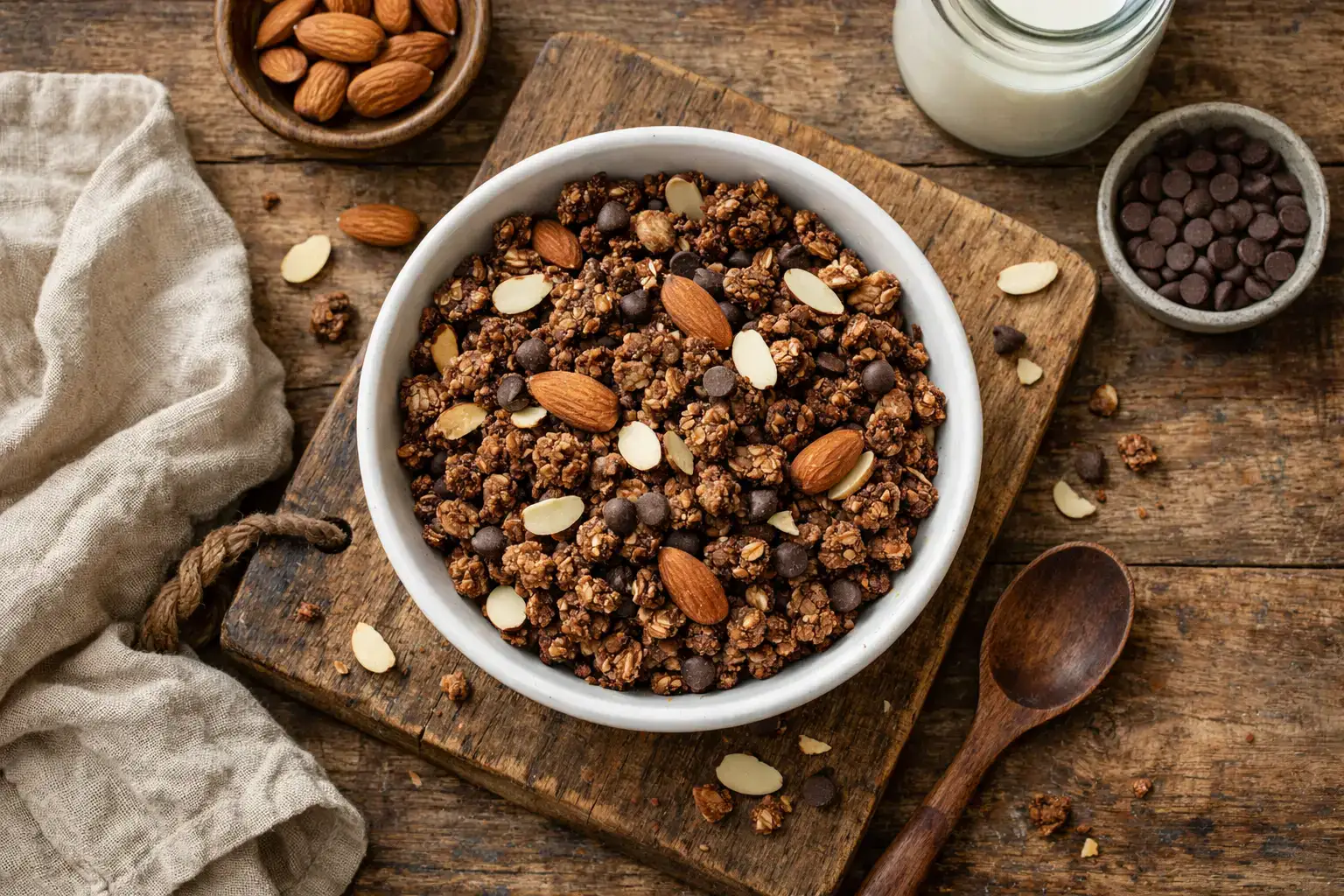
Quick Nutrition Facts
Per 1 Cup (42g)
| Nutrient | Amount |
|---|---|
| Calories | 180 kcal |
| Protein | 20g |
| Carbohydrates | 14g |
| Fiber | 2g |
| Sugars | 5g |
| Fat | 5g |
| Saturated Fat | 1g |
| Sodium | 260mg |
| Iron | 1.4mg |
| Calcium | 90mg |
| Potassium | 130mg |
Macronutrient Breakdown
 ChatGPT
  Claude
  AI Mode
  Perplexity
NUTRITIONIST INSIGHT
Premier Protein Cereal stands out with a 20g protein-to-180 calorie ratio, making it one of the highest protein-per-calorie cereals available. The blend of wheat gluten, pea protein, and almonds provides a complete amino acid profile that supports muscle maintenance and satiety throughout the morning.
Myth Busters
MYTH #1: High-Protein Cereals Are Just Processed Junk Food
TRUTH: While processed, Premier Protein Cereal delivers 20g protein with only 5g sugar per serving. Research shows high-protein breakfasts improve glycemic control and reduce overeating later in the day compared to typical sugary cereals with 2-3g protein.
MYTH #2: You Can't Get Enough Protein from Cereal
TRUTH: One serving provides 20g protein — equivalent to 3 eggs or a chicken breast. The combination of wheat, pea, and almond protein creates a complete amino acid profile suitable for muscle maintenance and recovery.
MYTH #3: Protein Cereal Causes Blood Sugar Spikes Like Regular Cereal
TRUTH: With only 14g carbs and 20g protein, this cereal has a much lower glycemic load than regular cereals (25-35g carbs). Protein slows carbohydrate absorption, reducing the glucose spike significantly.
MYTH #4: Wheat Gluten Protein Is Low Quality
TRUTH: Wheat gluten is a concentrated protein source. When combined with pea protein and almonds as in this cereal, the amino acid profile becomes complete, covering all essential amino acids needed for muscle synthesis.
MYTH #5: Stevia in Cereal Is Harmful
TRUTH: Stevia leaf extract is a natural, zero-calorie sweetener. Research shows stevia does not affect blood glucose or insulin levels and is considered safe by the FDA, making it a better choice than added sugar for blood sugar management.
NutriScore by Health Goals
| Health Goal | NutriScore | Why This Score? |
|---|---|---|
| Weight Loss |  | 180 calories with 20g protein promotes satiety and reduces overall calorie intake. Low sugar (5g) prevents cravings. |
| Muscle Gain | | 20g protein per serving supports muscle protein synthesis. Pair with milk for 28-30g total protein per bowl. |
| Diabetes Management |  | Only 14g carbs with high protein content that helps moderate blood sugar response. Pair with unsweetened milk. |
| PCOS Management | | Low sugar and high protein help manage insulin resistance. Choose unsweetened almond milk to keep sugar intake minimal. |
| Pregnancy Nutrition | | Provides iron (10% DV) and protein (20g). Fortified cereals help meet increased nutrient needs during pregnancy. Pair with folate-rich foods. |
| Viral/Flu Recovery | | Easy-to-prepare protein source when appetite is low. Iron supports immune function. Add warm milk for comfort. |
PERSONALIZED NUTRITION
Track your meals with NutriScan for personalized NutriScores based on your specific health goals!
Blood Sugar Response to Premier Protein Granola
Understanding how this protein cereal affects your blood glucose helps you optimize meal timing and pairings.
Typical Glucose Response Curve
This chart shows typical blood glucose response for general healthy individuals. Individual responses may vary. Not medical advice.
How to Flatten the Spike
Pairing protein cereal with healthy fats slows glucose absorption and extends energy release:
- 🥛 Unsweetened almond or oat milk - Adds healthy fats without extra sugar
- 🫐 Fresh berries - Low-GI fruit adds fiber and antioxidants
- 🥜 Extra sliced almonds or walnuts - Boosts healthy fats and fiber
- 🥚 Side of boiled eggs - Adds complete protein and healthy fats
This combination creates a sustained energy release, keeping blood sugar stable for hours after breakfast.
Cultural Significance
High-protein cereals represent a major shift in the American breakfast landscape, moving away from sugar-laden options toward performance-focused nutrition.
In the United States:
- Premier Protein emerged from the sports nutrition category, making gym-quality protein accessible at the breakfast table
- The "protein cereal" category grew rapidly as consumers demanded functional breakfasts
- Chocolate almond flavor bridges indulgence and nutrition — a key consumer demand in the 2020s
Global Protein Breakfast Trends:
- Protein-fortified cereals are expanding globally, following demand from fitness communities
- In India, protein-enriched muesli and granola brands are gaining shelf space
- The shift reflects a worldwide move from empty-calorie breakfasts to nutrient-dense morning meals
Compare & Substitute
Premier Protein Granola vs Similar High-Protein Cereals (Per Serving)
| Nutrient | Premier Protein Chocolate Almond (42g) | Magic Spoon Cereal (37g) | Kashi GO (52g) | Cheerios Protein (55g) |
|---|---|---|---|---|
| Calories | 180 kcal | 140 kcal | 180 kcal | 210 kcal |
| Protein | 20g | 13g | 12g | 7g |
| Carbs | 14g | 15g | 38g | 38g |
| Fiber | 2g | 1g | 8g | 3g |
| Fat | 5g | 7g | 2.5g | 2.5g |
| Sugar | 5g | 0g | 12g | 16g |
| Sodium | 260mg | 170mg | 260mg | 340mg |
| Best For | Maximum protein per calorie | Keto/low-carb | High fiber | Familiar taste |
Frequently Asked Questions
Is Premier Protein Granola good for weight loss?
180 calories with 20g protein makes it one of the most satiating cereal options. The high protein content reduces hunger hormones and keeps you fuller longer compared to standard cereals with only 2-3g protein.
Best practices: Use unsweetened almond milk (30 cal) instead of whole milk (150 cal), limit to one serving, and add berries for fiber.
Can diabetics eat Premier Protein Granola?
14g carbs per serving is significantly lower than most cereals (25-35g). The 20g protein helps slow carbohydrate absorption, resulting in a more moderate blood sugar response.
Tips for diabetics:
- Pair with unsweetened almond or soy milk
- Add cinnamon (may help insulin sensitivity)
- Eat at a consistent time each day
- Monitor blood sugar 2 hours after eating
Always consult your healthcare provider for personalized dietary advice.
How much protein is in Premier Protein Cereal?
One cup (42g) delivers 20g of protein from four sources: wheat gluten, wheat protein isolate, pea protein concentrate, and almonds. Adding 1 cup of milk brings the total to approximately 28-30g protein per bowl.
What are the main health benefits?
Key Benefits:
- Muscle Maintenance: 20g protein supports daily muscle protein synthesis needs
- Weight Management: High protein-to-calorie ratio promotes satiety
- Blood Sugar Control: Low carb (14g) and high protein moderates glucose response
- Iron Support: 10% DV iron per serving supports energy and oxygen transport
- Convenient Nutrition: Quick breakfast with gym-quality protein content
When is the best time to eat Premier Protein Cereal?
Depends on your goal:
- Weight Loss: Morning breakfast — protein reduces calorie intake throughout the day
- Muscle Gain: Post-workout (within 60 minutes) with milk for maximum protein delivery
- Diabetes: Consistent morning timing, paired with healthy fat
- Pre-workout: 60-90 minutes before exercise for sustained energy
Is Premier Protein Cereal safe during pregnancy?
The cereal provides iron (10% DV) and 20g protein, both critical during pregnancy. However, it is not fortified with folate or calcium at significant levels. Supplement with prenatal vitamins and folate-rich foods like leafy greens and fortified orange juice.


Similar Nutritious Foods
4505 Chicharrones Classic Chili Salt
7 Eleven Japan Crispy Corn Cheese
Explore More Nutrition Tools & Resources
AI Calorie Counter App - Snap a Photo, Get Macros
AI Nutritionist App That Reads Your Logged Meals
Best Protein Supplements for Women
Bulking Meal Plan App That Sets Your Surplus
ChatGPT Calorie Counter Alternative That Keeps the Total
ChatGPT Diet Plan Alternative That Tracks What You Eat
ChatGPT Weight Loss Coach Alternative With a Food Log
Fast Food Calorie Counter App That Reads the Tray
Free Calorie Tracker App with AI Photo Scans | NutriScan
Indian Diet Plan App With Veg and Non Veg Meals
Indian Food Calorie Calculator - Get Instant Nutrition Facts for Desi Meals — 2026
Intermittent Fasting for Women, Timer and Meal Log App
Intermittent Fasting Tracker App - Free Fasting Timer
Macro Tracker App That Fills the Numbers From a Photo
Mediterranean Diet Meal Plan App That Counts the Oil
Micronutrient Tracker App for Vitamins and Minerals
MyFitnessPal Alternative That Stays Free | NutriScan
NutriScore App: A Free Grade on Every Meal | NutriScan
Nutrition Label Scanner App for the Amount You Ate
Second Trimester Protein Guide
Vegetarian Meal Plan App With a Protein Target
Voice Calorie Counter - Speak to Track Meals Hands-Free
Water and Calorie Tracker App - Free Water Log