Red Grapes Nutrition: Calories, Carbs and Sugar
 ChatGPT
 Claude
 AI Mode
 Perplexity
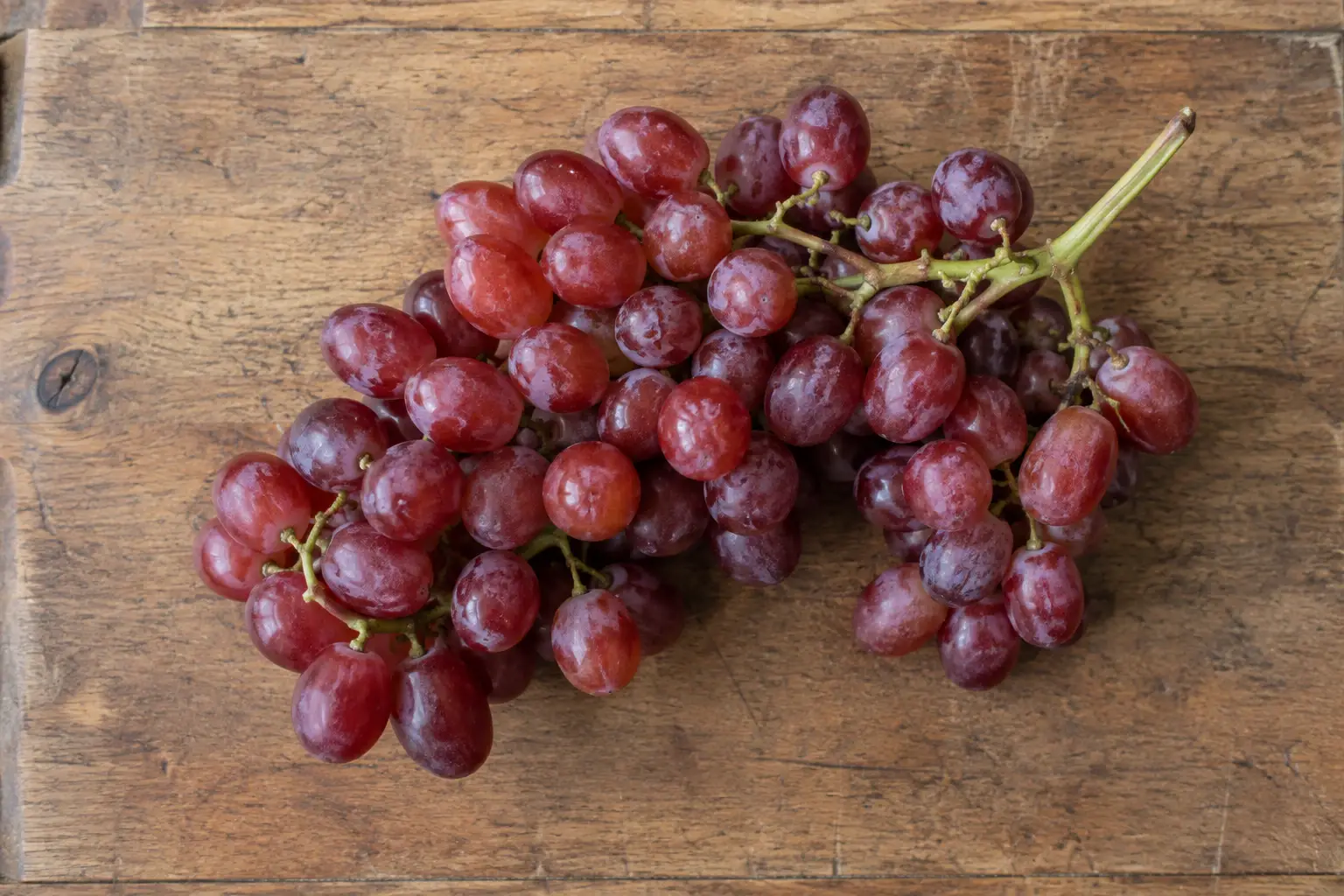
One cup of red grapes (151 g) has about 104 calories, 27.3 g carbohydrate, 23.4 g natural sugar and 1.4 g fiber, with almost no fat or sodium. That works out to 69 calories per 100 g. Red grapes are a light, hydrating snack that is easy to overeat, so the portion matters more than the food.
Quick Nutrition Facts
Per 1 cup (151 g)
| Nutrient | Amount |
|---|---|
| Calories | 104 kcal |
| Protein | 1.1g |
| Carbohydrates | 27.3g |
| Fiber | 1.4g |
| Sugars | 23.4g |
| Fat | 0.2g |
| Sodium | 3 mg |
Macronutrient Breakdown

NUTRITIONIST'S INSIGHT
Red grapes are mostly water and sugar, so the number to watch is the handful, not the grape. A cup is about 23 g of sugar, and most people eat more than a cup when they snack straight from the bag. Fiber is low at 1.4 g per cup, which is why grapes do not fill you up the way an apple does. Pairing a small bowl with a protein such as Greek yogurt, cheese or nuts slows the glucose rise and makes the portion last. Red and purple skins also carry polyphenols such as anthocyanins, but the amounts in a normal serving are small and no study supports eating grapes as a treatment for any condition.
Myth Busters
MYTH #1: Red grapes are too sugary to eat on a diet.
TRUTH: A cup has about 104 calories, which is less than a small bagel or a granola bar. The sugar is real (about 23 g), so keep it to a measured cup, but fresh fruit sits well inside a weight-loss plan when portions are controlled. USDA FoodData Central: Grapes, red or green (European type, such as Thompson seedless), raw; MyPlate: Fruits
MYTH #2: People with diabetes must avoid grapes.
TRUTH: Grapes have a low-to-medium glycemic index in published tables, roughly in the 50s. A small portion counted as part of the meal's carbohydrate total is usually workable. A cup holds about 27 g of carbohydrate, so a half cup is a common starting portion. Atkinson FS et al. (2008). International tables of glycemic index and glycemic load values. Diabetes Care.; Harvard T.H. Chan School of Public Health: Carbohydrates and Blood Sugar
MYTH #3: Red grapes are much healthier than green grapes.
TRUTH: Calories and macros are almost identical in USDA data (about 69 kcal per 100 g for both). Red skins add anthocyanin pigments, which is a real difference, but it is a small one next to eating a sensible portion of either color. USDA FoodData Central: Grapes, red or green (European type, such as Thompson seedless), raw; USDA FoodData Central: Grapes, red, seedless, raw (Foundation Foods)
MYTH #4: Frozen grapes have fewer calories than fresh grapes.
TRUTH: Freezing changes texture and eating speed, not calories. Frozen grapes feel like a treat and take longer to eat, which may help you eat fewer, but the nutrition per gram is the same. USDA FoodData Central: Grapes, red or green (European type, such as Thompson seedless), raw
MYTH #5: Whole grapes are safe for small children.
TRUTH: Whole grapes are a choking hazard for young children. Pediatric guidance is to cut them lengthwise into quarters for toddlers. American Academy of Pediatrics (HealthyChildren.org): Choking Prevention
NutriScore by Health Goals
| Health Goal | NutriScore | Why This Score? |
|---|---|---|
| Weight Loss |  | At 69 kcal per 100 g and mostly water, grapes are a low-calorie way to satisfy a sweet craving. The low fiber means they are easy to overeat, so measure a cup rather than eating from the bunch. USDA FoodData Central: Grapes, red or green (European type, such as Thompson seedless), raw; MyPlate: Fruits |
| Muscle Gain |  | With about 1.1 g protein per cup, grapes do not build muscle. They work as a quick carbohydrate source around training when paired with a protein food. USDA FoodData Central: Grapes, red or green (European type, such as Thompson seedless), raw |
| Diabetes Management | | A cup carries about 27 g carbohydrate and 23 g sugar with little fiber. The glycemic index is modest, but the portion needs to be counted and paired with protein or fat. Atkinson FS et al. (2008). International tables of glycemic index and glycemic load values. Diabetes Care.; Harvard T.H. Chan School of Public Health: Carbohydrates and Blood Sugar |
| Heart Health | | Grapes are naturally low in sodium (3 mg per cup) and fat, and fruit intake is part of standard heart-healthy eating patterns. They have small amounts of potassium. USDA FoodData Central: Grapes, red or green (European type, such as Thompson seedless), raw; MyPlate: Fruits |
| PCOS Management | | Fresh fruit is fine in PCOS, but the sugar load and low fiber make grapes a weaker pick than berries. A half cup with nuts or yogurt keeps the glucose response flatter. Harvard T.H. Chan School of Public Health: Carbohydrates and Blood Sugar; USDA FoodData Central: Grapes, red or green (European type, such as Thompson seedless), raw |
PERSONALIZED NUTRITION
Track your meals with NutriScan for personalized NutriScores based on your specific health goals!
Blood Sugar Response to Red Grapes
A cup of red grapes brings about 27 g of carbohydrate, almost all of it simple sugar with 1.4 g of fiber. The curve shows a modest rise that peaks around 45 minutes and returns toward baseline by two hours, in line with a glycemic index in the 50s. Eating the grapes alone on an empty stomach gives a sharper rise than eating them with protein. Atkinson FS et al. (2008). International tables of glycemic index and glycemic load values. Diabetes Care.; Harvard T.H. Chan School of Public Health: Carbohydrates and Blood Sugar
Estimated Blood Sugar Response (1 cup, 151 g)
Modeled from published glycemic index data for grapes. Not a measured CGM trace. Individual responses vary.
How to flatten the spike
- Measure a cup or less instead of eating from the bunch.
- Pair with protein or fat (Greek yogurt, cheese, a few almonds) to slow glucose absorption.
- Eat grapes with a meal or after one rather than on an empty stomach.
- Test your own response with a half cup first if you manage diabetes.
Cultural Significance
Grapes were among the first fruit crops people cultivated, with wine-making evidence in the Caucasus going back several thousand years. Red table grapes today are grown mostly for fresh eating, and varieties such as Flame Seedless, Crimson Seedless and Red Globe are common in supermarkets. In Spain, eating twelve grapes at midnight on New Year's Eve, one for each chime, is a long-standing tradition said to bring luck for the coming year. Grapes also show up as snack-box staples, cheese-board companions and frozen summer treats.
Compare & Substitute
Red Grapes vs Similar Foods
| Nutrient | Strawberries (1 cup, 152 g) | Blueberries (1 cup, 148 g) | Apple, sliced (1 cup, 109 g) | Green grapes (1 cup, 151 g) |
|---|---|---|---|---|
| Calories | 49 kcal | 84 kcal | 57 kcal | 104 kcal |
| Protein | 1g | 1.1g | 0.3g | 1.1g |
| Carbohydrates | 11.7g | 21.4g | 15.2g | 27.3g |
| Fat | 0.5g | 0.5g | 0.2g | 0.2g |
Frequently Asked Questions
How many calories are in a cup of red grapes?
One cup (151 g) of red grapes has about 104 calories. That is 69 calories per 100 g, or roughly 3 to 4 calories per grape.
How much sugar is in red grapes?
About 23 g of natural sugar per cup, or 15.5 g per 100 g in USDA's standard entry. A newer USDA entry for red seedless grapes lists about 17 g per 100 g, so cultivar and ripeness matter.
Are red grapes good for weight loss?
They can be. They are low in calories for the volume, mostly water, and satisfy sweet cravings. Because they have little fiber, measure a cup and pair them with protein so they keep you full.
Can diabetics eat red grapes?
Usually yes in a measured portion. A half cup has about 14 g of carbohydrate, which you count toward the meal. Pairing with nuts or cheese reduces the spike. Check your own glucose response and follow your care team's carbohydrate targets.
Are red grapes healthier than green grapes?
The calories, sugar and fiber are nearly the same. Red grapes have anthocyanin pigments in the skin that green grapes lack. Either color fits a healthy diet.
Are red grapes safe for toddlers?
Only cut up. Whole grapes are a choking hazard for young children, so slice them lengthwise into quarters until they are old enough to chew well.


Similar Nutritious Foods
4505 Chicharrones Classic Chili Salt
7 Eleven Japan Crispy Corn Cheese
Explore More Tools
AI Calorie Counter App - Snap a Photo, Get Macros
AI Nutritionist App That Reads Your Logged Meals
Best Protein Supplements for Women
Bulking Meal Plan App That Sets Your Surplus
ChatGPT Calorie Counter Alternative That Keeps the Total
ChatGPT Diet Plan Alternative That Tracks What You Eat
ChatGPT Weight Loss Coach Alternative With a Food Log
Fast Food Calorie Counter App That Reads the Tray
Free Calorie Tracker App with AI Photo Scans | NutriScan
Indian Diet Plan App With Veg and Non Veg Meals
Indian Food Calorie Calculator - Get Instant Nutrition Facts for Desi Meals — 2026
Intermittent Fasting for Women, Timer and Meal Log App
Intermittent Fasting Tracker App - Free Fasting Timer
Macro Tracker App That Fills the Numbers From a Photo
Mediterranean Diet Meal Plan App That Counts the Oil
Micronutrient Tracker App for Vitamins and Minerals
MyFitnessPal Alternative That Stays Free | NutriScan
NutriScore App: A Free Grade on Every Meal | NutriScan
Nutrition Label Scanner App for the Amount You Ate
Second Trimester Protein Guide
Vegetarian Meal Plan App With a Protein Target
Voice Calorie Counter - Speak to Track Meals Hands-Free
Water and Calorie Tracker App - Free Water Log