Rice Vermicelli Noodles: Calories, Nutrition and Health Benefits
 ChatGPT
 Claude
 AI Mode
 Perplexity
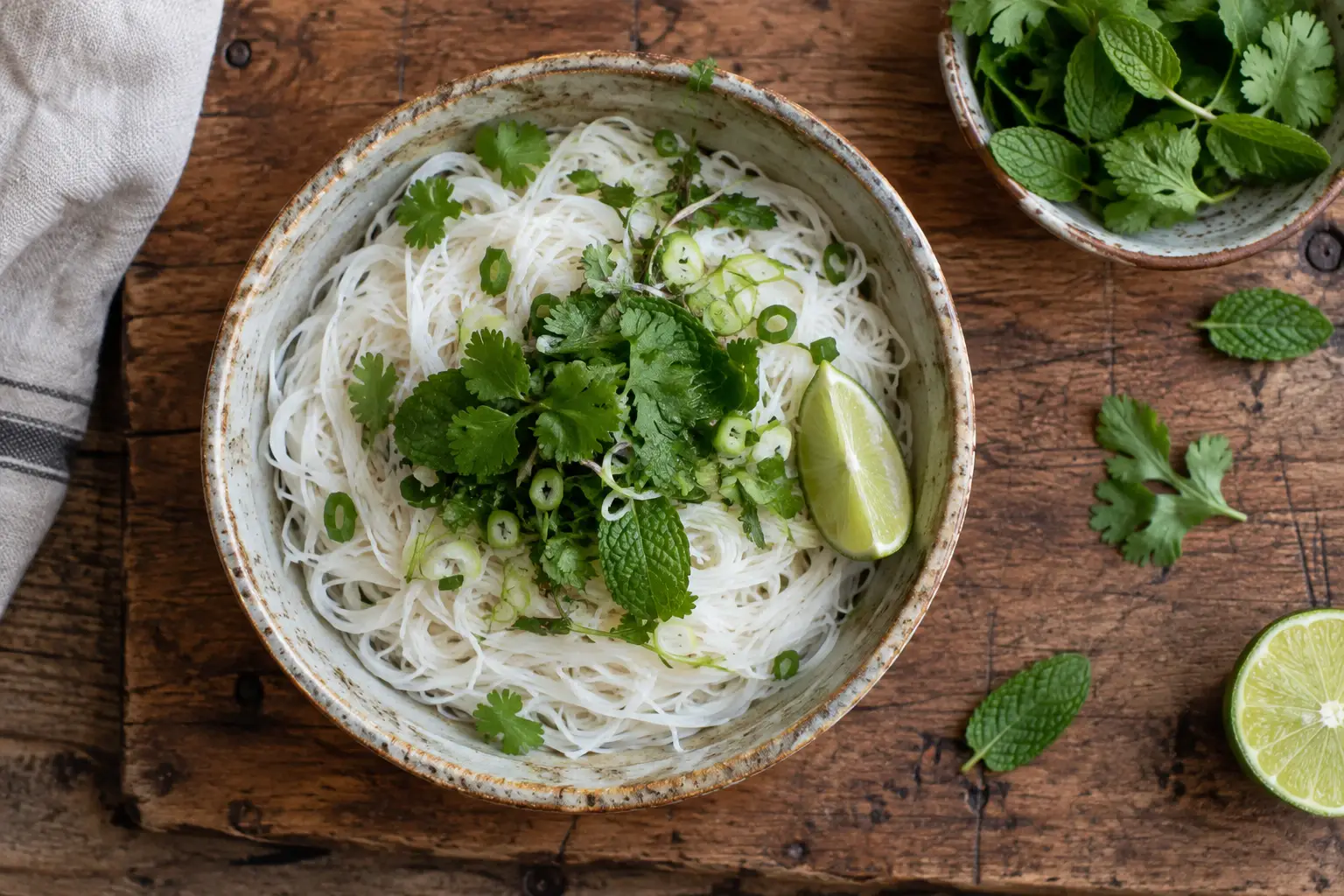
Rice vermicelli is thin noodles made from rice flour and water. Cooked, 100 g has about 108 kcal and a 1 cup (176 g) bowl has 190 kcal, almost all of it starch, with under 4 g of protein and almost no fat. Dry, the same noodles are about 370 kcal per 100 g, so check whether a calorie figure is for dry or cooked weight. They are gluten-free, unlike wheat semiya or egg noodles.
Quick Nutrition Facts
Per 1 cup cooked (176 g)
| Nutrient | Amount |
|---|---|
| Calories | 190 kcal |
| Protein | 3.2g |
| Carbohydrates | 42.3g |
| Fiber | 1.8g |
| Sugars | 0.1g |
| Fat | 0.4g |
| Sodium | 33 mg |
Macronutrient Breakdown
NUTRITIONIST'S INSIGHT
Most of the confusion about rice vermicelli comes from dry versus cooked weight. A 50 g dry nest is around 185 kcal, and it cooks up to a full bowl, so the nest and the bowl are the same meal. The noodles themselves carry little protein or fibre, so what you serve with them decides how the meal behaves: prawns, tofu, egg or chicken plus a big handful of vegetables turn a plain starch into a balanced plate. Watch the dressing too. A spoon of peanut sauce or fish sauce mix can add more calories and sodium than the noodles did.
Myth Busters
MYTH #1: Rice noodles are healthier than wheat pasta because they are lighter.
TRUTH: Cooked rice noodles have about 108 kcal per 100 g, somewhat less than cooked wheat pasta (about 158 kcal), but they are mostly starch with about 1 g of fibre and under 2 g of protein per 100 g. Their real advantage is that they are gluten-free, not that they carry more nutrients. Rice Noodles Nutrition Facts, Nutrition Fact Label (USDA data); Rice noodles, cooked (FDC 168914), USDA FoodData Central
MYTH #2: Rice vermicelli is a low-GI food, so it is safe for diabetes in any amount.
TRUTH: Reported GI values vary widely. A Sydney study of Vietnamese foods found noodle products at 39 to 61, while Everyday Health cites a range of 40 to about 80 for vermicelli, and puts a full cup of cooked rice noodles at a glycemic load near 26. Portion size and what you eat with the noodles matter more than the label "low GI". The glycaemic index values of Vietnamese foods, Eur J Clin Nutr 2001 (PubMed 11781674); Can You Eat Rice Noodles if You Live With Diabetes?, Everyday Health
MYTH #3: A nest of dry vermicelli has the same calories as a bowl of cooked noodles.
TRUTH: Dry noodles are about 370 kcal per 100 g and cooked ones about 108 kcal per 100 g because they absorb water. Compare like with like: 56 g dry (207 kcal) is not 56 g cooked (about 60 kcal). Calories in Rice Noodles, dry, CalorieKing; Rice Noodles Nutrition Facts, Nutrition Fact Label (USDA data)
MYTH #4: Rice vermicelli is a good source of protein.
TRUTH: A 1 cup (176 g) serving has only 3.2 g of protein. To reach a useful 20 g or more for a meal, you need to add tofu, egg, fish, prawns or lean meat. Rice Noodles Nutrition Facts, Nutrition Fact Label (USDA data)
NutriScore by Health Goals
| Health Goal | NutriScore | Why This Score? |
|---|---|---|
| Weight Loss |  | A 1 cup serving is 190 kcal with almost no fat, which is fine in a bowl packed with vegetables and lean protein. On their own the noodles give little fibre or protein, so they do not keep you full for long. Rice Noodles Nutrition Facts, Nutrition Fact Label (USDA data) |
| Muscle Gain |  | 3.2 g of protein per cup is very low. The noodles help refill carbs after training, but you need to add a real protein source. Rice Noodles Nutrition Facts, Nutrition Fact Label (USDA data) |
| Blood Sugar Control | | GI estimates range from the 40s to about 80 and a full cup has a glycemic load near 26. Half a cup with protein and vegetables brings it down to about 13. Can You Eat Rice Noodles if You Live With Diabetes?, Everyday Health; The glycaemic index values of Vietnamese foods, Eur J Clin Nutr 2001 (PubMed 11781674) |
| Heart Health |  | Plain noodles have 0.4 g of fat and 33 mg of sodium per cup. The sauce, not the noodles, is where salt and saturated fat come in. Rice Noodles Nutrition Facts, Nutrition Fact Label (USDA data) |
| Gluten-Free Eating |  | Rice vermicelli is made from rice flour and water, so it suits gluten-free diets. Check the pack, because some brands blend in wheat or are made on shared lines. Rice Noodles Nutrition Facts, Nutrition Fact Label (USDA data) |
| Digestive Health | | Only 1.8 g of fibre per cup. It is easy to digest, which suits some people, but it adds little for gut health. Rice Noodles Nutrition Facts, Nutrition Fact Label (USDA data) |
PERSONALIZED NUTRITION
Track your meals with NutriScan for personalized NutriScores based on your specific health goals!
Blood Sugar Response to Rice Vermicelli Noodles
Illustrative curve for a healthy adult eating 1 cup of cooked vermicelli with about 42 g of carbs and no protein or vegetables. Thin rice noodles digest quickly, so blood sugar climbs over the first 30 to 45 minutes and settles back toward baseline by about 2 to 3 hours. Adding protein, vegetables and an acidic dressing flattens the peak. Individual responses differ, so treat these numbers as a guide, not a measurement. Can You Eat Rice Noodles if You Live With Diabetes?, Everyday Health; The glycaemic index values of Vietnamese foods, Eur J Clin Nutr 2001 (PubMed 11781674)
Typical Glucose Response Curve
Not medical advice
How to flatten the spike
- Halve the portion to about half a cup of cooked noodles and fill the rest of the bowl with vegetables.
- Add protein such as tofu, egg, prawns or chicken so the carbs digest more slowly.
- Cook the noodles for the shortest time on the pack. Al dente starch raises blood sugar less than soft, well-cooked noodles.
- Finish with lime juice, rice vinegar or pickled vegetables, since acid slows stomach emptying.
- Take a 10 to 15 minute walk after the meal.
Cultural Significance
Rice vermicelli turns up across Southeast and East Asia. In Vietnam it is bun, served cold in bun cha and bun thit nuong bowls with herbs and grilled meat. In Thailand and Malaysia it is stir-fried or served in laksa and curry noodle soups, in China it appears in Singapore noodles, and in the Philippines it is pancit bihon. In supermarkets in Europe and North America it is sold in dry nests beside egg and wheat noodles, so people often look up the difference. It is a different product from wheat semiya, which is made from semolina.
Compare & Substitute
Rice Vermicelli Noodles vs Similar Foods
| Nutrient | Cooked whole wheat spaghetti | Cooked glass noodles (mung bean) | Zucchini noodles | Cooked brown rice |
|---|---|---|---|---|
| Calories | 181 kcal | 160 kcal | 20 kcal | 216 kcal |
| Protein | 7.5g | 0.1g | 1.5g | 5g |
| Carbohydrates | 37.2g | 39g | 4g | 45g |
| Fat | 0.8g | 0.1g | 0.4g | 1.8g |
Frequently Asked Questions
How many calories are in rice vermicelli?
Cooked rice vermicelli has about 108 kcal per 100 g, and a 1 cup (176 g) serving has 190 kcal. Dry noodles have about 370 kcal per 100 g, so a 56 g dry portion is 207 kcal. Sauce and oil are extra.
How many calories are in one nest of rice vermicelli?
It depends on the pack, but a nest is typically 40 to 60 g dry, which is roughly 150 to 220 kcal before sauce or toppings. Check the weight printed on your pack, since nest sizes differ by brand.
Is rice vermicelli good for weight loss?
It can fit if you keep the portion near half to one cup cooked (about 95 to 190 kcal) and load the bowl with vegetables and lean protein. Eaten alone it has little fibre or protein, so it does not keep you full for long.
Is rice vermicelli gluten-free?
Yes, it is made from rice flour and water, so plain rice vermicelli is gluten-free. Some brands blend in other flours or process on shared lines, so check the label if you have coeliac disease.
Is rice vermicelli OK for diabetes?
In small portions with protein and vegetables, it can be. Reported GI values range from the 40s to about 80, and a full cup of cooked rice noodles has a glycemic load near 26 versus about 13 for half a cup. Check your own glucose response.
What is the difference between rice vermicelli and wheat semiya?
Rice vermicelli is made from rice flour and is gluten-free. Semiya is made from wheat (semolina) and contains gluten, and it is usually sold toasted for sweet and savory Indian dishes.


Similar Nutritious Foods
4505 Chicharrones Classic Chili Salt
7 Eleven Japan Crispy Corn Cheese
Explore More Tools
AI Calorie Counter App - Snap a Photo, Get Macros
AI Nutritionist App That Reads Your Logged Meals
Best Protein Supplements for Women
Bulking Meal Plan App That Sets Your Surplus
ChatGPT Calorie Counter Alternative That Keeps the Total
ChatGPT Diet Plan Alternative That Tracks What You Eat
ChatGPT Weight Loss Coach Alternative With a Food Log
Fast Food Calorie Counter App That Reads the Tray
Free Calorie Tracker App with AI Photo Scans | NutriScan
Indian Diet Plan App With Veg and Non Veg Meals
Indian Food Calorie Calculator - Get Instant Nutrition Facts for Desi Meals — 2026
Intermittent Fasting for Women, Timer and Meal Log App
Intermittent Fasting Tracker App - Free Fasting Timer
Macro Tracker App That Fills the Numbers From a Photo
Mediterranean Diet Meal Plan App That Counts the Oil
Micronutrient Tracker App for Vitamins and Minerals
MyFitnessPal Alternative That Stays Free | NutriScan
NutriScore App: A Free Grade on Every Meal | NutriScan
Nutrition Label Scanner App for the Amount You Ate
Second Trimester Protein Guide
Vegetarian Meal Plan App With a Protein Target
Voice Calorie Counter - Speak to Track Meals Hands-Free
Water and Calorie Tracker App - Free Water Log