Soft Pretzel: Calories, Nutrition and Health Benefits
The classic Bavarian twisted bread with its distinctive brown crust and soft chewy interior - a beloved snack that requires mindful eating due to high sodium content.
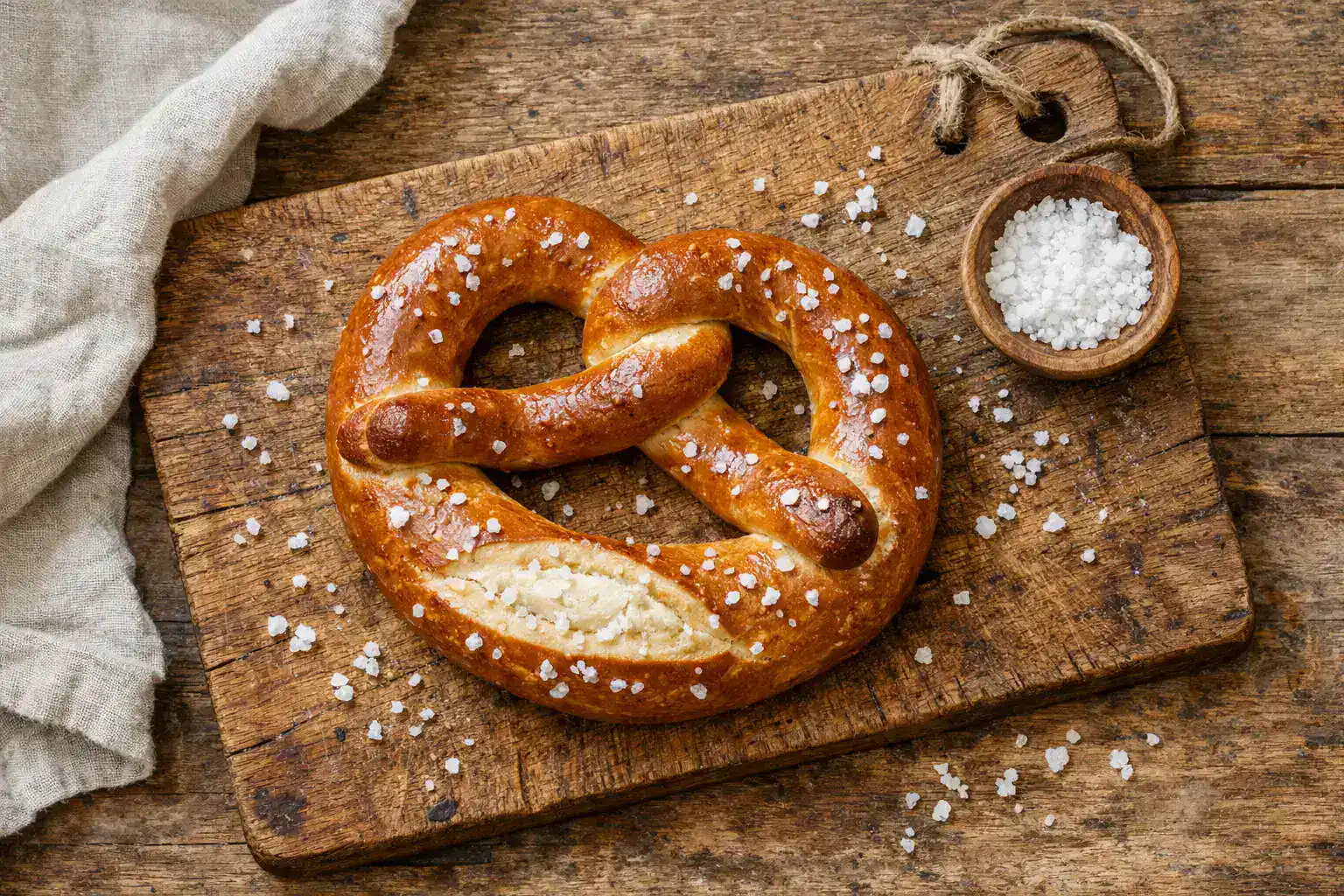
Quick Nutrition Facts
Per 1 Small Soft Pretzel (62g)
| Nutrient | Amount |
|---|---|
| Calories | 210 kcal |
| Protein | 5.1g |
| Carbohydrates | 43g |
| Fiber | 1.1g |
| Sugars | 0.2g |
| Fat | 1.9g |
| Sodium | 870mg |
| Iron | 2.4mg |
| Calcium | 14mg |
| Potassium | 55mg |
Macronutrient Breakdown
 ChatGPT
  Claude
  AI Mode
  Perplexity
NUTRITIONIST INSIGHT
Soft pretzels deliver 38% of your daily sodium in just one small serving. The high glycemic index (GI 80) means they spike blood sugar rapidly. Enjoy as an occasional treat, not a daily snack, and pair with protein to slow glucose absorption.
Myth Busters
MYTH #1: Soft Pretzels Are a Low-Calorie Snack
TRUTH: While a small pretzel has 210 calories, most vendors sell medium or large sizes (389-483 calories). Add cheese dip or mustard, and you're looking at 500+ calories. Portion control is essential for weight management.
MYTH #2: Pretzels Are Better Than Chips for Weight Loss
TRUTH: Soft pretzels have less fat (3.1g vs 35g per 100g) but similar calorie density and higher sodium. Both are refined carb snacks best consumed occasionally.
MYTH #3: The Salt on Pretzels Provides Essential Electrolytes
TRUTH: Most people already consume excess sodium. One small pretzel provides 38% of daily sodium limit (2300mg). High sodium intake raises blood pressure and heart disease risk.
MYTH #4: Whole Wheat Pretzels Are Just as High Glycemic
TRUTH: Research shows whole grain and soy-based pretzels have significantly lower GI (39-66 vs 80). Choosing these alternatives provides better blood sugar control.
MYTH #5: Soft Pretzels Have No Nutritional Value
TRUTH: While low in vitamins, soft pretzels provide iron (13% DV per small pretzel) and protein (5.1g). They're not nutritionally empty, just limited in fiber and micronutrients.
NutriScore by Health Goals
| Health Goal | NutriScore | Why This Score? |
|---|---|---|
| Weight Loss |  | High calorie density for a snack (338 kcal/100g), low fiber. Limit to half a small pretzel and pair with protein. |
| Muscle Gain | | Provides quick carbs (43g per small) for post-workout, but low protein (5.1g). Add a protein source for muscle recovery. |
| Diabetes Management |  | High glycemic index (GI 80) causes rapid blood sugar spikes. Choose whole grain alternatives or eat with protein/fat. |
| PCOS Management | | Refined carbs and high GI worsen insulin resistance. Limit intake; opt for whole grain versions. |
| Pregnancy Nutrition | | Fortified flour provides some folate and iron, but high sodium may worsen pregnancy swelling. Consume occasionally. |
| Viral/Flu Recovery |  | Easy to digest bland food, provides quick energy. Low fiber is actually beneficial during stomach illness. |
PERSONALIZED NUTRITION
Track your meals with NutriScan for personalized NutriScores based on your specific health goals!
Blood Sugar Response to Soft Pretzel
Understanding how soft pretzels affect your blood glucose is critical due to their high glycemic index.
Typical Glucose Response Curve
This chart shows typical blood glucose response for general healthy individuals. Individual responses may vary. Not medical advice.
How to Flatten the Spike
Pairing carbs with protein or healthy fat slows glucose absorption and reduces the peak blood sugar level:
- 🧀 Cheese or cheese dip - Adds protein and fat (watch portions for calories)
- 🥜 Peanut butter or almond butter - Healthy fats slow absorption
- 🍖 Deli meat or sliced turkey - Protein-rich pairing
- 🥗 Eat after a salad or vegetables - Fiber first slows digestion
This combination reduces the glucose spike and extends energy release, though it adds calories.
Cultural Significance
The pretzel's distinctive twisted shape dates back to early medieval Europe, with competing origin stories from German and Italian monastic traditions.
In Germany (Brezel):
- Bavaria claims the pretzel as a cultural icon, integral to Oktoberfest
- Traditional lye bath (Laugenbrezel) creates the characteristic dark brown crust
- Served fresh from bakeries with butter, mustard, or Obatzda cheese spread
- Pretzel shops (Bäckereien) are found on nearly every German street corner
Global Adoption:
- Philadelphia became the US pretzel capital in the 18th century via German immigrants
- Soft pretzel chains (Auntie Anne's, Wetzel's Pretzels) popularized mall snacking
- Stadium and street food staple across North America
- Now found in variations worldwide: pretzel dogs, pretzel buns, pretzel bites
Compare & Substitute
Soft Pretzel vs Similar Snacks (Per 100g)
| Nutrient | 🥨 Soft Pretzel | 🥖 Baguette | 🍪 Crackers | 🥔 Potato Chips |
|---|---|---|---|---|
| Calories | 338 kcal | 274 kcal | 480 kcal | 536 kcal |
| Carbs | 69g | 56g | 60g | 52g |
| Fiber | 1.7g | 2.4g | 3g | 4.8g |
| Protein | 8.2g | 9g | 10g | 7g |
| Fat | 3.1g | 1.6g | 23g | 35g |
| Sodium | 1404mg | 602mg | 900mg | 525mg |
| Sugar | 0.3g | 3g | 4g | 0.5g |
| Best For | Occasional treat, quick carbs | Sandwiches, lower sodium option | Longer shelf life, with dips | Crunch craving, lower sodium |
Frequently Asked Questions
How many calories are in a soft pretzel?
A small soft pretzel (62g) contains 210 calories. A medium pretzel (115g) has about 389 calories, while a large pretzel (143g) contains 483 calories.
Calorie breakdown: 82% carbohydrates, 10% protein, 8% fat.
Are soft pretzels healthy?
Soft pretzels are a moderate snack choice with pros and cons.
Pros:
- Low in fat and sugar
- Provides iron (13% DV per small)
- Contains some protein (5.1g)
Cons:
- Very high sodium (38% DV per small)
- High glycemic index (GI 80)
- Low fiber (1.1g)
Bottom line: Enjoy occasionally in small portions, paired with protein or vegetables.
Can diabetics eat soft pretzels?
Diabetics should limit soft pretzel consumption due to the high glycemic index (80).
Tips for diabetics:
- Choose small portions (half a pretzel)
- Always pair with protein or healthy fat
- Consider whole grain or soy-based alternatives (GI 39-66)
- Monitor blood sugar 2 hours after eating
Why are soft pretzels so high in sodium?
The traditional preparation involves dipping dough in a lye or baking soda solution, then topping with coarse salt crystals. This process creates the distinctive brown crust and adds significant sodium (870-1404mg).
To reduce sodium: Brush off visible salt crystals before eating, or request without salt at pretzel shops.
What is the glycemic index of soft pretzels?
Standard soft pretzels have a high glycemic index of 80, classified as high GI. This causes rapid blood sugar spikes.
Lower GI alternatives:
- Soy-based soft pretzels: GI 39
- Whole grain pretzels: GI 62-66
- Whole wheat pretzels: GI 63
Are soft pretzels better than chips?
For weight management, soft pretzels have some advantages:
Pretzels advantages: Lower fat (3.1g vs 35g per 100g), no saturated fat from frying.
Chips advantages: Lower sodium (525mg vs 1404mg per 100g), slightly higher fiber.
Verdict: Neither is a health food. For weight loss, pretzels are marginally better due to lower fat, but both should be occasional treats.
How should I store soft pretzels?
Fresh pretzels: Best eaten within 4 hours. Store at room temperature in a paper bag.
Leftover pretzels: Freeze for up to 3 months. Reheat in 350°F oven for 5-7 minutes, or microwave 20-30 seconds with a damp paper towel.
What's the healthiest way to eat a soft pretzel?
- Choose a small size (210 calories vs 483 for large)
- Brush off excess salt
- Pair with hummus, mustard, or cheese for protein
- Eat after a fiber-rich meal, not on empty stomach
- Consider whole grain alternatives when available


Similar Nutritious Foods
4505 Chicharrones Classic Chili Salt
7 Eleven Japan Crispy Corn Cheese
Explore More Nutrition Tools & Resources
AI Calorie Counter App - Snap a Photo, Get Macros
AI Nutritionist App That Reads Your Logged Meals
Best Protein Supplements for Women
Bulking Meal Plan App That Sets Your Surplus
ChatGPT Calorie Counter Alternative That Keeps the Total
ChatGPT Diet Plan Alternative That Tracks What You Eat
ChatGPT Weight Loss Coach Alternative With a Food Log
Fast Food Calorie Counter App That Reads the Tray
Free Calorie Tracker App with AI Photo Scans | NutriScan
Indian Diet Plan App With Veg and Non Veg Meals
Indian Food Calorie Calculator - Get Instant Nutrition Facts for Desi Meals — 2026
Intermittent Fasting for Women, Timer and Meal Log App
Intermittent Fasting Tracker App - Free Fasting Timer
Macro Tracker App That Fills the Numbers From a Photo
Mediterranean Diet Meal Plan App That Counts the Oil
Micronutrient Tracker App for Vitamins and Minerals
MyFitnessPal Alternative That Stays Free | NutriScan
NutriScore App: A Free Grade on Every Meal | NutriScan
Nutrition Label Scanner App for the Amount You Ate
Second Trimester Protein Guide
Vegetarian Meal Plan App With a Protein Target
Voice Calorie Counter - Speak to Track Meals Hands-Free
Water and Calorie Tracker App - Free Water Log