Urad Dal: Calories, Nutrition and Health Benefits
 ChatGPT
 Claude
 AI Mode
 Perplexity
100 g of dry urad dal has about 341 calories, 25g protein, 59g carbs, 18g fiber and 1.6g fat. It swells to about 2 cups cooked, so a 1-cup bowl (about 45 g dry) is roughly 150 calories and 11 to 12g protein before tadka oil or ghee. Its glycemic index is reported around 43, which is low.
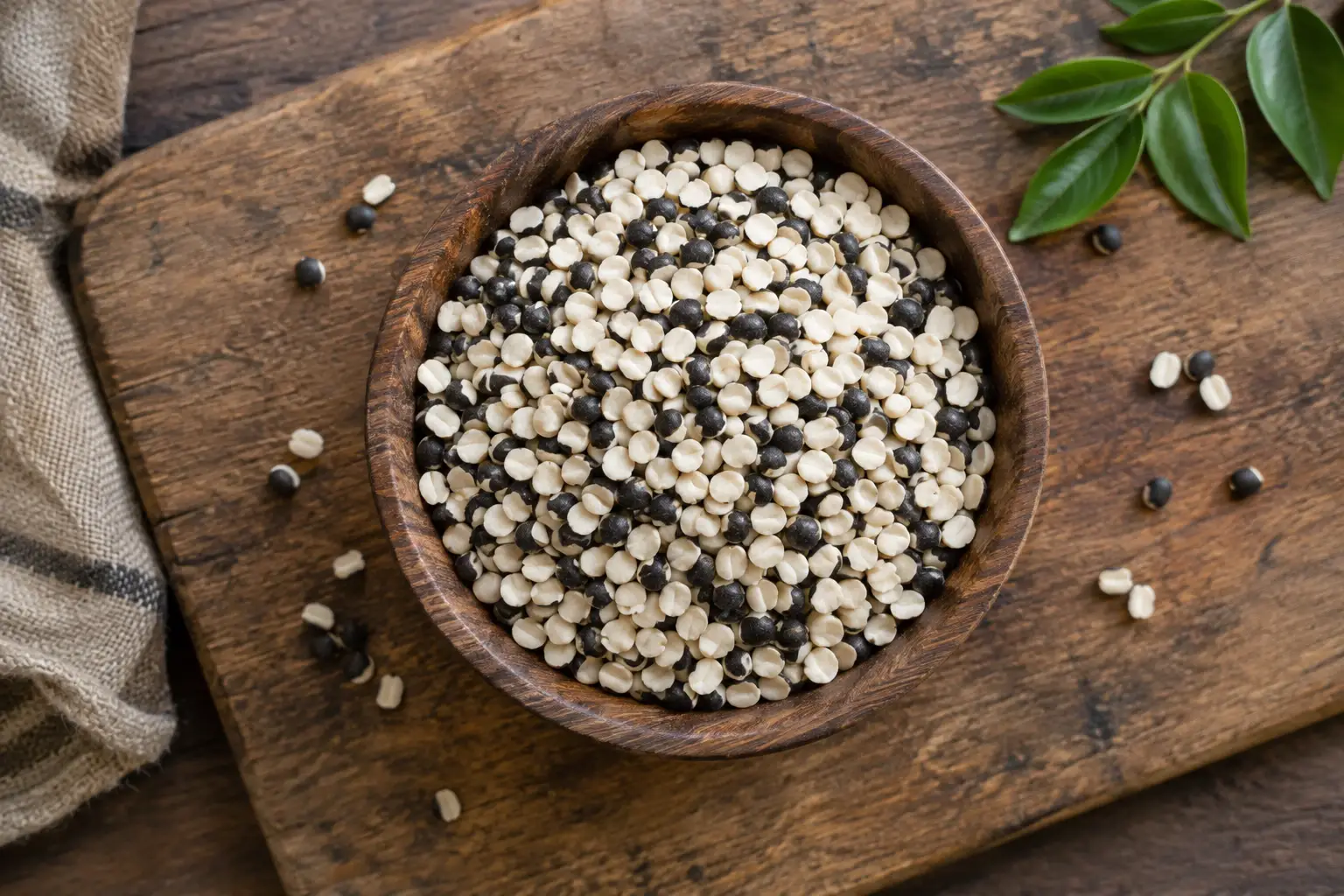
Quick Nutrition Facts
Per 100 g dry urad dal (about 1/2 cup raw)
| Nutrient | Amount |
|---|---|
| Calories | 341 kcal |
| Protein | 25.2g |
| Carbohydrates | 59g |
| Fiber | 18.3g |
| Sugars | 0g |
| Fat | 1.64g |
| Sodium | 38 mg |
Macronutrient Breakdown
NUTRITIONIST'S INSIGHT
Urad dal is a dense protein and fiber source: 25g of protein per 100 g dry is close to chicken breast by weight, though plant protein is low in methionine, so pair it with rice or roti. The catch is that raw numbers mislead. A cook-ready 100 g is a lot of dal for one person; most servings use 40 to 50 g dry, about 140 to 170 kcal, and the calories you add in ghee, oil and cream in dal makhani often match the dal itself. The reported glycemic index of about 43 is low, but the figure comes from recipe and food-database sites, not a controlled trial, so treat it as a guide. White split dehusked urad has less fiber than the whole black seed.
Myth Busters
MYTH #1: Urad dal is a fattening food.
TRUTH: The dal itself has only 1.6g fat per 100 g dry. The calories come from the 341 kcal of protein and starch, and from the ghee, butter or cream added in dishes like dal makhani. A 45 g dry portion is about 150 kcal. USDA FoodData Central: Mungo beans, mature seeds, raw (FDC 174259)
MYTH #2: Urad dal spikes blood sugar like white rice.
TRUTH: Reported glycemic index values are about 43, in the low range, helped by fiber and protein. These values come from food databases rather than clinical trials, and large portions still add carbs, so portion size matters. Tarla Dalal: Glycemic index of urad dal (GI 43, GL 7.6); Harvard T.H. Chan School of Public Health: Glycemic index and glycemic load
MYTH #3: Dal has as much protein per cup as meat.
TRUTH: Dry urad dal is 25g protein per 100 g, but a cooked cup is only about 12g because water makes up most of the weight. It also lacks some methionine, which grains in the same meal supply. USDA FoodData Central: Mungo beans, mature seeds, raw (FDC 174259)
MYTH #4: Washing off the black skin makes no difference.
TRUTH: The USDA figure of 18.3g fiber per 100 g is for the whole seed. Dehusked white urad dal loses part of that fiber, so whole black urad is the higher-fiber choice. USDA FoodData Central: Mungo beans, mature seeds, raw (FDC 174259); ManipalCigna: Health benefits of urad dal
NutriScore by Health Goals
| Health Goal | NutriScore | Why This Score? |
|---|---|---|
| Weight Loss |  | 18g fiber and 25g protein per 100 g dry keep you full for about 340 kcal, but tadka oil and ghee can double the calories of a bowl. USDA FoodData Central: Mungo beans, mature seeds, raw (FDC 174259) |
| Muscle Gain | | About 12g protein per cooked cup, a solid plant source. Incomplete amino acid profile, so combine with rice, roti or dairy. USDA FoodData Central: Mungo beans, mature seeds, raw (FDC 174259) |
| Diabetes Management | | Reported glycemic index is about 43, with fiber and protein slowing absorption. Carbs are still 59g per 100 g dry, so portions of 40 to 50 g dry work better. Tarla Dalal: Glycemic index of urad dal (GI 43, GL 7.6); American Diabetes Association: Glycemic index and diabetes |
| Heart Health | | Almost no fat, 18g fiber and 38 mg sodium per 100 g dry. Salt and ghee in the dish decide how heart-friendly it ends up. USDA FoodData Central: Mungo beans, mature seeds, raw (FDC 174259); ManipalCigna: Health benefits of urad dal |
| Pregnancy |  | Dried legumes like urad are rich in folate (about 628 µg per 100 g dry in USDA data), iron and protein, all of which pregnancy raises the need for. Cook it thoroughly. USDA FoodData Central: Mungo beans, mature seeds, raw (FDC 174259); NIH Office of Dietary Supplements: Folate fact sheet |
PERSONALIZED NUTRITION
Track your meals with NutriScan for personalized NutriScores based on your specific health goals!
Blood Sugar Response to Urad Dal
Cooked urad dal with about 25g of carbs in a typical 1-cup bowl rises slowly because its fiber and protein slow digestion. Glucose peaks near 60 minutes at a modest level and settles within about two hours. Eaten with white rice or naan, the rice sets the peak. Tarla Dalal: Glycemic index of urad dal (GI 43, GL 7.6); Harvard T.H. Chan School of Public Health: Glycemic index and glycemic load
Estimated Blood Sugar Response (1 cup cooked urad dal, about 45 g dry)
Modeled estimate for a person without diabetes, not a measured trace. Individual responses vary.
How to flatten the spike
- Keep the portion to 1 cup cooked (about 45 g dry) and fill the rest of the plate with vegetables.
- Pair dal with a small portion of rice or roti rather than a large one, since the grain drives most of the spike.
- Choose whole black urad over dehusked white for extra fiber.
- Go easy on ghee and oil in the tadka, which adds calories but not satiety.
- Take a 10 to 15 minute walk after the meal.
Cultural Significance
Urad dal (Vigna mungo, also called black gram or urd bean) has been grown in India for thousands of years. It is the base of idli and dosa batter in South India, where it is fermented with rice, and of dal makhani in Punjab. Vada, papad and the Gujarati and Rajasthani badi are also made from it. In many households it is a staple at festivals and weddings, and it is also eaten across Nepal and Pakistan.
Compare & Substitute
Urad Dal vs Similar Foods
| Nutrient | Moong dal, dry (100 g) | Masoor dal (red lentils), dry (100 g) | Chana dal, dry (100 g) | Toor dal, dry (100 g) |
|---|---|---|---|---|
| Calories | 347 kcal | 352 kcal | 364 kcal | 343 kcal |
| Protein | 23.9g | 24.6g | 20.8g | 22.3g |
| Carbohydrates | 62.6g | 63.4g | 60.9g | 62.8g |
| Fat | 1.2g | 1.1g | 5.3g | 1.5g |
Frequently Asked Questions
How many calories are in urad dal?
100 g of dry urad dal has about 341 calories. A 45 g dry portion, which cooks to about 1 cup, is about 150 calories before any ghee or oil.
How much protein is in urad dal?
About 25g per 100 g dry, or around 12g in a cooked cup. It is a good plant protein, best paired with rice or roti for a fuller amino acid profile.
Is urad dal good for diabetes?
Its reported glycemic index is about 43, which is low, and it has 18g fiber per 100 g dry in the whole seed. It still has 59g carbs per 100 g dry, so keep to about 1 cup cooked and ask your care team for personal targets.
Is urad dal good for weight loss?
It can be, because fiber and protein keep you full. Watch the tadka: ghee and oil add about 40 kcal per teaspoon.
What is the difference between black and white urad dal?
Whole black urad keeps its skin and has more fiber. White urad dal is dehusked and split, cooks faster and has less fiber, with similar calories and protein.


Similar Nutritious Foods
4505 Chicharrones Classic Chili Salt
7 Eleven Japan Crispy Corn Cheese
Explore More Tools
AI Calorie Counter App - Snap a Photo, Get Macros
AI Nutritionist App That Reads Your Logged Meals
Best Protein Supplements for Women
Bulking Meal Plan App That Sets Your Surplus
ChatGPT Calorie Counter Alternative That Keeps the Total
ChatGPT Diet Plan Alternative That Tracks What You Eat
ChatGPT Weight Loss Coach Alternative With a Food Log
Fast Food Calorie Counter App That Reads the Tray
Free Calorie Tracker App with AI Photo Scans | NutriScan
Indian Diet Plan App With Veg and Non Veg Meals
Indian Food Calorie Calculator - Get Instant Nutrition Facts for Desi Meals — 2026
Intermittent Fasting for Women, Timer and Meal Log App
Intermittent Fasting Tracker App - Free Fasting Timer
Macro Tracker App That Fills the Numbers From a Photo
Mediterranean Diet Meal Plan App That Counts the Oil
Micronutrient Tracker App for Vitamins and Minerals
MyFitnessPal Alternative That Stays Free | NutriScan
NutriScore App: A Free Grade on Every Meal | NutriScan
Nutrition Label Scanner App for the Amount You Ate
Second Trimester Protein Guide
Vegetarian Meal Plan App With a Protein Target
Voice Calorie Counter - Speak to Track Meals Hands-Free
Water and Calorie Tracker App - Free Water Log