White Sauce Pasta: Calories, Nutrition and Health Benefits
 ChatGPT
 Claude
 AI Mode
 Perplexity
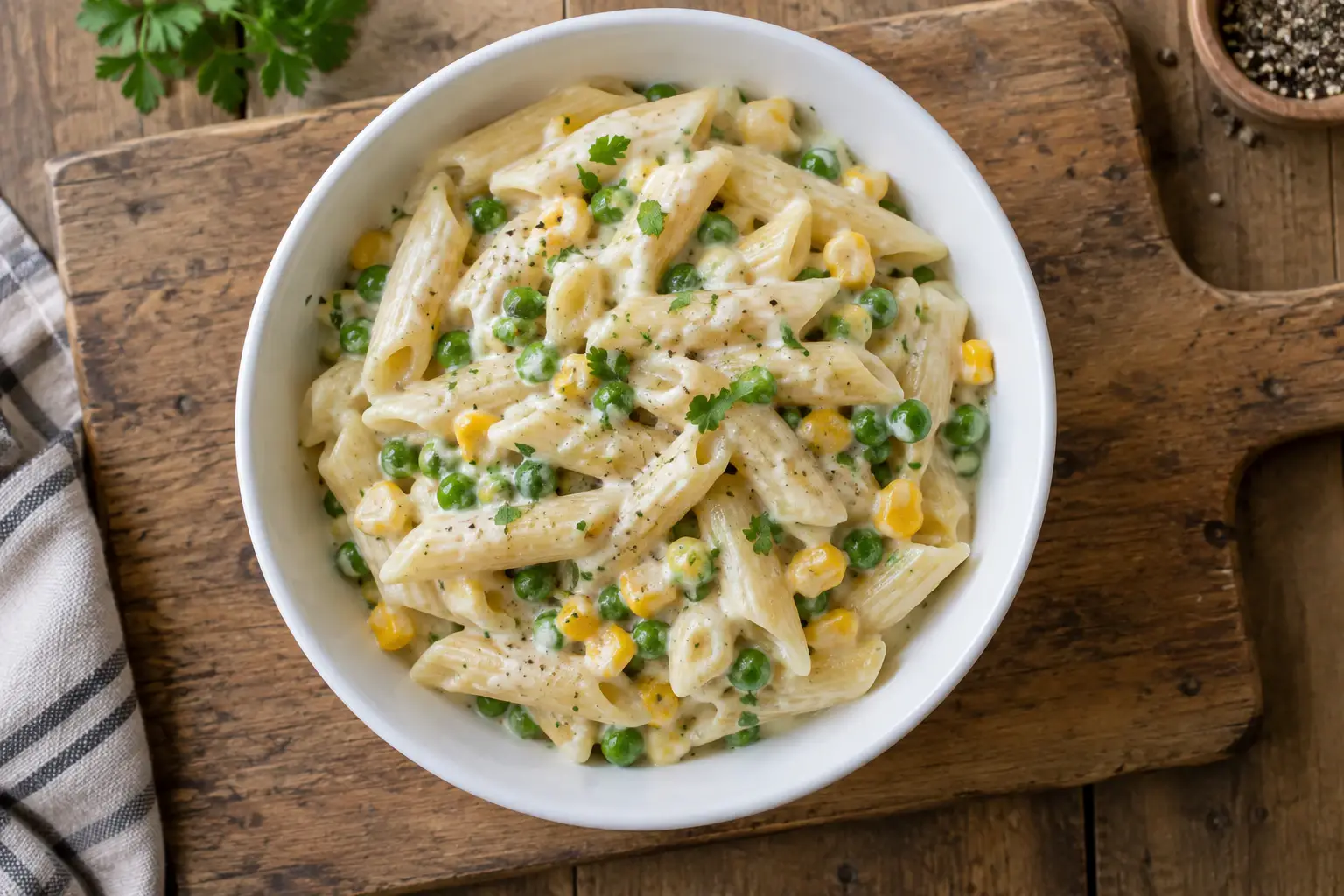
A homemade bowl of white sauce pasta (about 290 g, penne in a milk, butter and flour bechamel) has roughly 417 calories, 58.7 g of carbohydrate, 13.7 g of protein and 13.8 g of fat. Restaurant plates with cheese or cream are larger and can pass 600 calories.
Quick Nutrition Facts
Per 1 homemade bowl (about 290 g)
| Nutrient | Amount |
|---|---|
| Calories | 417 kcal |
| Protein | 13.7g |
| Carbohydrates | 58.7g |
| Fiber | 2.9g |
| Sugars | 7.4g |
| Fat | 13.8g |
| Sodium | 447 mg |
Macronutrient Breakdown

NUTRITIONIST'S INSIGHT
White sauce pasta is refined pasta in a bechamel, which is milk thickened with butter and flour, so most of the calories come from pasta starch and about a third from fat. The base bowl lands near 417 kcal, and the sauce is what moves the number: cheese, cream and extra butter add 60 to 100 kcal each. Protein is moderate at 13.7 g and fiber is low at 2.9 g, so peas, sweet corn, broccoli, mushrooms or chicken make the plate more filling for few extra calories. Salt is the other thing to watch, since a restaurant plate with cheese can carry well over 600 mg of sodium.
Myth Busters
MYTH #1: White sauce pasta is always very high in calories.
TRUTH: It depends on the sauce. A bechamel made with milk, a little butter and flour gives about 417 kcal in a 290 g bowl. Restaurant plates reach 600 kcal or more because they add cheese, cream and a larger portion. USDA FoodData Central; White Sauce Pasta: calories and nutrition facts (recipe entry, 401 g serving); Pasta with bechamel sauce: calories and nutrition facts
MYTH #2: The cream sauce is mostly cream.
TRUTH: A classic bechamel has no cream. It is milk thickened with a roux of butter and flour. That is why the homemade version has about 13.8 g of fat per bowl, and why cream or cheese is what pushes it higher. USDA FoodData Central; White Sauce Pasta: calories and nutrition facts (recipe entry, 401 g serving)
MYTH #3: Pasta spikes blood sugar the same way however you cook it.
TRUTH: Reviewed studies report that pasta cooked al dente produces a smaller glucose rise than pasta cooked soft, and that cooled and reheated pasta gives a lower peak than freshly cooked pasta. The carbohydrate load of 58.7 g still counts. Culinary strategies to manage glycemic response in people with type 2 diabetes: a narrative review; Does resistant starch formed by cooling pasta decrease glycemic response?; International Tables of Glycemic Index and Glycemic Load Values: 2008
MYTH #4: Because it is white, it has no nutritional value.
TRUTH: The milk brings protein and calcium, and the pasta supplies energy and B vitamins from enrichment. The weak spots are fiber (2.9 g) and, in rich versions, saturated fat. Adding vegetables or switching to whole-wheat pasta addresses both. USDA FoodData Central; Starchy foods and carbohydrates; Fat: the facts
NutriScore by Health Goals
| Health Goal | NutriScore | Why This Score? |
|---|---|---|
| Weight Loss |  | About 417 kcal for a modest bowl is workable, but the low fiber (2.9 g) means it is not very filling and restaurant portions with cheese easily pass 600 kcal. Measure the sauce and add vegetables. USDA FoodData Central; White Sauce Pasta: calories and nutrition facts (recipe entry, 401 g serving) |
| Blood Sugar Control |  | 58.7 g of carbohydrate with only 2.9 g of fiber is a heavy carbohydrate load. Al dente pasta and cooled pasta lower the rise somewhat, but portion size still dominates. USDA FoodData Central; Culinary strategies to manage glycemic response in people with type 2 diabetes: a narrative review; International Tables of Glycemic Index and Glycemic Load Values: 2008 |
| Heart Health | | The sauce supplies about 8 g of saturated fat from butter and milk, and cheese raises it further. The NHS advises limiting saturated fat and choosing lower-fat options. USDA FoodData Central; Fat: the facts |
| Muscle Gain | | 13.7 g of protein per bowl is moderate. The carbohydrate suits training days, but adding chicken, paneer, eggs or extra milk powder is needed to reach a useful protein dose. USDA FoodData Central |
| Digestive Health | | Refined pasta gives 2.9 g of fiber per bowl. The NHS recommends wholegrain starchy foods for fiber, so whole-wheat pasta and vegetables improve this score. USDA FoodData Central; Starchy foods and carbohydrates |
PERSONALIZED NUTRITION
Track your meals with NutriScan for personalized NutriScores based on your specific health goals!
Blood Sugar Response to White Sauce Pasta
A bowl has about 58.7 g of carbohydrate, mostly pasta starch, with 2.9 g of fiber and 13.8 g of fat from the sauce. Expect a moderate to high rise of about 40 to 50 mg/dL that peaks around 45 to 60 minutes and settles within 3 hours; the fat in the sauce slows stomach emptying a little. This is a modeled estimate from the carbohydrate, fiber and fat content, not a measured trace for this recipe. Overcooked pasta and larger portions raise the peak. Culinary strategies to manage glycemic response in people with type 2 diabetes: a narrative review; Does resistant starch formed by cooling pasta decrease glycemic response?; International Tables of Glycemic Index and Glycemic Load Values: 2008
Estimated Blood Sugar Response (1 bowl, about 290 g)
Modeled estimate for a person without diabetes, not a measured trace. Individual responses vary with pasta shape, cooking time, portion size, toppings and activity.
How to flatten the spike
- Cook the pasta al dente and drain it promptly, since shorter cooking gives a smaller glucose rise.
- Keep to one bowl of about 150 g cooked pasta and add peas, broccoli, mushrooms or spinach to fill the plate.
- Add protein such as chicken, paneer, eggs or beans so the meal digests more slowly.
- Eat leftovers cooled and gently reheated, which gave a lower peak than freshly cooked pasta in one study.
- Take a 10 to 15 minute walk after eating to blunt the peak.
Cultural Significance
White sauce pasta uses the French bechamel, one of the classic mother sauces, which became the base of Italian baked dishes such as lasagne. Today it is a home and restaurant standard in many countries: in the US and Europe it often comes as penne or fettuccine in a creamy sauce, and in India it is usually a milk-flour sauce with processed cheese and vegetables such as peas, sweet corn and capsicum. It is a common order at cafes and a first pasta many people cook at home because the ingredients are in most kitchens. Versions differ by region and by cafe, so portions and richness vary.
Compare & Substitute
White Sauce Pasta vs Similar Foods
| Nutrient | Whole-wheat penne with the same bechamel, 290 g bowl (estimated) | Bechamel pasta with half the pasta and 150 g mixed vegetables (estimated) | Tomato sauce pasta, 290 g bowl (estimated) |
|---|---|---|---|
| Calories | 417 kcal | 330 kcal | 370 kcal |
| Protein | 15.5g | 12.5g | 12g |
| Carbohydrates | 55g | 42g | 65g |
| Fat | 14.5g | 12g | 7g |
Frequently Asked Questions
How many calories are in white sauce pasta?
A homemade bowl of about 290 g has roughly 417 calories, made with 150 g cooked penne, milk, butter and flour. A restaurant serving with cheese or cream is often 500 to 650 calories. A published recipe entry lists 608 calories for 401 g.
How many calories are in 100 g of white sauce pasta?
Around 144 calories per 100 g for the homemade bowl here. Published entries give 152 kcal per 100 g (Fitia recipe) and 170 kcal per 100 g (EatBetter).
Is white sauce pasta healthy?
It is a carbohydrate-heavy dish with about 13.8 g of fat and 2.9 g of fiber per bowl. It fits a balanced diet in a measured portion with vegetables and a protein source, but the cheese and cream versions are high in saturated fat.
Is white sauce pasta good for weight loss?
It can fit if you keep the portion near one bowl, use milk instead of cream, go easy on cheese and add vegetables. A large restaurant plate can use up a third of a 1,800 calorie day.
How much protein is in white sauce pasta?
About 13.7 g in a 290 g homemade bowl. Adding grilled chicken, paneer or eggs raises it well above 25 g.
Can people with diabetes eat white sauce pasta?
It has about 58.7 g of carbohydrate per bowl, so count it toward your carbohydrate total. Al dente pasta, a smaller portion, vegetables and protein help, and checking your own glucose response with your care team is the reliable guide.
How do I make white sauce pasta lighter?
Use reduced-fat (2%) milk, cut the butter to 5 g, thicken with a little more flour, skip cream, use whole-wheat pasta and fold in 100 to 150 g of vegetables.


Similar Nutritious Foods
4505 Chicharrones Classic Chili Salt
7 Eleven Japan Crispy Corn Cheese
Explore More Tools
AI Calorie Counter App - Snap a Photo, Get Macros
AI Nutritionist App That Reads Your Logged Meals
Best Protein Supplements for Women
Bulking Meal Plan App That Sets Your Surplus
ChatGPT Calorie Counter Alternative That Keeps the Total
ChatGPT Diet Plan Alternative That Tracks What You Eat
ChatGPT Weight Loss Coach Alternative With a Food Log
Fast Food Calorie Counter App That Reads the Tray
Free Calorie Tracker App with AI Photo Scans | NutriScan
Indian Diet Plan App With Veg and Non Veg Meals
Indian Food Calorie Calculator - Get Instant Nutrition Facts for Desi Meals — 2026
Intermittent Fasting for Women, Timer and Meal Log App
Intermittent Fasting Tracker App - Free Fasting Timer
Macro Tracker App That Fills the Numbers From a Photo
Mediterranean Diet Meal Plan App That Counts the Oil
Micronutrient Tracker App for Vitamins and Minerals
MyFitnessPal Alternative That Stays Free | NutriScan
NutriScore App: A Free Grade on Every Meal | NutriScan
Nutrition Label Scanner App for the Amount You Ate
Second Trimester Protein Guide
Vegetarian Meal Plan App With a Protein Target
Voice Calorie Counter - Speak to Track Meals Hands-Free
Water and Calorie Tracker App - Free Water Log