Xanthan Gum: Calories, Nutrition and Health Benefits
 ChatGPT
 Claude
 AI Mode
 Perplexity
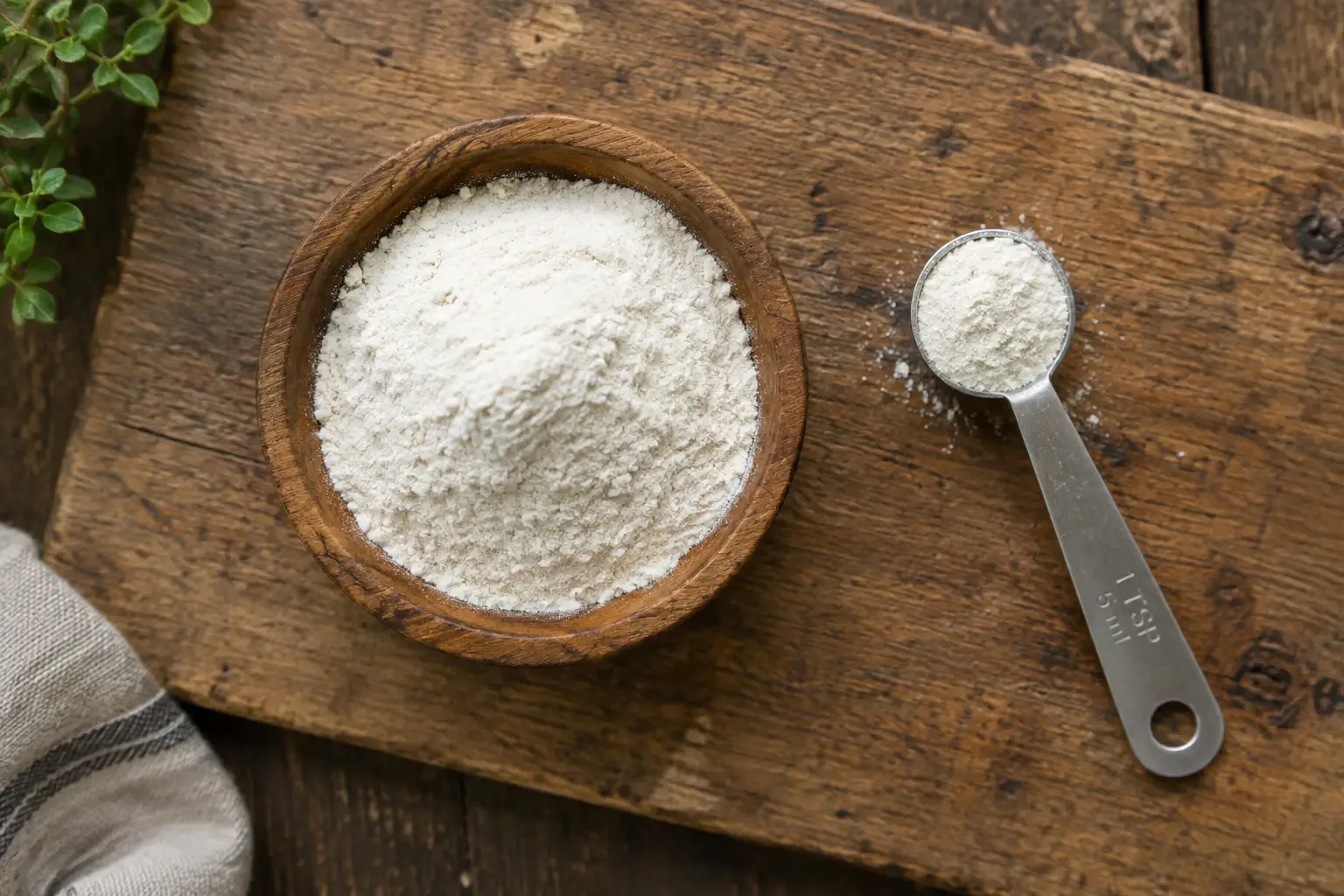
One teaspoon (3 g) of xanthan gum has about 10 calories, 2.3 g of carbohydrate, 0.3 g of protein, no fat and about 117 mg of sodium. It is a thickener made by fermenting sugar with Xanthomonas campestris, and the body does not digest most of it. Recipes use a pinch to a teaspoon, so the real calorie impact is usually close to zero.
Quick Nutrition Facts
Per 1 teaspoon (3 g)
| Nutrient | Amount |
|---|---|
| Calories | 10 kcal |
| Protein | 0.3g |
| Carbohydrates | 2.3g |
| Fiber | 0g |
| Sugars | 0g |
| Fat | 0g |
| Sodium | 117 mg |
Macronutrient Breakdown

NUTRITIONIST'S INSIGHT
Xanthan gum is a food additive, not a food you eat by the spoonful. The 30 kcal per tablespoon on the label is an upper bound, because the carbohydrate is a fermentable polysaccharide the small intestine does not break down into glucose. At the 1/4 to 1 teaspoon a recipe calls for, you take in under 10 kcal and a small amount of sodium (about 29 to 117 mg). The practical effect is texture: it thickens sauces, keeps gluten-free dough from crumbling and stops dressings separating. EFSA found no safety concern at normal food-additive levels. Doses of 10 to 13 g a day in human studies acted as a bulk laxative, so large amounts can cause gas, loose stools and bloating.
Myth Busters
MYTH #1: Xanthan gum is a sugar or adds sugar to food.
TRUTH: The label lists 0 g sugar. It is made by bacteria fermenting sugar, but the finished polysaccharide is not a sugar and the body does not break it down into glucose. Bob's Red Mill Xanthan Gum - USDA FoodData Central branded food 1358884; The Effects of Soluble Dietary Fibers on Glycemic Response: An Overview - Foods 2022
MYTH #2: Xanthan gum is a high-calorie ingredient because a tablespoon has 30 kcal.
TRUTH: A tablespoon is 9 g, far more than any recipe uses. A typical 1/2 teaspoon in a loaf or sauce is about 1.5 g, around 5 kcal for the whole batch. Bob's Red Mill Xanthan Gum - USDA FoodData Central branded food 1358884; Nutrition Facts for Bob's Red Mill Xanthan Gum - MyFoodData
MYTH #3: Xanthan gum is unsafe or toxic.
TRUTH: EFSA re-evaluated it in 2017 and set no numerical acceptable daily intake because it saw no safety concern at the approved use levels. Human studies at 10 to 13 g per day showed a bulk laxative effect without other adverse findings. Re-evaluation of xanthan gum (E 415) as a food additive - EFSA Journal
MYTH #4: Xanthan gum raises blood sugar.
TRUTH: It does not supply digestible carbohydrate, and in some trials adding viscous gums such as xanthan to muffins or rice lowered the post-meal glucose rise. The effect is small at the amounts used in cooking. The Effects of Soluble Dietary Fibers on Glycemic Response: An Overview - Foods 2022; Effect of Intake of Food Hydrocolloids of Bacterial Origin on the Glycemic Response - PMC
MYTH #5: You need xanthan gum to bake gluten-free.
TRUTH: It is the most common binder, but psyllium husk, ground flaxseed or chia gel can stand in. Many gluten-free flour blends already include it, so adding more can make baked goods gummy. Is Xanthan Gum Bad for You? Side Effects, Alternatives, and More - GoodRx
NutriScore by Health Goals
| Health Goal | NutriScore | Why This Score? |
|---|---|---|
| Weight Loss |  | About 10 kcal per teaspoon and typical recipe doses are under 5 kcal, so it adds almost nothing to a day's energy. Bob's Red Mill Xanthan Gum - USDA FoodData Central branded food 1358884 |
| Blood Sugar Management | | Zero sugar and a non-digestible polysaccharide; viscous gums slow glucose absorption in some trials. Bob's Red Mill Xanthan Gum - USDA FoodData Central branded food 1358884; The Effects of Soluble Dietary Fibers on Glycemic Response: An Overview - Foods 2022; Effect of Intake of Food Hydrocolloids of Bacterial Origin on the Glycemic Response - PMC |
| Muscle Gain |  | 0.3 g of protein per teaspoon contributes nothing toward a protein target. Bob's Red Mill Xanthan Gum - USDA FoodData Central branded food 1358884 |
| Digestive Comfort |  | Safe at normal food levels, but intakes around 10 g a day or more act as a bulk laxative and can cause gas or loose stools. Re-evaluation of xanthan gum (E 415) as a food additive - EFSA Journal; Is Xanthan Gum Bad for You? Side Effects, Alternatives, and More - GoodRx |
| Heart Health |  | No fat or cholesterol, but 350 mg sodium per tablespoon means heavy use adds sodium; recipe amounts are small. Bob's Red Mill Xanthan Gum - USDA FoodData Central branded food 1358884 |
PERSONALIZED NUTRITION
Track your meals with NutriScan for personalized NutriScores based on your specific health goals!
Blood Sugar Response to Xanthan Gum
Xanthan gum on its own has no digestible carbohydrate, so a teaspoon in a sauce or dressing leaves blood glucose flat at your baseline. The curve shows the gum added to a meal: it thickens the food and can slow glucose absorption slightly, so the rise from the meal itself is a little lower and later than it would be without it. Anything with sugar or starch in the same dish drives the real peak. The Effects of Soluble Dietary Fibers on Glycemic Response: An Overview - Foods 2022; Effect of Intake of Food Hydrocolloids of Bacterial Origin on the Glycemic Response - PMC
Estimated Glucose Response (1 teaspoon, 3 g, in a meal)
Illustrative curve for a healthy adult. The gum itself adds no glucose; the meal around it sets the response. Individual responses vary. Not medical advice.
How to flatten the spike
- Measure it in 1/8 teaspoon steps; it thickens fast and too much turns food slimy.
- Whisk it into oil or a dry mix before adding liquid so it does not clump.
- Use it in sauces, dressings and gluten-free bakes made with whole grains or legumes for the most gentle glucose response.
- Stay near recipe amounts and well under 10 g a day to avoid gas and loose stools.
Cultural Significance
Xanthan gum was developed by US Department of Agriculture researchers in the 1950s and has been a standard additive since the 1960s. It is made by fermenting sugar with the bacterium Xanthomonas campestris. It became a staple of gluten-free baking because it gives dough the stretch that gluten normally provides, and it is common in salad dressings, ice cream, sauces and thickened drinks. Home cooks now also use it in low-carb cooking and in modernist techniques such as gel-like sauces and stable foams.
Compare & Substitute
Xanthan Gum vs Similar Foods
| Nutrient | Psyllium husk powder (1 tsp, 3 g) | Ground flaxseed (1 tsp, 3 g) | Chia seeds (1 tsp, 4 g) | Cornstarch (1 tsp, 3 g) |
|---|---|---|---|---|
| Calories | 8 kcal | 16 kcal | 19 kcal | 11 kcal |
| Protein | 0.1g | 0.5g | 0.7g | 0g |
| Carbohydrates | 2.4g | 0.9g | 1.7g | 2.6g |
| Fat | 0g | 1.3g | 1.2g | 0g |
Frequently Asked Questions
How many calories are in a teaspoon of xanthan gum?
About 10 calories per 3 g teaspoon, based on the 30 kcal per tablespoon (9 g) on the Bob's Red Mill label in USDA FoodData Central.
Does xanthan gum have carbs?
Yes. A teaspoon lists about 2.3 g of carbohydrate, with 0 g sugar. Most of it is a polysaccharide the body does not digest, so it adds little or no glucose.
Is xanthan gum keto friendly?
Yes. A recipe uses 1/4 to 1 teaspoon for a whole batch, so the net digestible carbs per serving are close to zero. Many keto sauces and bakes use it as a thickener.
Is xanthan gum safe to eat every day?
At normal food amounts, yes. EFSA saw no safety concern and set no numerical limit. Intakes of 10 to 13 g a day acted as a bulk laxative in human studies, so keep to recipe amounts.
How much xanthan gum should I use?
Common starting points are 1/4 teaspoon per cup of liquid for sauces and 1/2 to 1 teaspoon per cup of gluten-free flour for baking. Start low, since it thickens more as it sits.


Similar Nutritious Foods
4505 Chicharrones Classic Chili Salt
7 Eleven Japan Crispy Corn Cheese
Explore More Tools
AI Calorie Counter App - Snap a Photo, Get Macros
AI Nutritionist App That Reads Your Logged Meals
Best Protein Supplements for Women
Bulking Meal Plan App That Sets Your Surplus
ChatGPT Calorie Counter Alternative That Keeps the Total
ChatGPT Diet Plan Alternative That Tracks What You Eat
ChatGPT Weight Loss Coach Alternative With a Food Log
Fast Food Calorie Counter App That Reads the Tray
Free Calorie Tracker App with AI Photo Scans | NutriScan
Indian Diet Plan App With Veg and Non Veg Meals
Indian Food Calorie Calculator - Get Instant Nutrition Facts for Desi Meals — 2026
Intermittent Fasting for Women, Timer and Meal Log App
Intermittent Fasting Tracker App - Free Fasting Timer
Macro Tracker App That Fills the Numbers From a Photo
Mediterranean Diet Meal Plan App That Counts the Oil
Micronutrient Tracker App for Vitamins and Minerals
MyFitnessPal Alternative That Stays Free | NutriScan
NutriScore App: A Free Grade on Every Meal | NutriScan
Nutrition Label Scanner App for the Amount You Ate
Second Trimester Protein Guide
Vegetarian Meal Plan App With a Protein Target
Voice Calorie Counter - Speak to Track Meals Hands-Free
Water and Calorie Tracker App - Free Water Log