Xylitol: Calories, Carbs and Nutrition Facts
 ChatGPT
 Claude
 AI Mode
 Perplexity
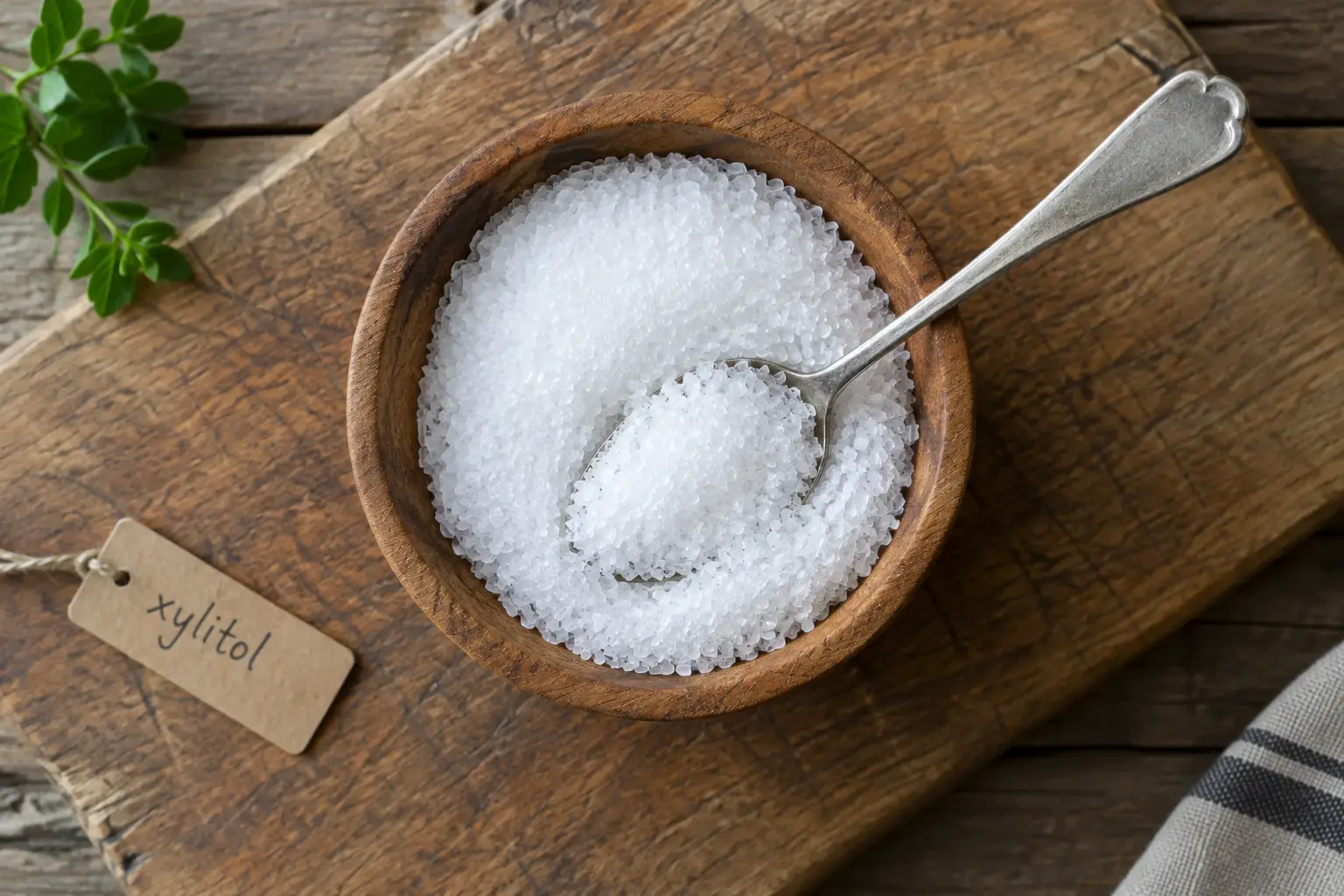
One teaspoon (4 g) of xylitol has about 10 calories and 4g of carbohydrate, all of it sugar alcohol with 0g sugars. That is 2.4 calories per gram against 4 for table sugar, with a glycemic index around 7 to 13, but large doses cause gas and diarrhea and the sweetener is poisonous to dogs.
Quick Nutrition Facts
Per 1 teaspoon (4 g)
| Nutrient | Amount |
|---|---|
| Calories | 10 kcal |
| Protein | 0g |
| Carbohydrates | 4g |
| Fiber | 0g |
| Sugars | 0g |
| Fat | 0g |
| Sodium | 0 mg |
Macronutrient Breakdown
NUTRITIONIST'S INSIGHT
Xylitol tastes like sugar and swaps in one-to-one, so a teaspoon saves about 6 calories against table sugar (16 calories). The saving is real but small, and the bigger effect is on blood sugar: the glycemic index is about 7 to 13 against 65 for sucrose. Two cautions matter more than the calories. First, the gut absorbs only part of it, so more than about 10 to 15 grams a day often brings bloating and diarrhea. Second, a 2024 study from the Cleveland Clinic group linked higher blood xylitol to more heart attacks and strokes, and lab work points to platelets clotting more easily. That is an association, not proof, but a heavy daily intake is a poor idea if you already have heart disease. Keep it out of reach of dogs: a small amount can drop a dog's blood sugar and damage its liver.
Myth Busters
MYTH #1: Xylitol has no calories.
TRUTH: Xylitol has about 2.4 calories per gram, so a teaspoon (4 g) is roughly 10 calories. That is 40% less than table sugar at 4 calories per gram, but it is not zero. Erythritol is the sugar alcohol that is close to zero. Xylitol: What to know about this popular sugar substitute; Suitability of sugar alcohols as antidiabetic supplements: A review
MYTH #2: Xylitol does not affect blood sugar at all.
TRUTH: Its glycemic index is low, about 7 to 13, so it raises blood sugar and insulin very little. It is still a carbohydrate on the label (4g per teaspoon), and what you bake it into, such as flour or fruit, still counts. Xylitol: What to know about this popular sugar substitute; Interactive Nutrition Facts Label: Sugar Alcohols
MYTH #3: Sugar-free sweeteners like xylitol are safe in any amount.
TRUTH: Cleveland Clinic cites studies that put safe intake at 10 to 15 grams of sugar alcohols a day, and a 2006 British trial found xylitol caused bloating, gas and diarrhea. Newer research links high blood xylitol to heart attack and stroke risk, so heavy daily use is not harmless. Sugar Alcohols May Not Be as Safe as You Thought
MYTH #4: If it is safe for people, it is safe for the family dog.
TRUTH: The FDA warns that xylitol poisons dogs. Even a small amount can cause a sharp drop in blood sugar within about 20 to 30 minutes and later liver failure. Gum, sugar-free peanut butter and baked goods containing it must be kept away from pets. Paws Off Xylitol; It's Dangerous for Dogs
NutriScore by Health Goals
| Health Goal | NutriScore | Why This Score? |
|---|---|---|
| Weight Loss |  | At about 10 calories a teaspoon against 16 for sugar, it trims calories in drinks and baking. The saving is small, so portions of sweet foods still matter. Xylitol: What to know about this popular sugar substitute; Xylitol Sweetener Buying Guide: 1 tsp (4 g) is about 9.6 calories |
| Muscle Gain |  | No protein, fat or micronutrients, only 4g of carbohydrate a teaspoon. It adds sweetness without supporting training or recovery. Xylitol Sweetener Buying Guide: 1 tsp (4 g) is about 9.6 calories |
| Diabetes Management | | A glycemic index of about 7 to 13 means very little blood sugar rise from the sweetener itself. Count the 4g carbohydrate on the label and keep portions modest. Xylitol: What to know about this popular sugar substitute; Suitability of sugar alcohols as antidiabetic supplements: A review |
| Heart Health | | Higher blood xylitol has been linked to more heart attacks and strokes, with a clotting effect on platelets seen in lab tests. Evidence is an association, but it argues for low daily use. Sugar Alcohols May Not Be as Safe as You Thought |
| PCOS Management |  | It barely moves insulin, which suits PCOS, but large amounts upset digestion and a sweet habit can persist. Use it as a replacement for sugar, not as an extra. Xylitol: What to know about this popular sugar substitute; Sugar Alcohols May Not Be as Safe as You Thought |
| Pregnancy Nutrition | | Normal food amounts are generally tolerated, but there are no nutrients and digestive upset is common above 10 to 15 grams a day. Keep it to small amounts and away from pets at home. Sugar Alcohols May Not Be as Safe as You Thought; Paws Off Xylitol; It's Dangerous for Dogs |
PERSONALIZED NUTRITION
Track your meals with NutriScan for personalized NutriScores based on your specific health goals!
Blood Sugar Response to Xylitol
A teaspoon of xylitol has 4g of carbohydrate and a glycemic index around 7 to 13, so the curve barely lifts above baseline, peaking near 97 mg/dL after about 45 minutes. Most of it is absorbed slowly or fermented in the large intestine, which is also why large doses cause gas and loose stools. Xylitol: What to know about this popular sugar substitute; Suitability of sugar alcohols as antidiabetic supplements: A review; Interactive Nutrition Facts Label: Sugar Alcohols
Estimated Blood Sugar Response (1 teaspoon, 4 g xylitol)
Modeled from carb content and the published glycemic index of 7 to 13. Not a measured CGM trace. Individual responses vary.
How to flatten the spike
- Swap it for sugar one to one in coffee or tea, and keep total sugar alcohols under 10 to 15 grams a day.
- Count the label carbohydrate (4g per teaspoon) if you track carbs for diabetes, and check the flour or fruit in the recipe too.
- Add it to meals with protein and fiber rather than eating sweets alone, so the rest of the meal sets the blood sugar curve.
- Introduce it slowly, starting with half a teaspoon, to avoid bloating and diarrhea.
Cultural Significance
Xylitol was first isolated by German and French chemists in the 1890s, Finland later made it at scale from birch wood, and Finnish researchers in the 1970s showed it cut dental cavities, which is why it is the sweetener of many sugar-free gums and mints. It is also called wood sugar and occurs in trace amounts in plums, strawberries and corn husks. Today it appears in dental products, diabetic-friendly baking and keto sweetener blends. Pet owners learn its other side quickly: it is among the more common causes of poisoning in dogs.
Compare & Substitute
Xylitol vs Similar Foods
| Nutrient | Table sugar (sucrose), 1 tsp (4 g) | Erythritol, 1 tsp (4 g) | Honey, 1 tsp (7 g) |
|---|---|---|---|
| Calories | 16 kcal | 0 kcal | 21 kcal |
| Protein | 0g | 0g | 0.1g |
| Carbohydrates | 4g | 4g | 5.8g |
| Fat | 0g | 0g | 0g |
Frequently Asked Questions
How many calories are in xylitol?
Xylitol has about 2.4 calories per gram, so a teaspoon (4 g) has roughly 10 calories. Table sugar has 4 calories per gram, or 16 per teaspoon.
How many carbs are in xylitol?
A teaspoon (4 g) has 4g of carbohydrate on a US label, all listed as sugar alcohol with 0g sugars. Because the body absorbs part of it, some diabetes plans count only half.
Is xylitol good for diabetics?
It has a glycemic index of about 7 to 13, so it raises blood sugar very little compared with sugar. Count its carbohydrate on the label and stay under 10 to 15 grams a day to avoid digestive upset.
Is xylitol safe?
In normal food amounts it is generally tolerated by people. Large doses cause gas and diarrhea, and a 2024 study linked higher blood xylitol to heart attack and stroke risk, so heavy daily use is not advised, particularly with heart disease.
Is xylitol toxic to dogs?
Yes. The FDA reports that xylitol poisons dogs, causing a rapid fall in blood sugar and later liver failure. Call a vet immediately if your dog eats gum, baked goods or anything else containing it.
Is xylitol better than sugar?
It has 40% fewer calories and barely affects blood sugar, and it does not cause tooth decay. It is not free of downsides, which are digestive upset and a possible heart risk at high intakes.


Similar Nutritious Foods
4505 Chicharrones Classic Chili Salt
7 Eleven Japan Crispy Corn Cheese
Explore More Tools
AI Calorie Counter App - Snap a Photo, Get Macros
AI Nutritionist App That Reads Your Logged Meals
Best Protein Supplements for Women
Bulking Meal Plan App That Sets Your Surplus
ChatGPT Calorie Counter Alternative That Keeps the Total
ChatGPT Diet Plan Alternative That Tracks What You Eat
ChatGPT Weight Loss Coach Alternative With a Food Log
Fast Food Calorie Counter App That Reads the Tray
Free Calorie Tracker App with AI Photo Scans | NutriScan
Indian Diet Plan App With Veg and Non Veg Meals
Indian Food Calorie Calculator - Get Instant Nutrition Facts for Desi Meals — 2026
Intermittent Fasting for Women, Timer and Meal Log App
Intermittent Fasting Tracker App - Free Fasting Timer
Macro Tracker App That Fills the Numbers From a Photo
Mediterranean Diet Meal Plan App That Counts the Oil
Micronutrient Tracker App for Vitamins and Minerals
MyFitnessPal Alternative That Stays Free | NutriScan
NutriScore App: A Free Grade on Every Meal | NutriScan
Nutrition Label Scanner App for the Amount You Ate
Second Trimester Protein Guide
Vegetarian Meal Plan App With a Protein Target
Voice Calorie Counter - Speak to Track Meals Hands-Free
Water and Calorie Tracker App - Free Water Log