Zarda Sweet Rice: Calories, Nutrition and Health Benefits
 ChatGPT
 Claude
 AI Mode
 Perplexity
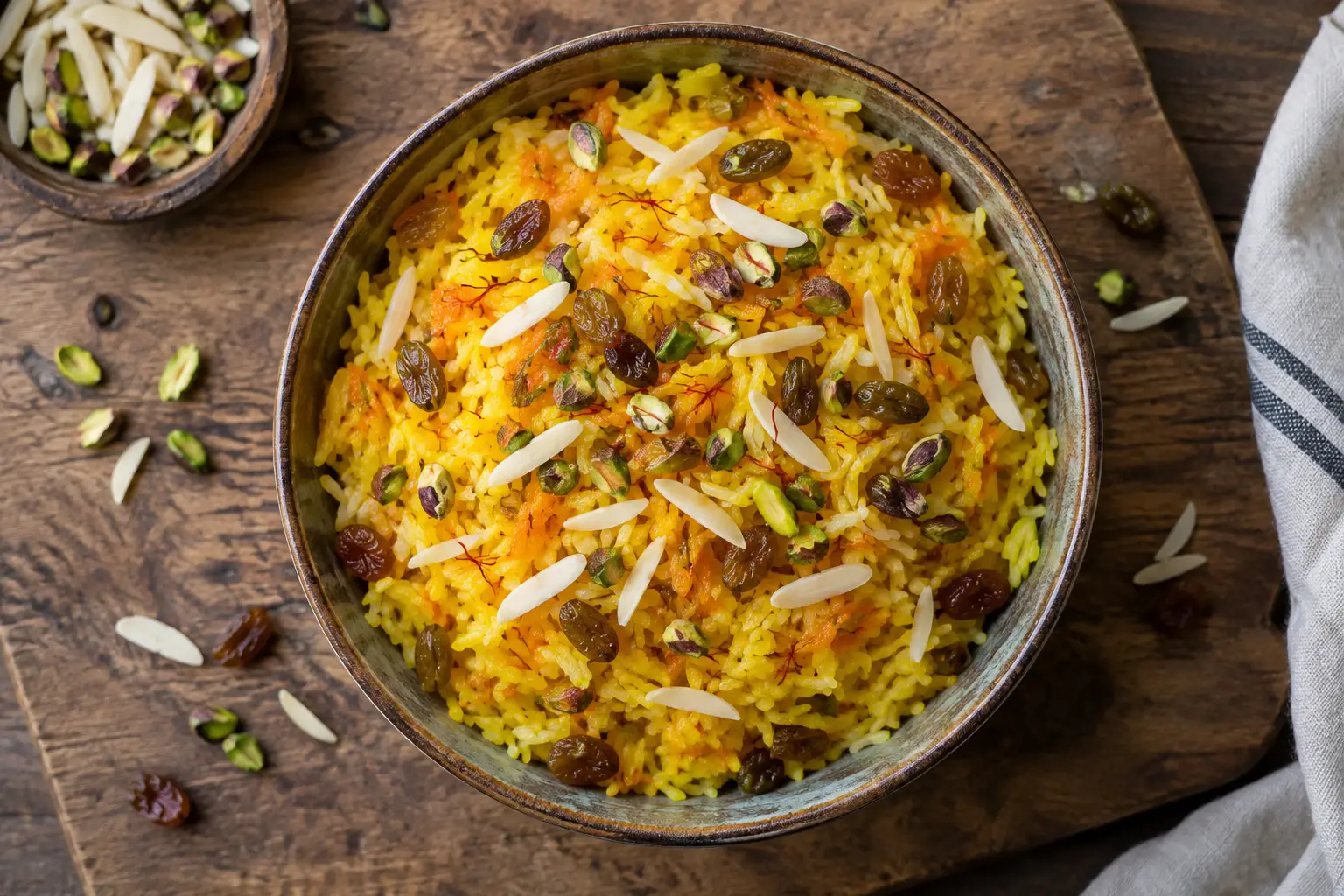
One katori (about 150 g) of homemade zarda sweet rice has about 438 calories, 4 g protein, 64 g carbs, 20 g fat and 36 g sugar. Zarda is basmati rice cooked with saffron, ghee and sugar, so the sugar alone is 72% of the WHO's 50 g daily free-sugar limit. The numbers come from one recipe and swing from 265 to 438 kcal across published versions, depending on how much ghee and sugar goes in. This page covers the sweet rice dessert, not zarda chewing tobacco.
Quick Nutrition Facts
Per 1 katori (about 150 g, homemade ghee and sugar version)
| Nutrient | Amount |
|---|---|
| Calories | 438 kcal |
| Protein | 4g |
| Carbohydrates | 64g |
| Fiber | 2g |
| Sugars | 36g |
| Fat | 20g |
| Sodium | 8 mg |
Macronutrient Breakdown

NUTRITIONIST'S INSIGHT
Zarda is a dessert, and it behaves like one: in the Dassana recipe about 100 g of sugar and 40 g of ghee go into three servings, so a katori carries roughly 33 g of added sugar plus raisins, and about 10 g of saturated fat, which is 20% of its calories (the WHO caps saturated fat at 10% of daily energy). Protein is only 4 g and fiber 2 g, so it digests fast and does little for fullness. The fixes are about portion and recipe, not avoidance: serve half a katori, cut the sugar by a third (Shahzadi Devje's version uses half the sugar and still lands at 369 kcal because of the coconut and nuts), and let the nuts do the work of flavor. Basmati is a better base than most white rice because its glycemic index is among the lowest of milled rices, but the added sugar cancels most of that advantage.
Myth Busters
MYTH #1: Zarda is just rice, so it is a light dessert
TRUTH: Plain cooked basmati is about 130 kcal per 100 g, but zarda adds sugar and ghee in large amounts. One katori of the Dassana recipe has 438 kcal, 36 g of sugar and 20 g of fat, more than a typical slice of cake. Lighter home versions exist (265 kcal in Tea for Turmeric's recipe), but they still rely on about 150 g of sugar per 4 servings. Zarda - Meethe Chawal Recipe (Indian Sweet Rice): ingredients and nutrition per serving (Dassana's Veg Recipes); Zarda (Meethe Chawal - Sweet Rice): 265 kcal per serving, salted, no nuts (Tea for Turmeric)
MYTH #2: Basmati rice means zarda will not spike blood sugar
TRUTH: Basmati has a lower glycemic index than most white rice, with reviewed trials reporting values from about 50 to 69 depending on variety and cooking time. That advantage applies to the plain rice. Zarda adds roughly 36 g of sugar per katori, and sugar plus starch together still raise blood glucose quickly, so people with diabetes should treat it as a dessert to portion, not as a low-GI food. A systematic review of the influence of rice characteristics and processing methods on postprandial glycaemic and insulinaemic responses (PMC); Conceptualization of Rice with Low Glycaemic Index: Perspectives from the Major European Consumers (PMC)
MYTH #3: Saffron and dry fruit make zarda a healthy sweet
TRUTH: Almonds, cashews, pistachios and raisins add some fiber, minerals and unsaturated fat, and they are why the Shahzadi Devje version has 4 g of fiber and 7 g of protein. They do not offset the sugar. The WHO advises keeping free sugars under 10% of daily energy and ideally under 5%, and one katori of zarda is already about 72% of the 10% limit. Zarda - Sweet Rice With Nuts And Coconut: 369 kcal per serving, half the sugar (Shahzadi Devje, RD); Healthy diet fact sheet: free sugars, saturated fat and sodium limits (World Health Organization)
MYTH #4: Zarda is high in sodium like other Indian rice dishes
TRUTH: Sodium is low. The Dassana recipe lists 8 mg per katori because it uses no salt, and even the Tea for Turmeric version with 1/4 teaspoon of salt has 169 mg, under 10% of the WHO's 2,000 mg daily sodium limit. The concerns with zarda are sugar, calories and saturated fat, not salt. Zarda - Meethe Chawal Recipe (Indian Sweet Rice): ingredients and nutrition per serving (Dassana's Veg Recipes); Zarda (Meethe Chawal - Sweet Rice): 265 kcal per serving, salted, no nuts (Tea for Turmeric); Healthy diet fact sheet: free sugars, saturated fat and sodium limits (World Health Organization)
NutriScore by Health Goals
| Health Goal | NutriScore | Why This Score? |
|---|---|---|
| Weight Loss |  | At 438 kcal per katori with 36 g of sugar and 20 g of fat, zarda is calorie-dense and low in protein (4 g) and fiber (2 g), so it does not fill you for long. Half a katori after a meal (about 220 kcal) can fit a deficit; a full bowl plus seconds, which is common at festivals, cannot. Zarda - Meethe Chawal Recipe (Indian Sweet Rice): ingredients and nutrition per serving (Dassana's Veg Recipes); Healthy diet fact sheet: free sugars, saturated fat and sodium limits (World Health Organization) |
| Muscle Gain | | Four grams of protein against 64 g of carbs makes zarda a poor protein source. The carbs and calories can refuel after hard training, but the sugar and saturated fat are better spent on other foods, and the protein should come from elsewhere in the meal. Zarda - Meethe Chawal Recipe (Indian Sweet Rice): ingredients and nutrition per serving (Dassana's Veg Recipes) |
| Diabetes |  | A katori has 64 g of carbs and 36 g of sugar with only 2 g of fiber. Basmati's lower glycemic index (about 50 to 69 in trials) helps the rice itself, but the added sugar removes that benefit. People managing diabetes should keep to a few spoonfuls, pair it with protein, and check their own glucose response. Zarda - Meethe Chawal Recipe (Indian Sweet Rice): ingredients and nutrition per serving (Dassana's Veg Recipes); A systematic review of the influence of rice characteristics and processing methods on postprandial glycaemic and insulinaemic responses (PMC); Conceptualization of Rice with Low Glycaemic Index: Perspectives from the Major European Consumers (PMC) |
| Heart Health | | Ghee gives about 10 g of saturated fat per katori, roughly 20% of its calories, against the WHO's limit of 10% of daily energy from saturated fat, and cholesterol is 38 mg. Sodium is minimal (8 mg), which is a point in its favor. The nuts add unsaturated fat, but the ghee and sugar dominate. Zarda - Meethe Chawal Recipe (Indian Sweet Rice): ingredients and nutrition per serving (Dassana's Veg Recipes); Healthy diet fact sheet: free sugars, saturated fat and sodium limits (World Health Organization) |
| General Wellness |  | As an occasional festive dish, zarda gives energy, some minerals from the nuts and almost no sodium. As an everyday dessert its sugar load is too high. A half portion at Eid, a wedding or a family dinner is a reasonable place to land. Zarda - Meethe Chawal Recipe (Indian Sweet Rice): ingredients and nutrition per serving (Dassana's Veg Recipes); Healthy diet fact sheet: free sugars, saturated fat and sodium limits (World Health Organization) |
| PCOS | | Sugar-heavy, low-fiber, low-protein foods raise glucose and insulin faster than balanced meals, which matters for insulin resistance. If you eat zarda, keep it to a small portion after a meal that already has protein and vegetables, and prefer the lower-sugar versions (Shahzadi Devje's uses half the sugar). Zarda - Sweet Rice With Nuts And Coconut: 369 kcal per serving, half the sugar (Shahzadi Devje, RD); A systematic review of the influence of rice characteristics and processing methods on postprandial glycaemic and insulinaemic responses (PMC) |
PERSONALIZED NUTRITION
Track your meals with NutriScan for personalized NutriScores based on your specific health goals!
Blood Sugar Response to Zarda Sweet Rice
Zarda combines white basmati (reported glycemic index of about 50 to 69) with roughly 36 g of sugar, so blood glucose climbs within 15 to 30 minutes and peaks near 45 to 60 minutes at roughly 165 mg/dL in a person with typical glucose handling, then returns toward baseline by about 2 hours. These are illustrative values, not a measured curve for zarda: the ghee (20 g of fat) slows stomach emptying a little, which rounds the peak, but the added sugar makes it higher than plain basmati would be. People with diabetes or insulin resistance may see a higher and longer rise. A systematic review of the influence of rice characteristics and processing methods on postprandial glycaemic and insulinaemic responses (PMC); Conceptualization of Rice with Low Glycaemic Index: Perspectives from the Major European Consumers (PMC)
Typical Glucose Response Curve
Not medical advice
How to flatten the spike
- Eat it after a meal that already has protein and vegetables, not on an empty stomach.
- Keep to half a katori (about 75 g, roughly 220 kcal) and eat it slowly.
- Stir in extra almonds or pistachios, or serve with plain yogurt, to add protein and fat that slow the rise.
- Cut the sugar by a third when you cook it; the saffron and cardamom carry most of the flavor.
- Take a 10 to 15 minute walk after eating to blunt the peak.
- Skip the sweet tea or soft drink that often comes with it at festivals.
Cultural Significance
Zarda, also called meethe chawal, is a sweet saffron rice from North India and Pakistan, made for weddings, Eid, Muharram and other festivals. The yellow-orange color comes from saffron or food coloring (Tea for Turmeric's recipe uses food color), and the dish is studded with nuts and raisins. It is often served at the end of a rice-based feast as the sweet course, and recipes differ by family: some add milk, kewra or orange blossom water, coconut, or whole cloves and cardamom. It is unrelated to zarda chewing tobacco, which shares the name; searches for the dessert usually mean the sweet rice.
Compare & Substitute
Zarda Sweet Rice vs Similar Foods
| Nutrient | Lighter zarda (Tea for Turmeric recipe, 1 serving) | Half-sugar zarda with nuts and coconut (Shahzadi Devje, RD, 1 serving) | Plain steamed basmati rice (150 g, about 1 katori) |
|---|---|---|---|
| Calories | 265 kcal | 369 kcal | 195 kcal |
| Protein | 1g | 7g | 4g |
| Carbohydrates | 51g | 59g | 42g |
| Fat | 8g | 13g | 0.4g |
Frequently Asked Questions
How many calories are in zarda sweet rice?
One katori (about 150 g) of homemade zarda has about 438 calories, with 4 g protein, 64 g carbs, 20 g fat and 36 g sugar, based on the Dassana's Veg Recipes version. Lighter recipes list 265 kcal (Tea for Turmeric) and 369 kcal (Shahzadi Devje, RD) per serving, so the real number depends on the ghee and sugar used.
How much sugar is in zarda?
About 36 g per katori in the Dassana recipe, and up to 48 g per serving in the Tea for Turmeric recipe. The WHO says free sugars should stay under 10% of daily energy, about 50 g for a 2,000 calorie diet, so one katori is roughly 72% of that limit.
Is zarda safe for people with diabetes?
It is not a good fit as a regular food. Basmati rice has a lower glycemic index than most white rice (about 50 to 69 in trials), but zarda adds about 36 g of sugar per katori on top of 64 g of carbs. If you have diabetes, keep to a few spoonfuls after a protein-rich meal and ask your care team how it fits your plan.
What is the difference between zarda and kheer?
Zarda is rice grains cooked dry with saffron, ghee and sugar until they are separate and fragrant, like a sweet pulao. Kheer is rice simmered in milk until it is creamy and pudding-like. Zarda is denser in sugar and fat per spoonful, while kheer gets more of its calories from milk.
Is the zarda in this page the same as zarda chewing tobacco?
No. This page covers zarda sweet rice (meethe chawal), the saffron rice dessert. Zarda chewing tobacco is an unrelated product that shares the name, and it carries serious health risks that this nutrition page does not cover.
How can I make zarda lighter?
Cut the sugar by a third or half, use 1 to 2 tablespoons of ghee per serving batch instead of 3, and add more nuts and a little coconut for flavor and fiber. Shahzadi Devje's version with half the sugar has 18 g of sugar per serving instead of 36 g. Serving half a katori also halves the calories to about 220.


Similar Nutritious Foods
4505 Chicharrones Classic Chili Salt
7 Eleven Japan Crispy Corn Cheese
Explore More Tools
AI Calorie Counter App - Snap a Photo, Get Macros
AI Nutritionist App That Reads Your Logged Meals
Best Protein Supplements for Women
Bulking Meal Plan App That Sets Your Surplus
ChatGPT Calorie Counter Alternative That Keeps the Total
ChatGPT Diet Plan Alternative That Tracks What You Eat
ChatGPT Weight Loss Coach Alternative With a Food Log
Fast Food Calorie Counter App That Reads the Tray
Free Calorie Tracker App with AI Photo Scans | NutriScan
Indian Diet Plan App With Veg and Non Veg Meals
Indian Food Calorie Calculator - Get Instant Nutrition Facts for Desi Meals — 2026
Intermittent Fasting for Women, Timer and Meal Log App
Intermittent Fasting Tracker App - Free Fasting Timer
Macro Tracker App That Fills the Numbers From a Photo
Mediterranean Diet Meal Plan App That Counts the Oil
Micronutrient Tracker App for Vitamins and Minerals
MyFitnessPal Alternative That Stays Free | NutriScan
NutriScore App: A Free Grade on Every Meal | NutriScan
Nutrition Label Scanner App for the Amount You Ate
Second Trimester Protein Guide
Vegetarian Meal Plan App With a Protein Target
Voice Calorie Counter - Speak to Track Meals Hands-Free
Water and Calorie Tracker App - Free Water Log