Moon Cheese Cheddar Bites: Calories, Nutrition and Health Benefits
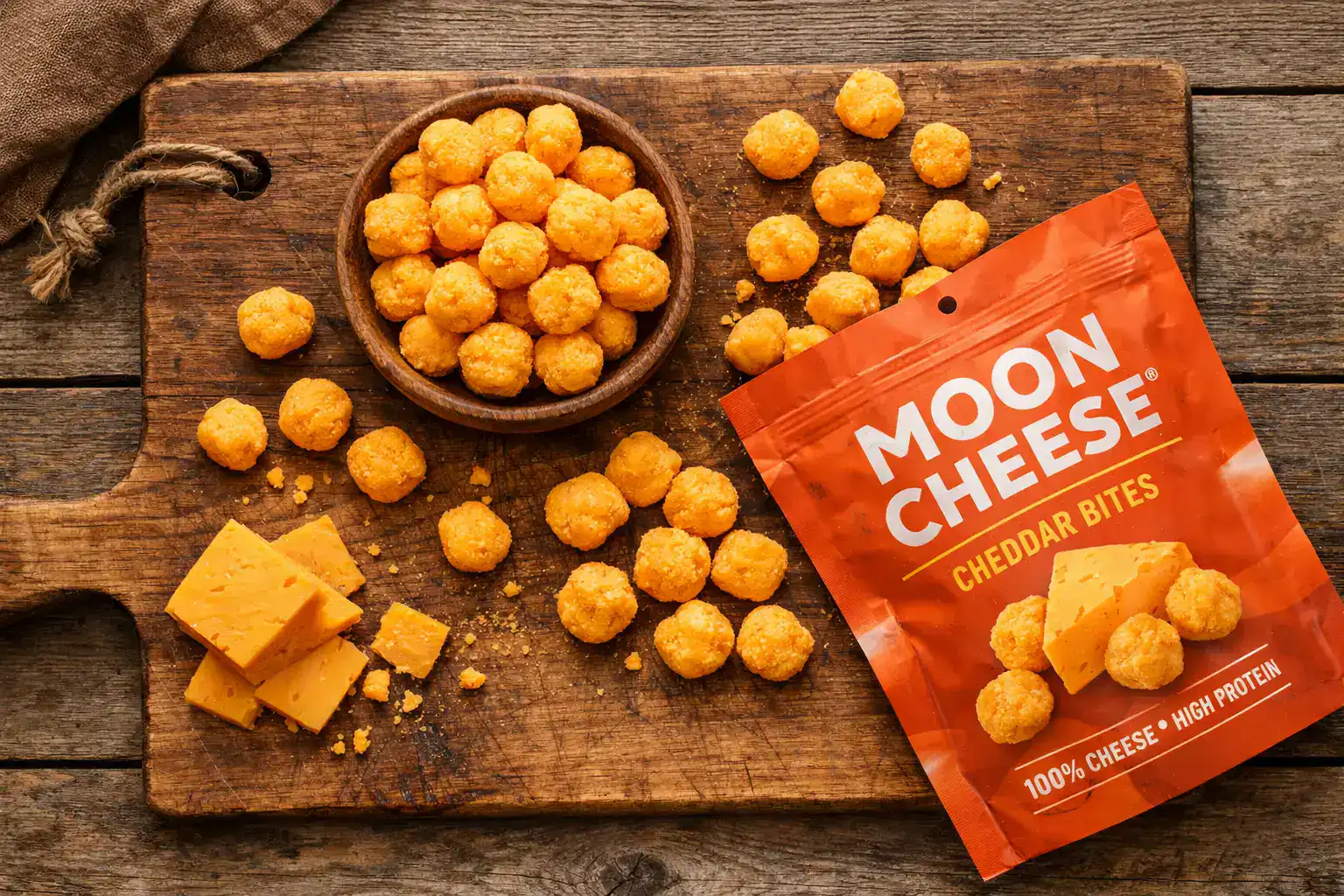
A crunchy, shelf-stable cheese snack made from 100% real cheddar, packed with 11g protein and just 1g carbs per serving.
Quick Nutrition Facts
Per 1 Serving (28g)
| Nutrient | Amount |
|---|---|
| Calories | 160 kcal |
| Protein | 11g |
| Carbohydrates | 1g |
| Fiber | 0g |
| Sugars | 0g |
| Fat | 13g |
| Saturated Fat | 8g |
| Calcium | 200mg |
| Sodium | 240mg |
| Cholesterol | 40mg |
Macronutrient Breakdown
 ChatGPT
  Claude
  AI Mode
  Perplexity
NUTRITIONIST INSIGHT
Moon Cheese delivers 39g protein per 100g, making it one of the most protein-dense snacks available. With virtually zero carbs and no sugar, it is ideal for keto and low-carb lifestyles. Watch sodium intake if consuming multiple servings.
Myth Busters
MYTH #1: Cheese Snacks Are Always Unhealthy
TRUTH: Moon Cheese is made from 100% real cheese with no artificial ingredients. It provides 11g protein per serving. Research shows cheese consumption is inversely associated with cardiovascular disease and type 2 diabetes risk when consumed in moderation.
MYTH #2: High-Fat Snacks Cause Weight Gain
TRUTH: Fat and protein together promote satiety. Studies show high-protein cheese snacks are energetically compensated during subsequent meals, meaning you naturally eat less later. Total daily calories matter more than fat content.
MYTH #3: Dehydrated Cheese Loses Its Nutrients
TRUTH: Dehydrating concentrates nutrients rather than destroying them. Moon Cheese retains calcium (200mg per serving, 15% DV), protein, and fat-soluble vitamins from the original cheddar cheese.
MYTH #4: All Processed Cheese Is Bad
TRUTH: Moon Cheese undergoes dehydration, not ultra-processing. The ingredient list is simple: pasteurized milk, cheese culture, salt, enzymes, and annatto. No preservatives, no fillers, no added sugars.
MYTH #5: Cheese Snacks Spike Blood Sugar
TRUTH: With only 1g carbs and 0g sugar per serving, Moon Cheese has a negligible glycemic impact. Dairy proteins in cheese can actually help moderate blood sugar response when paired with carbohydrate foods.
NutriScore by Health Goals
| Health Goal | NutriScore | Why This Score? |
|---|---|---|
| Weight Loss |  | Low carb (1g) and high protein (11g) promote satiety, but 160 calories per 28g is calorie-dense. Limit to 1 serving. |
| Muscle Gain |  | 11g protein per serving with complete amino acid profile from cheese supports muscle protein synthesis. Good post-workout snack. |
| Diabetes Management |  | Only 1g carbs, 0g sugar. Dairy foods may help manage type 2 diabetes. Minimal blood glucose impact. |
| PCOS Management | | Very low carbs reduce insulin stimulation. High protein supports metabolic health. Watch saturated fat intake. |
| Pregnancy Nutrition | | Made from pasteurized milk, safe during pregnancy. Good calcium source (200mg). |
| Viral/Flu Recovery | | Protein supports immune function, but dry texture may be hard on sore throat. Pair with warm liquids. |
PERSONALIZED NUTRITION
Track your meals with NutriScan for personalized NutriScores based on your specific health goals!
Blood Sugar Response to Moon Cheese
Understanding how Moon Cheese affects your blood glucose helps you make informed snacking choices.
Typical Glucose Response Curve
*This chart shows typical blood glucose response for general healthy individuals. Individual responses may vary. Not medical advice.*
How to Optimize Your Snacking
Pairing protein-rich snacks with fiber or complex carbs creates a more sustained energy release:
- 🍎 Apple slices - Adds fiber and natural sweetness to balance the savory cheese
- 🥒 Cucumber or celery - Low-calorie crunch with hydration
- 🥜 Mixed nuts - Additional healthy fats and minerals
- 🫒 Olives - Mediterranean pairing with complementary fats
Moon Cheese has minimal blood sugar impact on its own due to virtually zero carbs, making it an excellent standalone snack for blood sugar stability.
Cultural Significance
Dehydrated cheese has roots in preservation traditions dating back centuries, from European alpine cheese-making to modern freeze-drying innovations.
Modern Innovation:
- Moon Cheese uses patented dehydration technology to remove moisture while preserving cheese structure
- Born from the same food science used in astronaut meals and military rations
- Part of the growing high-protein, low-carb snacking movement in America
- Represents the shift toward clean-label, minimal-ingredient processed foods
Global Cheese Culture:
- Cheddar originated in Somerset, England in the 12th century
- Americans consume over 40 pounds of cheese per person annually
- Dehydrated cheese snacks have gained popularity across Asia, Europe, and Australia
- India's paneer tradition shares the concept of concentrated dairy nutrition
Compare & Substitute
Moon Cheese vs Similar Snacks (Per 100g)
| Nutrient | 🧀 Moon Cheese | 🧀 Whisps Parmesan | 🥩 Beef Jerky | 🥜 Almonds |
|---|---|---|---|---|
| Calories | 571 kcal | 556 kcal | 410 kcal | 579 kcal |
| Carbs | 3.6g | 0g | 11g | 22g |
| Fiber | 0g | 0g | 0g | 12.5g |
| Protein | 39g | 50g | 33g | 21g |
| Fat | 46g | 39g | 25g | 50g |
| Calcium | 714mg | 1000mg | 12mg | 269mg |
| Sodium | 857mg | 1389mg | 2081mg | 1mg |
| Best For | Keto, protein, on-the-go | Keto, lowest carb | Lean protein, low-fat | Fiber, heart health |
Frequently Asked Questions
Is Moon Cheese good for weight loss?
Moon Cheese can fit into a weight loss plan when portions are controlled. Each 28g serving has 160 calories and 11g protein that helps curb cravings. The zero-carb profile works well for low-carb diets.
Best practices: Stick to 1 serving (28g), pair with vegetables for volume, track calories since the small serving size makes overeating easy.
Can diabetics eat Moon Cheese?
Yes, Moon Cheese is an excellent snack for diabetics. With only 1g carbs and 0g sugar per serving, it causes minimal blood glucose fluctuation.
Tips for diabetics:
- Enjoy as a between-meal snack to prevent blood sugar dips
- Pair with vegetables for added fiber
- Monitor sodium if managing hypertension alongside diabetes
- Choose as a replacement for high-carb chips or crackers
How much protein is in Moon Cheese?
One serving (28g) provides 11g of protein, equivalent to about 39g per 100g. This makes Moon Cheese comparable to jerky and protein bars as a high-protein snack option.
For muscle gain, combine with other protein sources throughout the day to meet your daily protein goals.
Is Moon Cheese keto-friendly?
Yes, Moon Cheese is one of the most keto-friendly snacks available. With 1g net carbs, 13g fat, and 11g protein per serving, it fits perfectly within standard keto macros (70% fat, 25% protein, 5% carbs).
What is Moon Cheese made of?
Moon Cheese Cheddar Bites contain just one main ingredient: cheddar cheese (pasteurized milk, cheese culture, salt, enzymes, annatto for color). No artificial preservatives, no added sugars, no fillers.
The cheese is dehydrated using a proprietary process that removes moisture while keeping the crunchy texture and concentrated nutrition.
How does Moon Cheese compare to regular cheddar?
Per 100g comparison:
- Calories: Moon Cheese 571 vs Regular Cheddar 403
- Protein: Moon Cheese 39g vs Regular Cheddar 25g
- Fat: Moon Cheese 46g vs Regular Cheddar 33g
- Water: Moon Cheese ~2% vs Regular Cheddar ~37%
Moon Cheese is essentially concentrated cheddar. The dehydration process removes water, making nutrients more dense per gram. It is shelf-stable and portable, unlike regular cheese.




Similar Nutritious Foods
4505 Chicharrones Classic Chili Salt
7 Eleven Japan Crispy Corn Cheese
Explore More Nutrition Tools & Resources
AI Calorie Counter App - Snap a Photo, Get Macros
AI Nutritionist App That Reads Your Logged Meals
Best Protein Supplements for Women
Bulking Meal Plan App That Sets Your Surplus
ChatGPT Calorie Counter Alternative That Keeps the Total
ChatGPT Diet Plan Alternative That Tracks What You Eat
ChatGPT Weight Loss Coach Alternative With a Food Log
Fast Food Calorie Counter App That Reads the Tray
Free Calorie Tracker App with AI Photo Scans | NutriScan
Indian Diet Plan App With Veg and Non Veg Meals
Indian Food Calorie Calculator - Get Instant Nutrition Facts for Desi Meals — 2026
Intermittent Fasting for Women, Timer and Meal Log App
Intermittent Fasting Tracker App - Free Fasting Timer
Macro Tracker App That Fills the Numbers From a Photo
Mediterranean Diet Meal Plan App That Counts the Oil
Micronutrient Tracker App for Vitamins and Minerals
MyFitnessPal Alternative That Stays Free | NutriScan
NutriScore App: A Free Grade on Every Meal | NutriScan
Nutrition Label Scanner App for the Amount You Ate
Second Trimester Protein Guide
Vegetarian Meal Plan App With a Protein Target
Voice Calorie Counter - Speak to Track Meals Hands-Free
Water and Calorie Tracker App - Free Water Log